
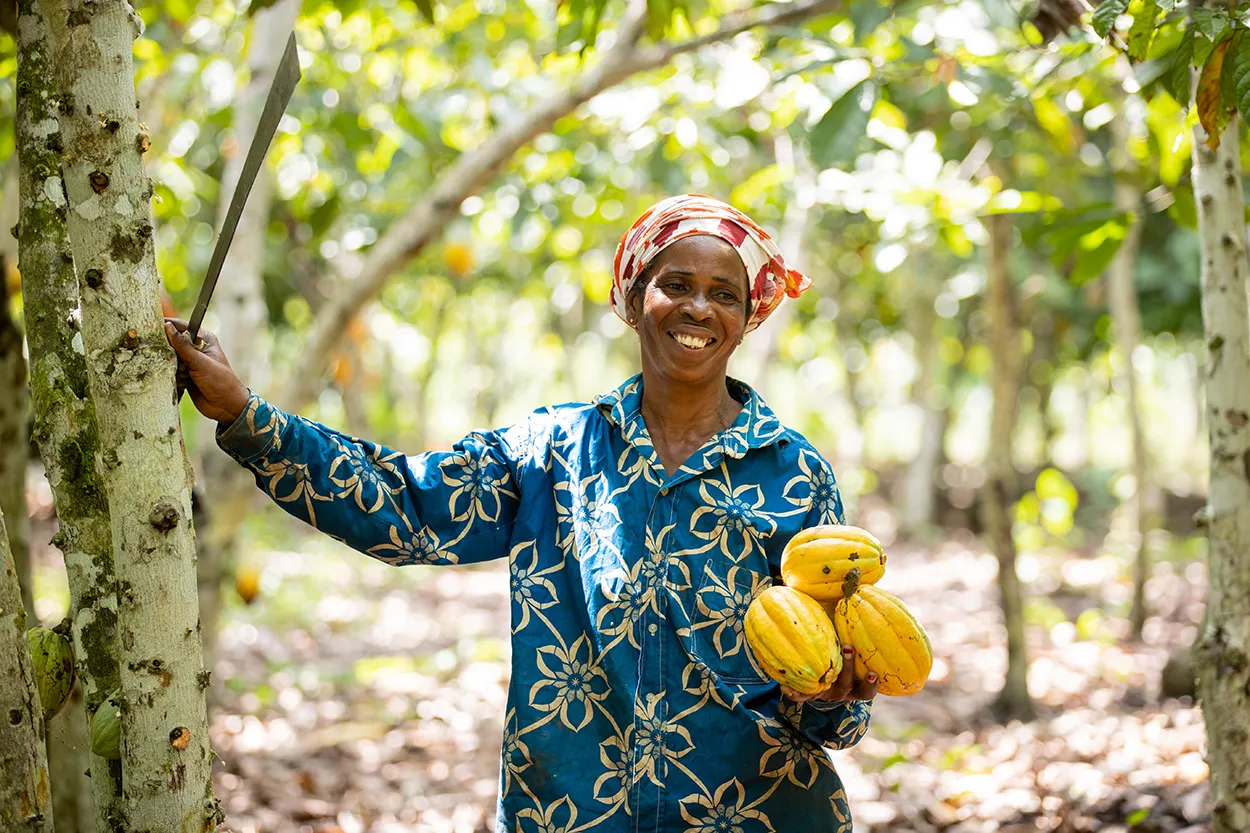
Prices may have soared to historic highs, but for most smallholders in Côte d’Ivoire and Ghana, daily life has grown more precarious. Rising input costs, climate shocks, and mounting compliance demands have widened, not narrowed, the gap between global market headlines and household realities.
Against this backdrop, Fairtrade has released one of its most consequential analyses in recent years: Building a Better World for Cocoa Farmers report draws on fresh evidence from programme evaluations, independent studies, and on-the-ground research across West Africa.
Advertisement

Its findings offer both a warning and a roadmap, highlighting the transformative impact of strong co-operatives: organisations that help farmers build resilience, secure financial benefits, and access essential services that improve livelihoods and strengthen communities. These co-operatives not only boost farmer incomes and lift families out of poverty, but also play a vital role in advancing the UN Sustainable Development Goals.
In our exclusive interview (below), the Report’s author, Rachel Wadham, Head of Evidence and Insights at the Fairtrade Foundation, said co-operatives are absolutely central to the future of sustainable cocoa. “By definition, they are built to represent member interests — economic, social, and community needs. They provide resilience as much as they reduce risk.
“Buyers, donors, and programmes may come and go, but the co-operative is the constant in a farmer’s life. They are the actors best placed to understand barriers to living income and to support farmers through climate shocks, market volatility, and external pressures.”
The Fairtrade report outlines how well-governed co-operatives can help farmers move closer to a living income, unlock access to new markets, strengthen climate resilience, and deliver essential community services. But this potential is far from guaranteed — and often undermined by short-term purchasing practices, inconsistent investment, and widening regulatory burdens.
‘International Year of Co-operatives’
This year is also the ‘International Year of Co-operatives’, and the cocoa industry is facing a decisive inflection point, Fairtrade argues that co-operatives must move from being treated as implementation partners to being recognised as strategic actors in global supply chains.
The case is compelling, but it raises tough questions: Are companies stepping up with the long-term commitments they claim to make? Can co-operatives realistically meet intensifying due diligence requirements? And do the success stories represent genuine sector-wide change, or pockets of progress against a backdrop of persistent systemic challenges?
To unpack the evidence behind the headlines — and to probe how the sector must evolve if co-operatives are to thrive rather than merely survive — CocoaRadar sat down with Wadham, to dig into the data, the blind spots, and the uncomfortable truths behind the co-operative model, asking what it would take to rebalance the cocoa economy in favour of the people who grow it.

Waldham explained how Fairtrade co-operatives, for example, have helped thousands of farmers move closer to earning a living income while investing millions in education, healthcare, and community infrastructure. In Côte d’Ivoire, the proportion of Fairtrade cocoa farmers projected to earn above a living income has more than tripled in two years—from 7% to 24%—with another 50% earning close to a living income.
The report also showcases co-operatives providing aggregation services and market access to support members’ income-generating activities beyond cocoa.
Examples of organisations moving up the cocoa value chain — for instance, Ecookim exporting and negotiating directly with Mars and Ferrero, and nine unions in Ghana joining forces to establish their own Licensed Buying Company.
The ECOOKIM union — representing more than 42,000 producers — has built schools, water towers, and solar canteens, and distributed more than 2.5 million seedlings to combat deforestation and improve soil fertility.
Aminata Bamba, Sustainability Manager at ECOOKIM in Côte d’Ivoire, said: “A well-organised and structured co-operative with good governance is more credible and has more commercial clout than an individual producer. By joining forces, our members improve their bargaining power, obtain better prices and premiums, and invest in their communities. Alone, we are vulnerable, but together, we are stronger.”
Q&A: Rachel Wadham
Head of Evidence and Insights at the Fairtrade Foundation
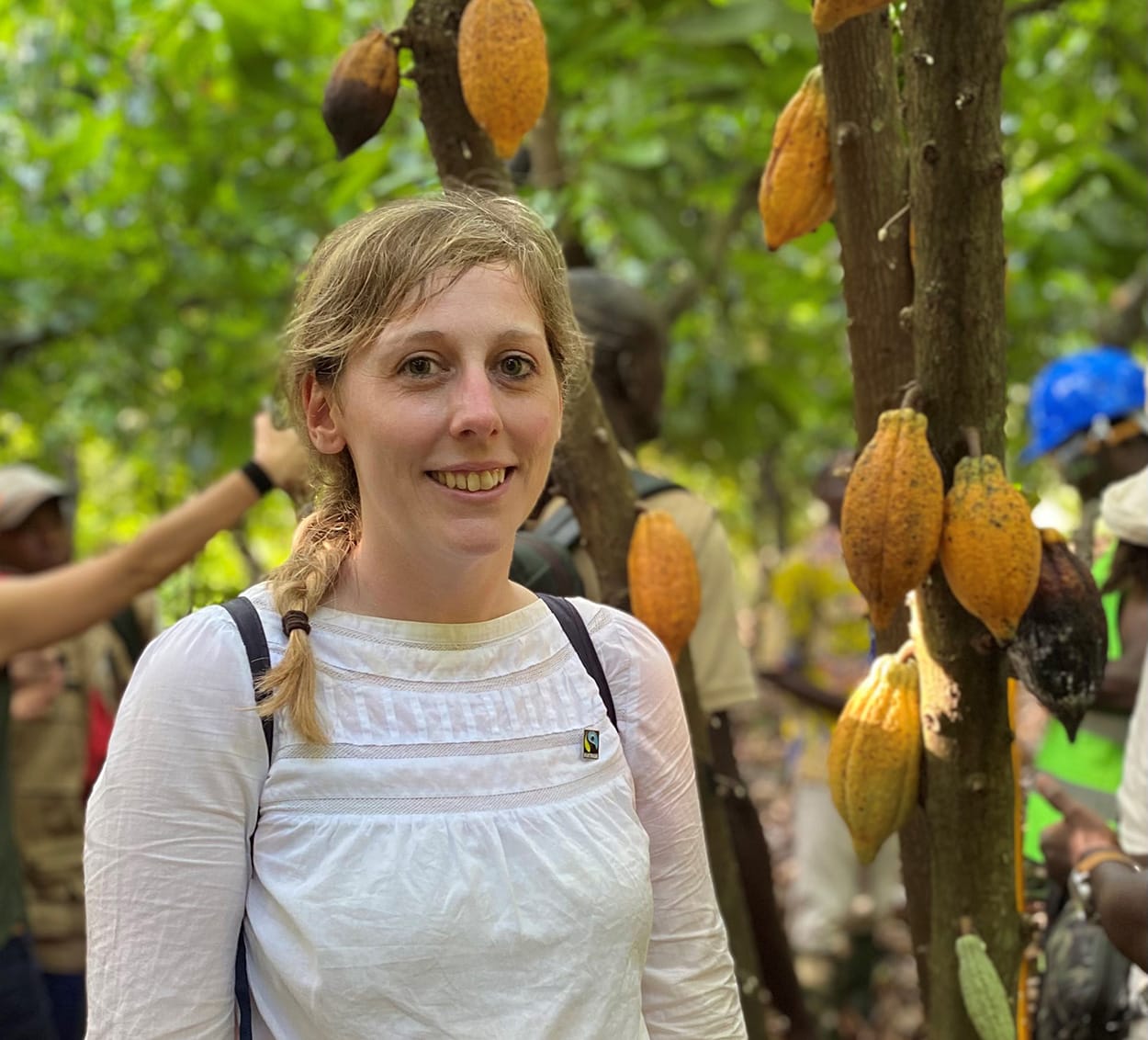
Q: Evidence vs Reality: Are co-operatives actually receiving the long-term backing that companies claim to provide?
Rachel Wadham: The research for this report didn’t specifically analyse contractual commitments between companies and co-operatives, but from our wider experience, we do see an increasing appetite for more direct, long-term engagement. Traceability demands are pushing brands, suppliers, and retailers to work more closely with specific co-operatives.
Some companies have been leading this for years. Ben & Jerry’s, for example, has long worked in Côte d’Ivoire under their ‘linked prosperity’ model and Living Income Accelerator Programme. Mars also publicly discloses the co-operatives they source from.
Fairtrade’s position is that long-term, stable commitments should be the norm across the industry. The evidence shows that when that commitment is there, it works — and the sector should move decisively in that direction.
Q: Living Income: Why aren’t record cocoa prices translating into farmer prosperity?
Rachel Wadham: Living income is complex. Price is absolutely part of the picture — and high prices can move households closer to a living income. In our study, once we adjusted for 2024-25 prices, the proportion of Fairtrade farmers projected to earn above a living income rose from 7% to 24%.
But the problem is that high prices have coincided with falling production. Côte d’Ivoire saw a 23% drop, and Ghana 19%, driven by multiple factors: years of underinvestment, climate change, swollen shoot disease, and rising input costs. Even with high prices, declining yields and rising costs hold households back.
This is where co-operatives matter. They provide stability and resilience — bulk input purchasing that lowers production costs, nurseries and seedlings after climate shocks, approved treatments, and continuous technical support. Co-operatives help farmers navigate the volatility that makes living income progress so difficult.
They are, in many ways, the ‘constant’ when the market is anything but.
Q: EUDR & data burden: Are co-operatives being set up to fail?
Rachel Wadham: I can’t comment on the specifics of the EUDR delay — that sits with other colleagues. But more broadly, Fairtrade’s research shows a growing strain placed on co-operatives from escalating data and compliance demands.
One major challenge is duplication: many actors request the same data, yet co-operatives don’t always have access to the data they provide. There’s also currently insufficient investment in helping co-operatives generate, manage, and benefit from this data.
Our position is clear: co-operatives need the resources and systems not just to comply, but to own their data. When they have access to their own GPS mapping, polygon data, and farm-level information, it empowers them — it helps with business planning, land tenure security, and responding to external threats.
So the expectation must come with investment. Otherwise, yes — the burden becomes unsustainable.
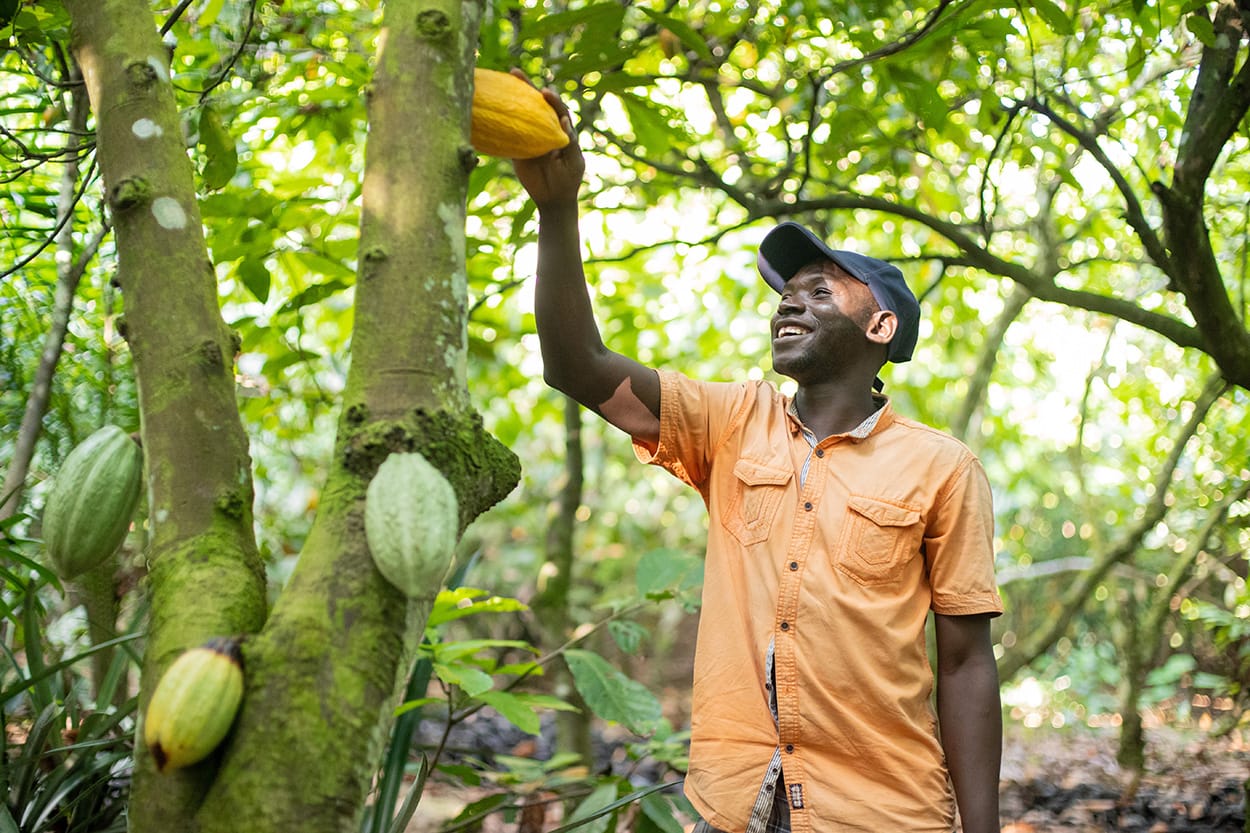
Q: Income diversification: Can it realistically scale across West Africa?
Rachel Wadham: Diversification is absolutely possible at scale — but only when programmes are designed with a clear route to market. That’s where we’ve seen too many initiatives fail in the past.
Our evidence shows that diversification succeeds when it is ‘market-backed’, not just training-based. That means demand exists, buyers are engaged, and co-operatives can broker connections and aggregate products.
One example is our LEAP programme, which uses a market systems approach to diversify into palm, honey, and rubber. The recent evaluation showed strong results because the programme embedded itself in market demand and built the infrastructure around it.
Co-operatives are central to making diversification viable — they are the bridge between farmers and markets.
Q: Illegal gold mining and land loss in Ghana: How serious is the threat for cocoa?
Rachel Wadham: It’s an issue we’re aware of through sector-wide research, but it isn’t my specific area of expertise. The only point I would make is that strong data systems — GPS, polygon maps, land documentation — are critical tools for protecting farmers’ land rights.
This links back to the need for data ownership: co-operatives having accurate land-use information strengthens their ability to respond to external threats, including land pressure from illegal mining.
CocoaRadar's Takeaway
The key message of the report and from our discussion with Wadham is this: co-operatives are not just implementers — they are business partners. With long-term commitments, investment, and professionalisation, they can drive sustainability, resilience, and real progress toward living incomes. Strengthening co-operatives benefits everyone in the supply chain.
Co-operatives are the backbone of Fairtrade cocoa certification and it sees them as not just economic entities but as powerful agents of change and ecological trailblazers, helping smallholder farmers become frontline defenders of forests and champions of regenerative agriculture.
- Download the full report here: https://www.fairtrade.net/content/dam/fairtrade/fairtrade-uk/resource-library/reports/Co-operatives%20Build%20a%20Better%20World%20for%20Cocoa%20Farmers.pdf

- CocoaRadarLive - Amsterdam Cocoa Week Special Preview: Join the CocoaRadar editor and The Team Behind Chocoa for a peer meeting to discuss the programme for this crucial gathering and exchange insights that will shape the industry for the next 12 months.
- LIVE DISCUSSION: Thu, Dec 4, 2025, 2:30 PM CET
- JOIN US HERE