Under the moderation of Jack Steijn of The Company Behind Chocoa, the session Trade & Transport in Transition, during day one of the Chocoa Sustainabilty Conference delivered a sobering yet forward-looking assessment of an industry grappling with unprecedented disruption.
A Market in Turbulence
Cocoa markets are experiencing historic volatility. Prices have swung dramatically, driven by disease outbreaks, climate change, shifting production geographies, and demand fluctuations. At the same time, Latin America’s rising output is reshaping traditional supply dynamics long dominated by West Africa.
Advertisement

Overlay these structural shifts with escalating criminal activity in producing regions, logistical vulnerabilities, and tightening EU sustainability regulations, and it becomes clear why trade and transport are undergoing profound transformation.
For Northwest Europe – and Amsterdam in particular – the stakes are high. As one of the world’s most important cocoa hubs, changes at origin ripple directly through European ports, terminals, warehouses, and financial markets.
Digital Compliance and Market Confidence
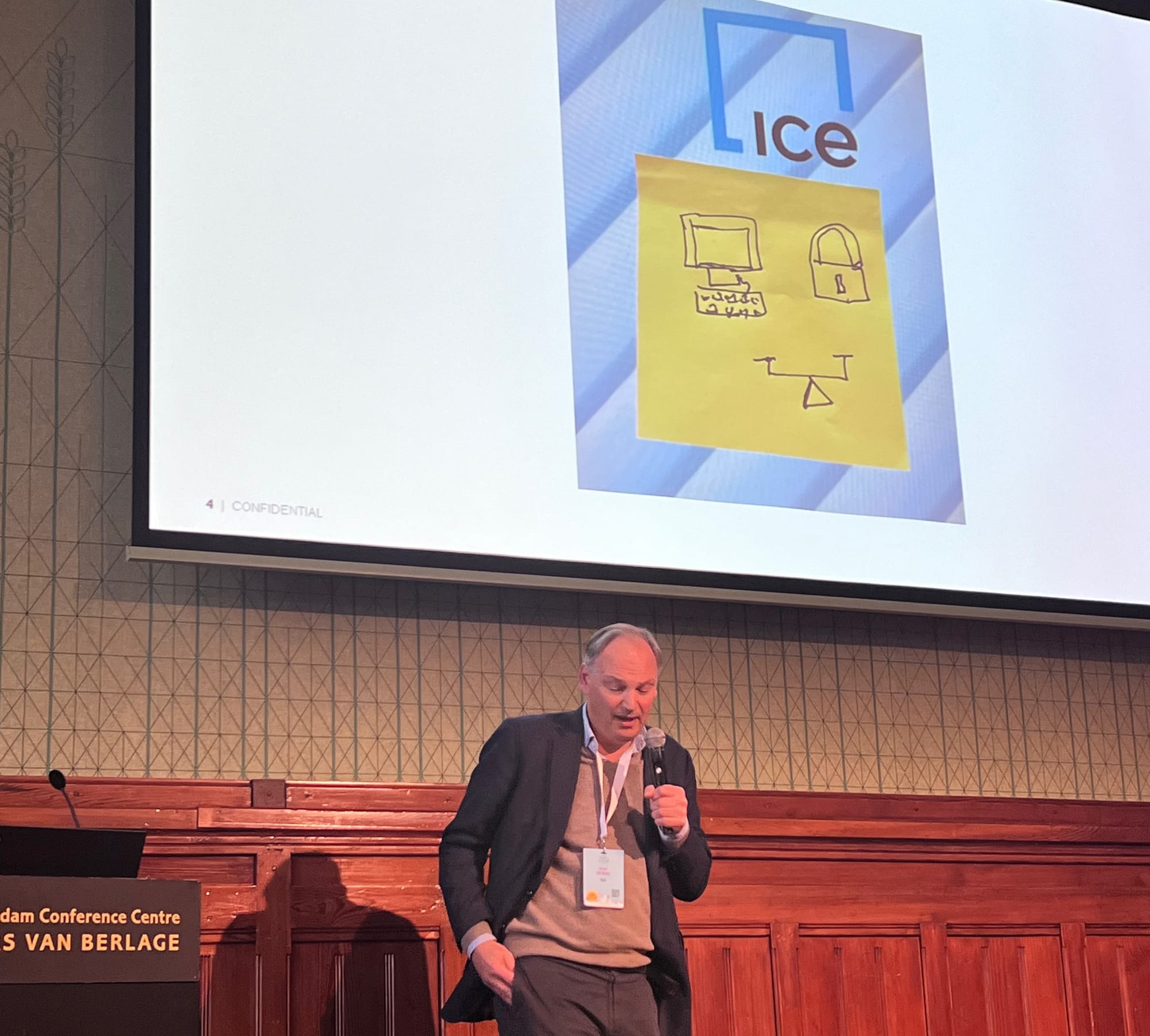
Clive de Ruig of Intercontinental Exchange (ICE) outlined how digital transformation is becoming essential to market stability. Over the past 25 years, ICE has transitioned analogue commodity processes into digital ecosystems. Cocoa is no exception.
Recent price volatility, he explained, reflects classic supply-and-demand mechanics – surplus production followed by demand destruction. Yet beyond pricing, regulatory change is now a defining force.
The EU Deforestation Regulation (EUDR) requires cocoa placed on the EU market to be deforestation-free and lawfully produced. ICE’s answer is ICE Cocoa Trace (ICE Cot) – a standardised compliance platform offering:
- Deforestation mapping
- Traceability verification
- Lawful production criteria
- Digital compliance “badges”
These badges can be written into sales contracts, reducing disputes and compliance costs while freeing resources for sustainability investments.
In a market built on physically delivered cocoa – where futures prices reflect actual European market realities – digital standardisation may prove essential to restoring confidence, he claimed.

Security Risks and the Criminal Shadow Economy
If regulation is reshaping trade from Brussels, geopolitics and criminal networks are reshaping it from the ground up.
Cecilio A. Alvarez B, CFO and CEO of Punta Trading, painted a stark picture of operating in Latin America. US efforts to curb Chinese influence in the region have intensified scrutiny of exporters. Meanwhile, the same shipping routes used for legitimate trade are exploited for illicit activities, particularly drug trafficking.
With cocoa prices surging from $2,400 to $12,000 per metric tonne at their peak, the commodity has become an attractive vehicle for criminal infiltration. Armed gangs demand payments. Ports are compromised. Insurance coverage for cash-in-transit and producer security risks remains scarce.
Punta Trading has responded with rigorous documentation protocols, including photographic and video evidence tied to payment milestones (25%, 50%, 75%, 100%). Contracts now include “conditions precedent” clauses requiring full shipment documentation before payment release.
Yet unpredictability remains. Alvarez's message was clear: compliance is no longer just environmental—it is operational and security-based.
Moving Closer to Origin
For Valentijn van der Weide of C. Steinweg - Handelsveem, adaptation means proximity.
The cocoa map is shifting. While West Africa remains central, Latin American producers – particularly Ecuador and Brazil – are expanding, alongside growing demand for organic and specialty cocoa.
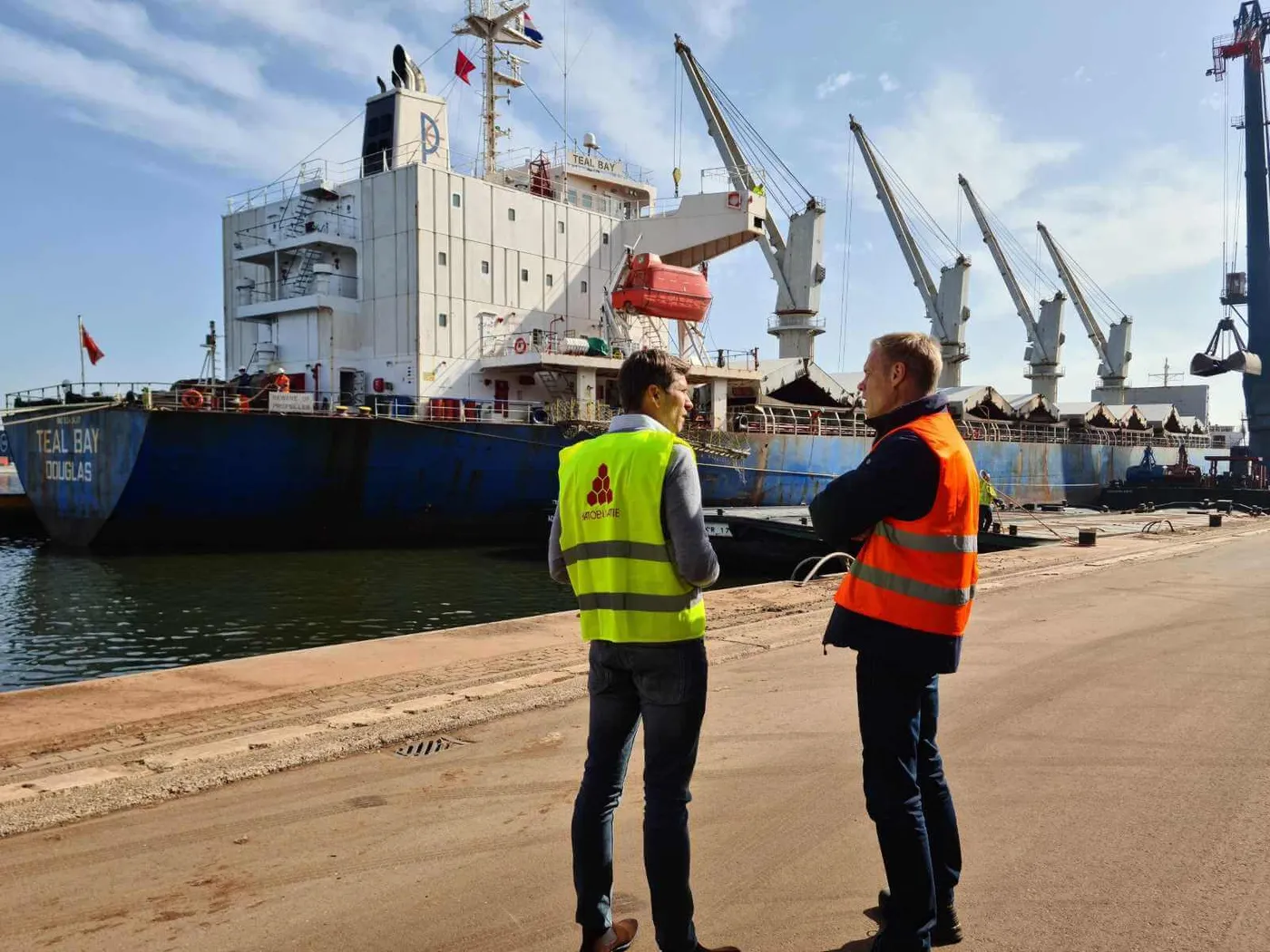
Steinweg’s strategy: integrate logistics, warehousing, and trade finance closer to origin. The company is expanding across the cocoa belt, with targeted growth in Côte d'Ivoire, Peru, Guinea, and Uganda. By embedding quality control, sampling, climate-controlled storage, and freight management at origin, Steinweg aims to safeguard both product integrity and financial flow.
Amsterdam, Antwerp, Hamburg, and Italy remain key hubs—but control increasingly begins at the source, he said.
The Hidden Risk: Mineral Oil Contamination
Beyond geopolitics and logistics lies a quieter but technically critical challenge: contamination from mineral oil hydrocarbons (MOH), often linked to jute packaging.
Michiel Kokken, Chair of the Technical Working Group on MOH at the European Cocoa Association, highlighted the need for preventive industry-wide standards to avoid contamination risks. With food safety scrutiny intensifying, even packaging materials can no longer be taken for granted.
In a market already under pressure, technical compliance failures are risks few can afford.
Rethinking Transport for Climate Integrity
For Céline Jaffradou of Belco and its sister company Nahu ('Nature and Human'), sustainability extends beyond certification – it shapes transport choices themselves.
Nahu prioritizes:
- Environmental preservation
- Decarbonization
- Price transparency
- Full origin-based quality control
Rather than relying on container ships – responsible for approximately 4% of global emissions – the company opts for barge transport where feasible. Though slightly more expensive per kilo, barges reduce CO₂ emissions by up to 90% on certain routes and offer more stable temperature and humidity conditions – critical for speciality cocoa and coffee.
Jaffradou called for a more robust voyage dataset for sail and barge transport, including temperature, humidity, emissions, and quality metrics. Data, once again, is the bridge between sustainability ambition and measurable impact.
A System in Transition
Across panels and perspectives, one theme dominated: transition is no longer optional.
Trade is being reshaped by regulation.
Transport is being redefined by sustainability.
Security concerns are rewriting risk management.
Digital tools are becoming compliance infrastructure.
Origin countries are gaining operational centrality.
Amsterdam may remain a global cocoa hub – but the rules governing its trade flows are evolving rapidly.
The cocoa industry has always depended on global interconnection. Today, that interconnection is more complex—and more fragile—than ever.
What emerged from Day One of Chocoa’s special session during last week's conference was not simply a list of challenges, but a shared recognition: resilience in cocoa trade and transport will depend on integration – of data, sustainability, security, and trust – across every link in the chain.
cocoaradar.com is:
- Official Media Partner - Amsterdam Sustainable Cocoa Conference, Chocoa, 2026.
- 'From Our Desk. To Yours. Daily'
- Sign-up here for free and choose your plan.