
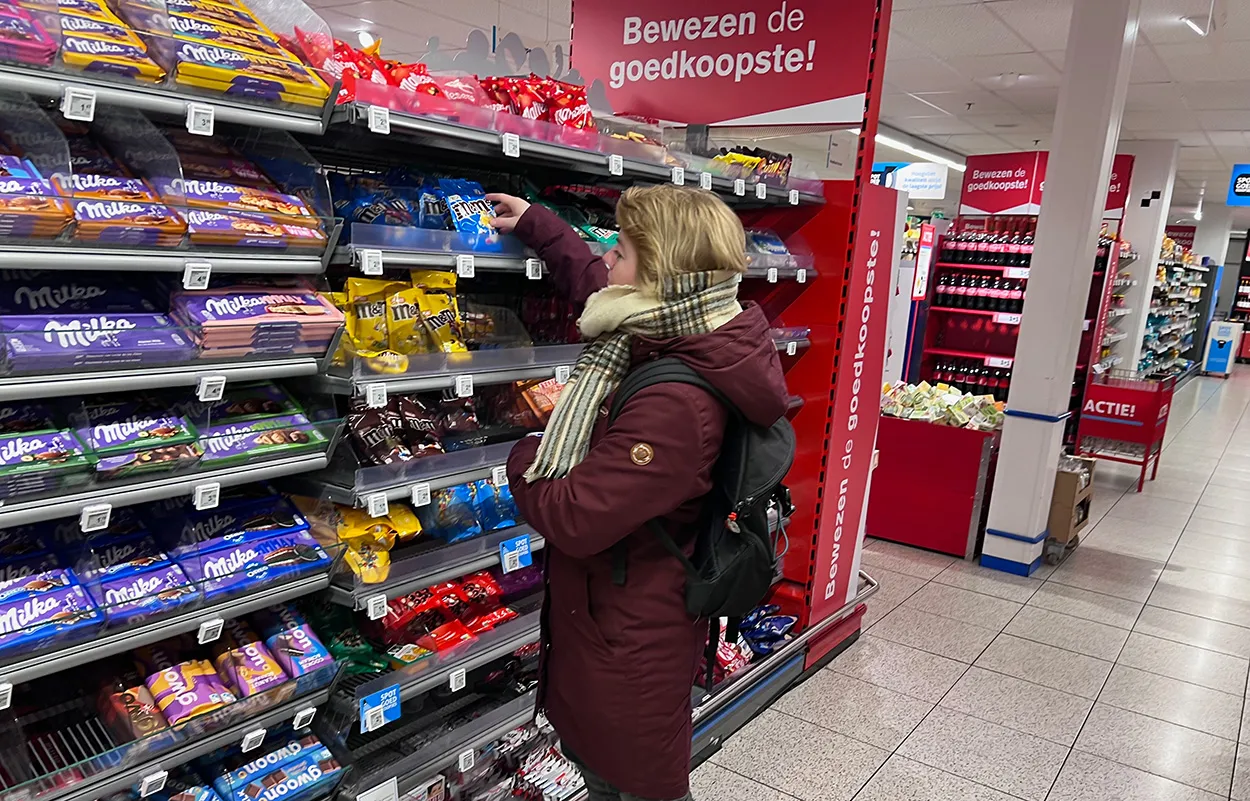
Retail chocolate prices across the European Union rose by 17.9% in 2025, the steepest increase among food categories tracked by Eurostat, according to Euronews. The surge far outpaced overall EU inflation of 2.5% and 3.3% for food and non-alcoholic beverages.
In the United Kingdom, chocolate prices climbed 16.2% year-on-year, according to Office for National Statistics data cited by Euronews.
The price surge reflects a turbulent period for cocoa markets, driven largely by production shocks in West Africa — the region that supplies roughly 70% of the world’s cocoa.
Advertisement

Cocoa Prices More Than Doubled
Global cocoa prices experienced one of the sharpest spikes in commodity prices in recent years.
World Bank data cited by Euronews shows cocoa prices rising from $3.28 per kilogram in 2023 to $7.33 in 2024 and $7.80 in 2025 — an increase of more than 120% in a single year.
The surge was triggered by severe crop disruptions in the two largest cocoa producers, Côte d’Ivoire and Ghana.
Poor weather conditions, including prolonged dryness, combined with plant disease — particularly cocoa swollen shoot virus (CSSV) — significantly reduced harvests and tightened global supply. Reuters reported that Côte d’Ivoire’s cocoa production was expected to drop by about 20% in the 2023–24 season, while Ghana’s output was projected to be nearly 40% below target.
These disruptions pushed cocoa inventories to historically low levels and rapidly increased chocolate manufacturers' costs.

Uneven Price Increases Across Europe
The impact on consumers has varied widely across Europe.
According to Eurostat, inflation in chocolate prices across EU countries in 2025 ranged from 6.6% in Slovakia to 32.6% in Poland.
Other countries experiencing sharp increases included Estonia (31.5%), Lithuania (31.5%), Romania (26.1%), Latvia (25.9%), and Serbia (25.4%).
By contrast, countries with large chocolate manufacturing sectors — such as Germany, France, Italy, Belgium, the Netherlands and Switzerland — generally recorded smaller price increases.
Analysts attribute this to the structure of the chocolate industry. Large manufacturers in these countries often have stronger supply chains, longer-term contracts, and a greater ability to absorb short-term commodity shocks. Smaller markets that rely heavily on imported chocolate tend to experience stronger price pass-through.
Additional factors — including energy costs, labour costs, sugar and dairy prices, exchange rates, and retail competition — have also influenced how quickly cocoa price increases reach consumers.
Mondelēz Expands Toblerone Production
While rising ingredient costs have squeezed margins across the confectionery sector, some manufacturers are responding by doubling down on premium chocolate brands.
Mondelēz International, one of the world’s largest snack companies, is expanding investment in its flagship Swiss brand Toblerone as part of a broader push toward higher-value products.
The company has invested 65 million Swiss francs (approximately $83 million) in its Toblerone facility in Bern, Switzerland, installing a new production line and positioning the site as a global ‘Center of Excellence’ for the brand.
The Bern plant already produces roughly 90% of Toblerone’s global output, exporting the triangular chocolate bars to more than 120 countries.
According to analysis from Simply Wall St, the investment reflects Mondelez’s strategy of strengthening premium chocolate brands that can maintain demand even as prices rise. Premium positioning allows companies to protect margins while differentiating products in an increasingly competitive market.
Volatility Likely To Continue
Despite the steep price increases in 2025, cocoa markets have already shown signs of volatility.
After reaching record highs in 2024, cocoa prices fell sharply in early 2026 as supply conditions improved and market disruptions in Côte d’Ivoire altered global trade flows.
However, commodity price declines do not always translate immediately into lower retail prices. Manufacturers typically hedge cocoa purchases months in advance, meaning consumer prices can remain elevated even after raw-material costs fall.
A Fragile Global Supply Chain
The recent price shock has highlighted how vulnerable the chocolate industry remains to disruptions in cocoa production.
With most global supply concentrated in just a few West African countries, climate extremes, disease outbreaks and agricultural challenges can quickly ripple through international markets.
Industry analysts say long-term solutions will likely involve investment in climate-resilient cocoa farming, improved disease management and diversification of supply.
In the meantime, consumers may continue to feel the effects of one of the most dramatic commodity swings in the modern chocolate industry — while manufacturers adapt through pricing changes, product reformulation and a stronger focus on premium brands.
cocoaradar.com is:
- Official Media Partner - CAA International Cocoa Conference
- 'From Our Desk. To Yours. Daily'
- Sign-up here for free and choose your plan.