Announced following a specially convened session, Biodiversity in Cocoa Landscapes, at the World Cocoa Foundation Partnership Meeting in Amsterdam earlier this month, the initiative positions biodiversity not as a peripheral compliance issue -but as the strategic backbone of responsible sourcing.
A Living Cocoa Landscape
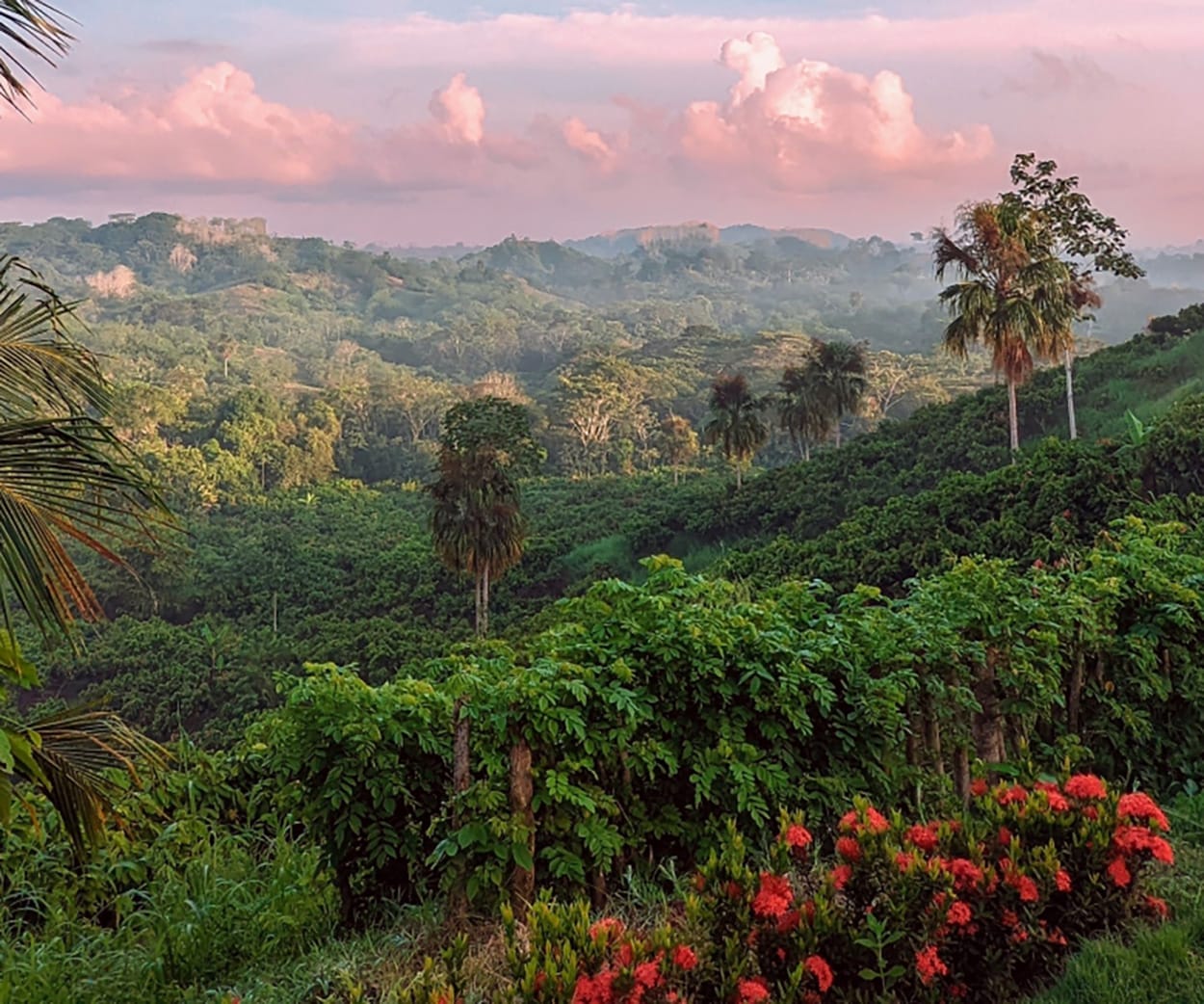
Cordillera’s cocoa landscapes are far more than agricultural plots. They are complex agroforestry ecosystems where production coexists with nature.
A rigorous biodiversity baseline study – developed in partnership with Proforest and Universidad del Norte – identified:
- 60+ protected or threatened species (IUCN/CITES indexed)
- 34 migratory bird species
- 570+ species cohabiting cocoa agroforestry ecosystems
In total, more than 500 species of fauna and flora were documented across Cordillera’s cocoa landscapes – many cohabiting, others migrating through these productive systems.
Advertisement

The findings establish a first-in-its-class scientific baseline for Colombian cocoa agroforestry, enabling measurable conservation programmes and long-term environmental targets.
Biodiversity as a Strategic Backbone
Speaking at the Amsterdam session, Jorge León, B2B Sustainability Manager at Cordillera Chocolate, emphasised that the company has adopted a scientific baseline as the foundation for future action.
“Biodiversity will be treated as core to responsible sourcing and farming – not just a reporting topic.”
With biodiversity-related compliance potentially on the horizon through legislation such as the EU’s Corporate Sustainability Due Diligence Directive (CSDDD) and Corporate Sustainability Reporting Directive (CSRD), industry experts at the panel underscored the urgency of scalable, credible, and practical nature-positive reporting mechanisms.
Cordillera’s response is clear: move from aspiration to measurable action.
Exclusive Q&A with Jorge León
B2B Sustainability Manager, Cordillera Chocolate

“We don’t just process cocoa, we cultivate life.”
Q: Cordillera often says it doesn’t just process cocoa, but ‘cultivates life’ How does this philosophy shape your sustainability approach today?
A: Within Grupo Nutresa, our sustainability approach is grounded in a Responsible Sourcing framework that guides our continuous work with suppliers across the value chain. At Cordillera, this philosophy comes to life through our nearly 70-year relationship with cocoa farmers.
We now understand sustainability from a more holistic perspective. A prosperous farmer cannot exist without a healthy environment. ‘Cultivating life’ means recognising that cocoa production, biodiversity, and human well-being are deeply interconnected.
By balancing farmers’ realities with the ecosystems they depend on, we are not only protecting biodiversity—we are securing the long-term resilience of our supply chain and our business.”
Q: Why place biodiversity – rather than a more conventional sustainability focus – at the centre of this initiative?
A: The cocoa sector has traditionally been approached through social and economic perspectives, which remain essential. But that perspective is no longer sufficient on its own.
When we developed our Deforestation and Conversion Free (DCF) programme in 2024, it became clear that cocoa is not isolated from nature – it is part of a living ecosystem. If sustainability focuses only on productivity, income, or compliance without addressing ecosystem health, the commitment remains incomplete.
Biodiversity holds cocoa agroforestry systems together. Without it, there is no resilient farmer, no stable supply, and ultimately no sustainable business.
This placed biodiversity at the centre of our approach—not as an additional chapter, but as the foundation connecting environmental integrity, farmer livelihoods, and long-term business resilience.”
Cocoa Farms as Biological Corridors
Q: Your cocoa agroforestry systems are described as living ecosystems and biological corridors. What does this mean in practical terms?
A: In practical terms, our cocoa agroforestry systems function as living ecosystems rather than monocultures. Cocoa grows alongside native and productive shade, timber, and fruit trees, creating structurally complex farms that support biodiversity and ecosystem health.
Because these systems are integrated into the broader landscape, they act as biological corridors—connecting forests and natural areas and helping maintain ecological balance.”
Q: What did the biodiversity inventory reveal about the ecological role of cocoa farms?
A: The inventory confirmed that cocoa agroforestry systems play a much broader ecological role than production alone. They function as biodiversity reservoirs and bridges across regions.
Critically endangered species like the Cotton-top tamarin rely on these landscapes as safe habitats. Migratory birds such as the Scarlet tanager, which travel from northeastern North America and Canada, also find refuge in Colombia’s cocoa systems during their winter journeys.”
From Baseline to Action
Q: Why is data and measurement so critical?
A: Data turns sustainability from intention into impact. A scientific baseline allows us to understand the ecosystem’s starting point and measure real change over time.
Without measurement, sustainability remains an ideal. With it, every initiative becomes a result – one that strengthens ecosystems, farmer resilience, and long-term business sustainability.”
Q: How will the baseline shape concrete conservation programmes?
A: It allows us to move from diagnosis to action. We can now design targeted conservation programs, prioritise ecosystems and species under threat, and define measurable objectives together with farmers and partners.
This is not a standalone effort. Meaningful, long-term impact requires collective action across the value chain.
Farmers at the Centre
Q: How are cocoa farmers involved?
A: Farmers are at the centre of this initiative. For nearly 70 years, we have worked hand in hand with Colombia’s cocoa-growing communities.
No biodiversity initiative can succeed without farmer adoption. Real impact happens on the farm.
Q: How does biodiversity contribute to climate resilience?
A: Biodiversity enables cocoa systems to function as resilient ecosystems rather than fragile monocultures.
By strengthening biodiversity, we improve water regulation, soil health, pollination, and climate adaptation. It directly reinforces farmer resilience, supply stability, and long-term business viability.
Q: How will Cordillera define success?
“Success will be defined by our ability to mobilise collective action – building long-term partnerships grounded in solid scientific data.
Over time, we expect to see healthier cocoa ecosystems, continuous biodiversity monitoring, and the expansion of productive agroforestry practices that protect the ecosystem. Biodiversity conservation must become part of our value chain’s DNA.
Q: If biodiversity became standard practice across the cocoa sector, how might the future change?
A: It would fundamentally change cocoa and chocolate for the better. Agroforestry would become the backbone of the sector, while monoculture systems would increasingly prove unsustainable.
This shift would strengthen ecosystems, stabilise supply chains, and support more resilient farmer livelihoods—ensuring a secure future for businesses and for the entire industry.”
A Call to the Industry
Cordillera is inviting partners, clients, and stakeholders to discover how cocoa can drive a sustainable future—transforming biodiversity into a strategic ingredient for responsible business growth.
As regulatory expectations rise and environmental pressures intensify, the message from Colombia is clear: sustainability is no longer an add-on. In cocoa, it is the main ingredient.
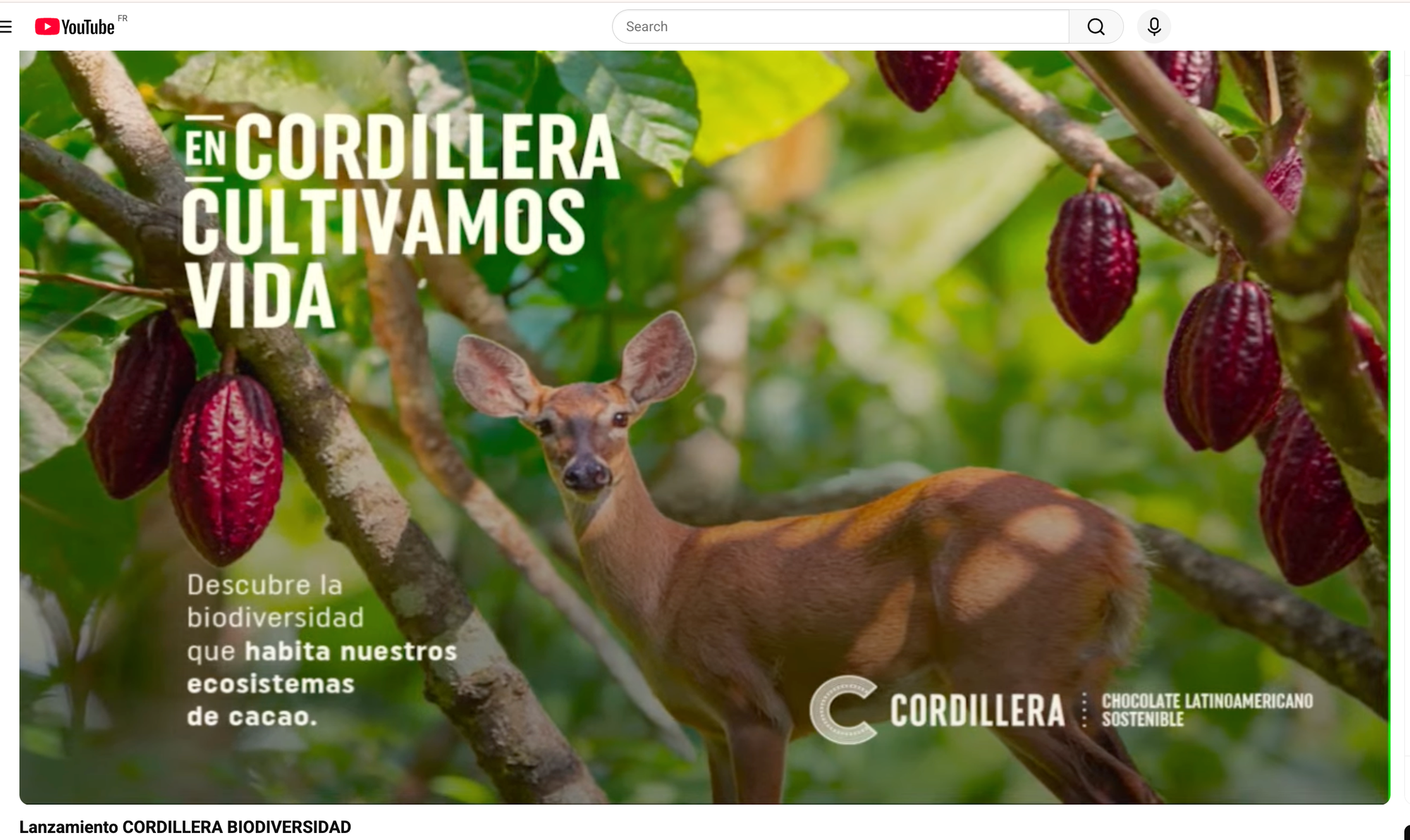
- Watch the official launch online: