
On Thursday 19 February 2026, industry leaders will gather in the Dutch capital for the Chocoa Sustainability Conference session examining how cocoa trade and transport are being reshaped – and what that means for Europe and Latin America alike.
Advertisement

Held at the historic Beurs van Berlage, the session, Trade and Transport in Transition 2026, takes place during Amsterdam Cocoa Week and positions the city as a lens through which the cocoa sector’s global transformation can be understood.
Shocks, Losses, Volatility And The Rise of Latin America
The cocoa industry is navigating a convergence of shocks: unprecedented price volatility, production losses linked to disease and climate change, rising insecurity in producing regions, and major regulatory shifts in Europe. At the same time, Latin America is increasing its share of global cocoa production and exports, challenging long-established West African supply dominance.
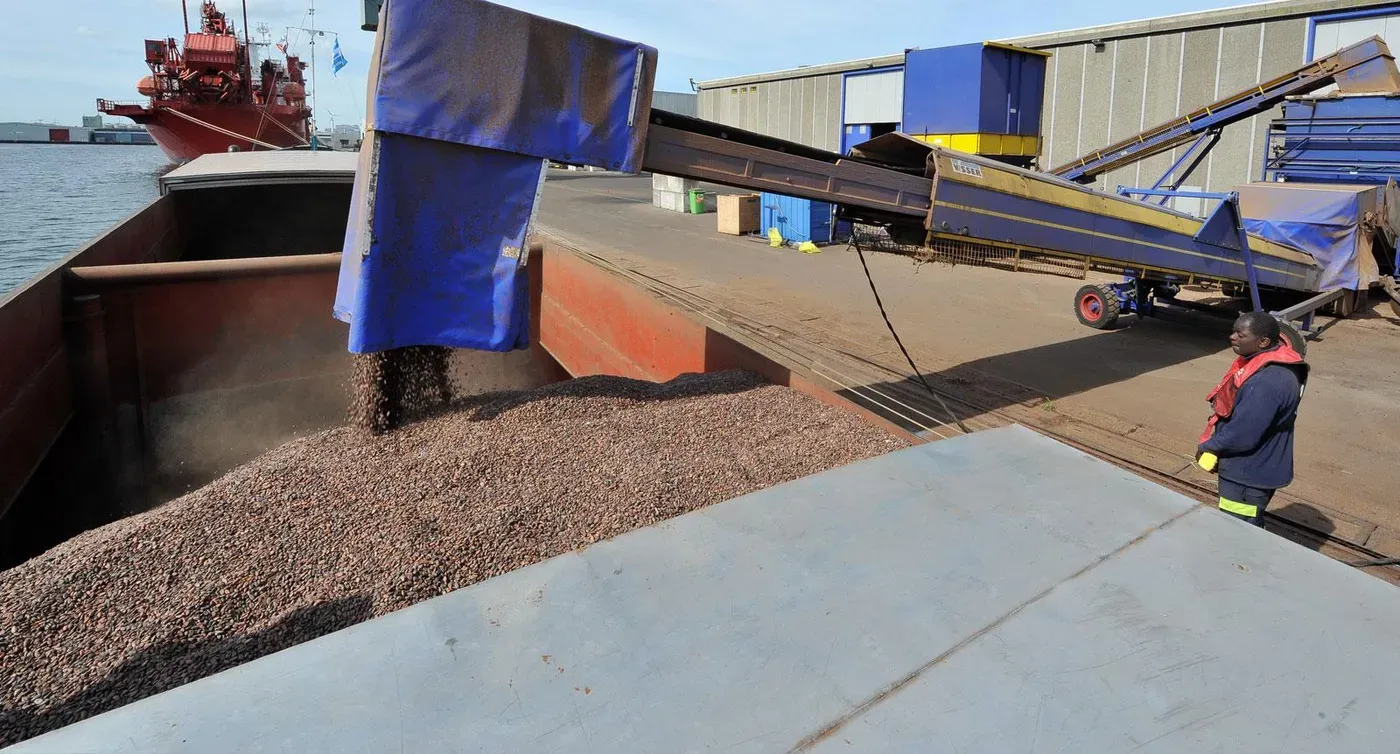
Amsterdam – home to one of the largest cocoa ports and grinding clusters in the world – sits at the heart of this transition. What happens to trade flows, logistics models, and sustainability standards here will ripple across producing regions, traders, manufacturers, and consumers worldwide.
According to the conference programme, the session is explicitly designed to explore how these pressures are transforming both origin countries and European trade hubs, with Amsterdam as a central case study.
A City Built on the Cocoa Trade
For decades, Amsterdam has functioned as a strategic gateway between cocoa-producing countries and European chocolate makers. Its ports, warehouses, futures markets, and service providers form an ecosystem that extends far beyond the Netherlands.
But that ecosystem is under strain. Rising volumes from Latin America, tighter European regulations, and new sustainability expectations are forcing traders and logistics providers to rethink how cocoa moves - from farm to port, warehouse to factory.
The Trade and Transport in Transition session is only the second of its kind in the history of Amsterdam Cocoa Week, reflecting the urgency of these changes and the city’s desire to remain a relevant, responsible trade hub.
Spotlight on Latin America
One of the session’s core themes is what makes cocoa trade with Latin America distinct. In a keynote address, Cecilio A Alvarez B of Punta Trading is set to examine how geopolitical shifts, security concerns, and logistical realities are reshaping trade relationships with countries such as Ecuador, Peru, Colombia, and Brazil.
Latin America’s cocoa sector is often associated with fine-flavour cocoa and closer links between producers and buyers. Yet the region also faces growing challenges, including organised crime affecting transport routes and ports, and the need to comply with increasingly strict European sustainability and food safety regulations.
As Latin American volumes rise, European hubs like Amsterdam must adapt their infrastructure, risk management, and compliance systems to accommodate different trade patterns and origin-specific realities.
Regulation, Logistics, and the Future of Trade
Other keynote sessions highlight how deeply interconnected trade, transport, and regulation have become.
Clive de Ruig, from the Intercontinental Exchange ICE Benchmark Administration, will outline how futures markets are adapting to regulatory change, traceability demands, and periods of cocoa scarcity. Warehousing and logistics providers, including Amsterdam-based operators, will discuss how shifts in production and consumption are redefining their role in the supply chain.
Food safety regulation is another focal point. New European rules on mineral oil hydrocarbons – linked in part to contamination from traditional jute bags - pose a significant risk of disruption if not carefully managed. Industry groups are increasingly called upon to coordinate solutions that protect consumers without cutting producers out of the market.

Finally, the session will explore low- and zero-carbon transport models, including the use of sailing vessels for cocoa shipments. These initiatives, while still niche, raise critical questions about scalability, cost, and their potential to decarbonise long-distance trade between Latin America and Europe.
Amsterdam’s Strategic Choice
What emerges from the agenda is a clear message: Amsterdam’s future as a cocoa hub will depend on its ability to evolve. Maintaining volume alone is no longer enough. The city’s competitive advantage increasingly lies in its capacity to offer compliant, transparent, and sustainable trade services – aligned with both European regulation and producer realities.
For Latin American exporters, Amsterdam remains a key entry point into European markets. But the relationship is changing from one based primarily on throughput to one defined by data, standards, and shared responsibility across the supply chain.
As the cocoa world enters what many describe as a structural transition rather than a temporary crisis, the conversations taking place in Amsterdam will help determine whether trade hubs can be part of the solution - or risk becoming bottlenecks in a rapidly changing system.
CocoaRadar’s analysis
The Trade and Transport in Transition 2026 session concludes with a wrap-up discussion and industry networking, but its implications extend well beyond Amsterdam Cocoa Week. For traders, producers, policymakers, and logistics providers, the questions raised – about resilience, equity, and sustainability – will shape decisions for years to come.
As Latin America’s role expands and Europe tightens its rules, the cocoa supply chain is being rewritten. Amsterdam, once again, finds itself at the centre of that story.
Chocolate Makers Forum - special panel: Technology and Innovation in Chocolate: Redefining the Future of Flavour // Friday 20 February 2026 (16:15 – 17:30)
Executive Summary: The chocolate industry faces increasing challenges related to cacao supply, price volatility, sustainability, and regulation. This academic survey explores industry perspectives on cacao alternatives used or considered for chocolate and chocolate-like products, amid a growing push to explore alternatives in response to these perceived challenges. Conducted as part of a Boston University (BU) research project, the survey assesses the relevance and potential of these alternatives among stakeholders. The survey takes about 10 minutes to complete. Responses will be confidential and aggregated, with findings published open access by the Institute for Cacao and Chocolate Research (ICCR) and in a presentation in the above session by José López Ganem, Executive Director Institute for Cacao and Chocolate Research.
Take the survey: https://bostonu.qualtrics.com/jfe/form/SV_0eK1IuB3uUBMDhc
cocoaradar.com is:
- Official Media Partner - Amsterdam Sustainable Cocoa Conference, Chocoa, 2026.
- 'From Our Desk. To Yours. Daily'
- Sign-up here for free and choose your plan.