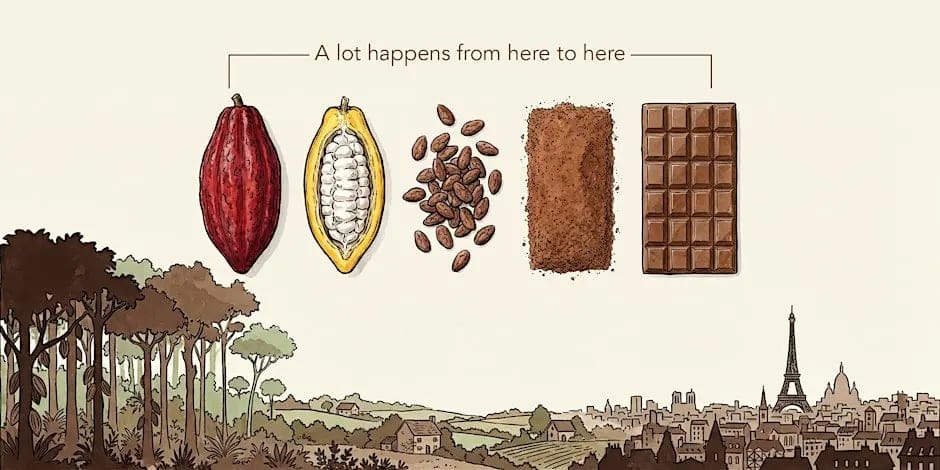

This is reflected in price. According to ICCO market reviews and buyer disclosures, bulk West African cocoa has historically traded at a significant discount to speciality origins, while fine-flavour cocoa from origins such as Madagascar, Ecuador, Venezuela, and Trinidad has commanded premiums ranging from 30% to well over 100%, depending on quality, certification, and buyer segmentation.
Origin, in other words, has functioned as a proxy for expected flavour and differentiation.
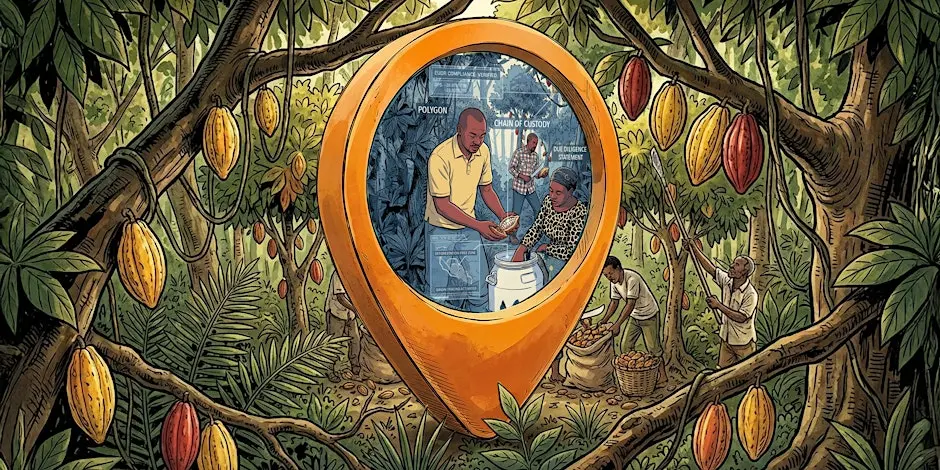
CHOCOA WORKSHOP: TECH VS TERRIOR
Join COOKO Founder Ferdinand van Heerden for a debate on precision fermentation and data-driven post-harvesting.
Beurs van Berlage, Amsterdam, NH
Wednesday, feb. 18, 10:30 a.m - 12:30 p.m. CET
Market data reinforces this tension. Recent origin differentials show fine-flavour cocoa from origins such as Ecuador commanding material premiums over bulk West African supply, often several hundred dollars per tonne, while also displaying notable volatility within the same origin. Origin continues to carry price weight, but it does so unevenly and increasingly imperfectly as a proxy for quality.
Yet a quiet question is now circulating through sourcing teams, R&D departments, and quality labs: does country of origin still tell us what we think it does?
As cocoa supply chains become increasingly mediated by technology, through controlled fermentation, digital traceability, and data-driven post-harvest handling, the traditional relationship between origin, flavour, and value is under pressure. At the same time, significant investment is flowing into synthetic and cell-culture-based cocoa alternatives, often positioned as responses to climate and sustainability challenges. While these technologies promise functional substitutes, they also sharpen an uncomfortable contrast: removing cocoa from place removes not only risk, but identity.
Origin, Variety And The Biology Of Terroir
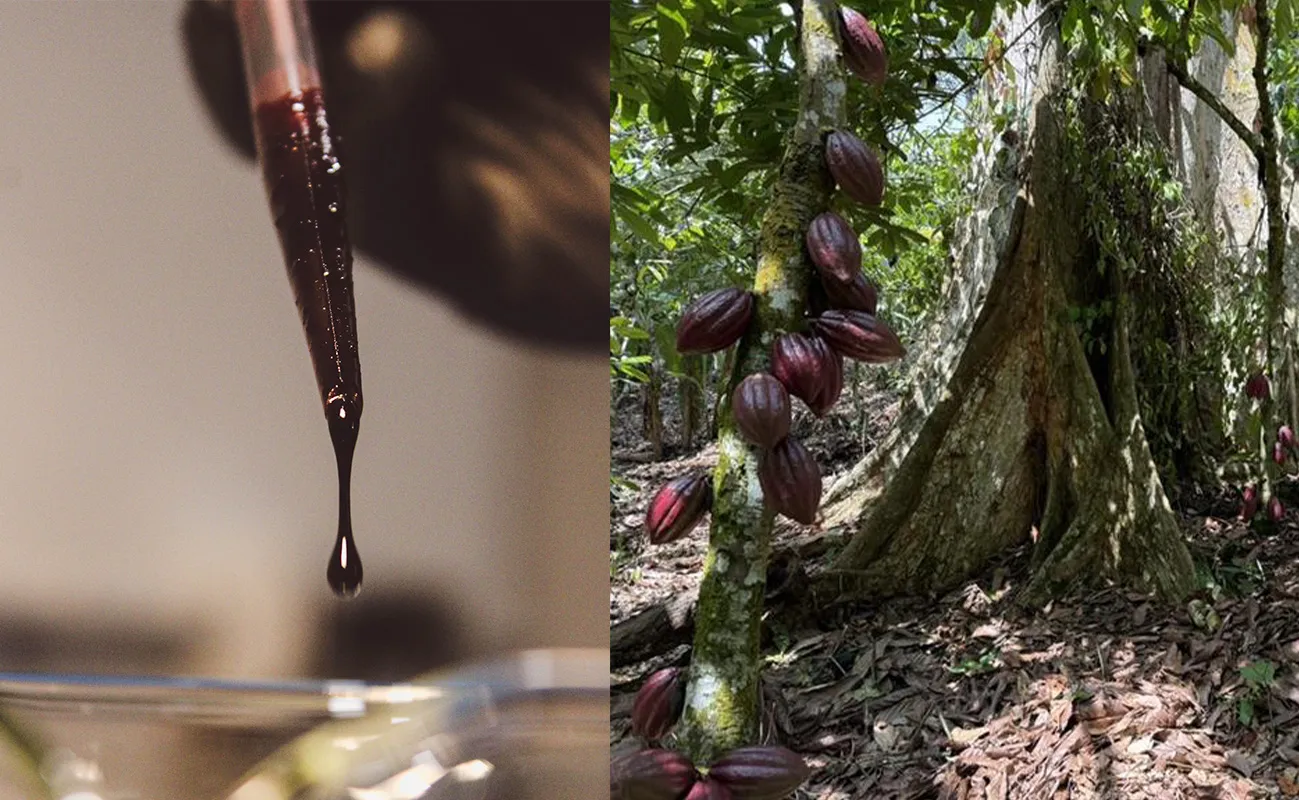
The concept of cocoa terroir draws from wine and coffee, where climate, soil, genetics, and local practice shape sensory outcomes. In cocoa, terroir is not only geographic but biological. Different cocoa varieties grown in different regions produce pulp with distinct sugar, acid, and aromatic profiles.
Fermentation takes place within this pulp. As a result, varietal differences directly influence microbial activity and the flavour compounds that are absorbed into the cocoa bean. This means that flavour development begins before fermentation starts, and that the potential for terroir expression is embedded in the variety itself.
Scientific evidence supports this view. Research presented at the 2017 International Symposium on Cocoa Research demonstrated that cocoa terroir is both chemically and sensorially meaningful when varietal differences, post-harvest practices, and microbial dynamics are considered together (Sukha et al., 2017). The study also highlighted the role of local microbial populations in shaping flavour outcomes, reinforcing the idea that terroir includes biological ecosystems, not just place.
Process Can Reveal — Or Destroy — Terroir
At the same time, a growing body of literature shows that post-harvest processing, particularly fermentation, often exerts a stronger influence on final flavour than geography alone. Variables such as fermentation duration, temperature, oxygen availability, and microbial succession can either amplify varietal and origin-linked characteristics or overwhelm them.
Importantly, technology itself is neutral. Controlled fermentation and monitoring do not inherently diminish character. However, poorly designed or poorly executed fermentation – whether traditional or technical – can spoil any cocoa, regardless of origin or variety.
Origin may set the parameters, but fermentation determines how clearly those parameters are expressed.
The Origin Premium Under Scrutiny
Despite the persistence of origin-based pricing, manufacturers frequently observe substantial variability within the same origin. Beans from a single country, region, or harvest can deliver inconsistent sensory and quality outcomes depending on post-harvest handling.
This raises an uncomfortable question: are origin premiums rewarding terroir – or compensating for uncertainty? As regulatory scrutiny, quality expectations, and sustainability pressures rise, predictability is becoming as valuable as provenance. In this context, origin narratives unsupported by process data are increasingly difficult to defend.
Source Fermentation And The Preservation Of Identity
Source-based fermentation models are emerging as one response to this challenge. By applying controlled, monitored fermentation at origin, these approaches aim to preserve the link between place, variety, and flavour while reducing variability and risk.
COOKO’s work in Cameroon illustrates how source fermentation can function as an enabling layer rather than a replacement. By anchoring process control at the first mile, characteristic flavour profiles can be expressed more consistently, while the agricultural and cultural identity of origin remains intact.
The Questions The Industry Can No Longer Avoid
These questions sit at the centre of the ‘Tech vs Terroir?’ workshop, part of COOKO’s workshop series at Chocoa 2026:
- If the country of origin commands a premium, what exactly are buyers paying for today?
- Does process control diminish cocoa’s character, or make terroir more legible?
- In a world investing heavily in synthetic cocoa, what defines authenticity and identity in chocolate?
Bringing together perspectives from Dr Silke Elwers, Dr Christina Rohsius, Karin Chatelain, and Muffadal Saylawala, the session examines how origin, variety, process design, and technology interact in shaping flavour, value, and identity.
As with contamination and food safety, the challenge facing the chocolate industry is no longer whether technology belongs in cocoa, but how it is used - to replace origin, or to make it intelligible.
Indicative References
- ICCO. Cocoa Market Review and Fine Flavour Cocoa Reports.
- Sukha, D.A., Umaharan, P., & Butler, D.R. (2017). Evidence for applying the concept of terroir in cocoa flavour and quality attributes. International Symposium on Cocoa Research, Lima, Peru.
- Afoakwa, E.O. et al. (2014). Flavor formation and character in cocoa and chocolate. Food Chemistry.
- Kongor, J.E. et al. (2016). Factors influencing quality variation in cocoa fermentation. Journal of Agricultural and Food Chemistry.
- Sponsored content: This article was created in collaboration with COOKO. While it aligns with our audience’s interests, the ideas and content are provided by COOKO, which retains copyright and editorial responsibility. We’re sharing it to offer our readers relevant information and perspectives.
- Attending Chocoa 2026? Check out more workshops from COOKO: