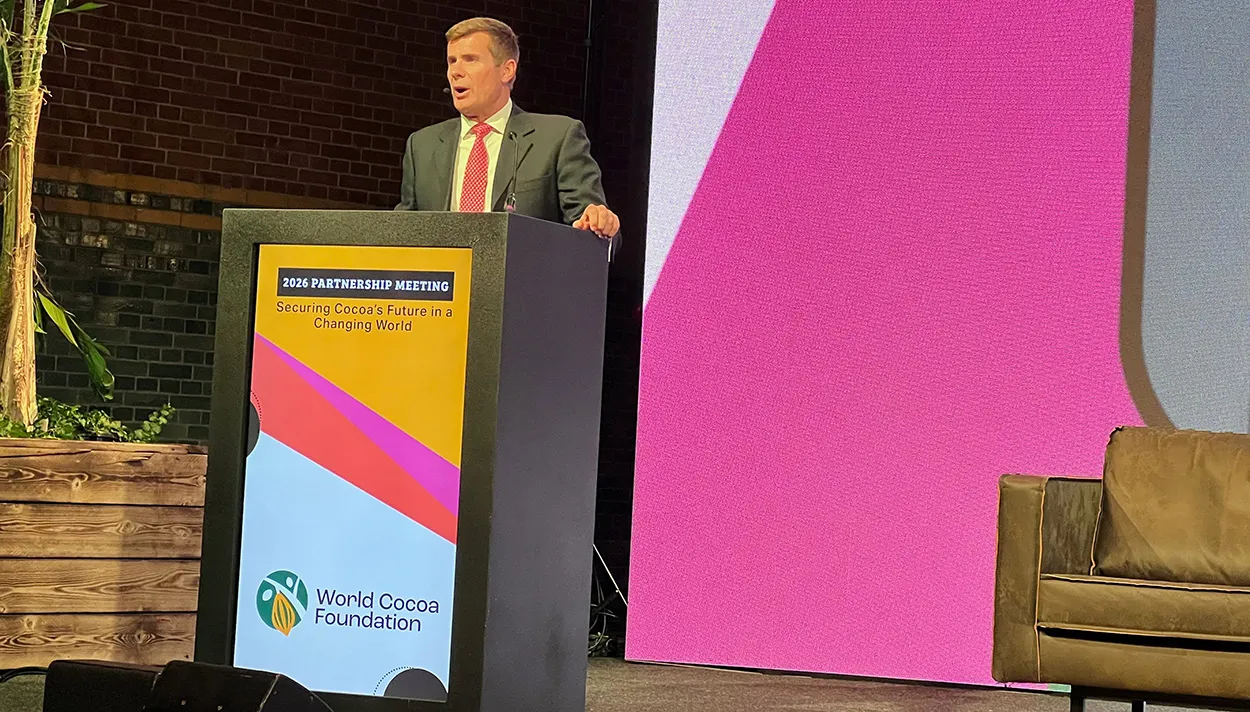
CocoaRadar understands that Vincent informed the WCF Board in the summer of 2025 of his intention to step down this summer. At the Board’s request, he has agreed to continue as President through to the end of 2026 to lead the full implementation of WCF’s refined strategy and ensure continuity during this critical delivery phase for the cocoa sector.
WCF Leadership Transition as Strategy Enters ‘Delivery Phase’
The announcement comes as the global cocoa sector is entering one of its most volatile chapters in decades — and the organisation that represents more than 60% of it is preparing for a leadership transition.
Advertisement

After a week of high-level discussions in Amsterdam, which included the WCF Partnership Meeting, industry leaders privately describe the next 12 months as a ‘make-or-break’ period for cocoa: volatile prices and supply and demand, tightening European regulation, crop disease in West Africa, and growing scrutiny of sustainability claims are reshaping the supply chain.
A Managed Transition — Not a Crisis
In a statement, WCF Chair Tricia Brannigan called the transition “normal, healthy governance and long-term planning,” adding that the Board has “full confidence” in Vincent’s leadership and is committed to an orderly succession process.
In an exclusive interview with Cocoaradar, Vincent — speaking from his home in Abidjan — framed the timing as deliberate rather than reactive.
“The key thing we’ve achieved is clarity,” he said. “Clarity on our purpose, clarity on strategy, and clarity on the Board’s role. In a sector with this many stakeholders, that matters enormously.”
Vincent joined WCF in 2020 to oversee programmes, then became interim president within months. He has now spent five years leading the organisation through what many insiders describe as a reset period following internal turbulence before his tenure.
Reputation Shield — or Systemic Convener?
WCF has long faced criticism from some NGOs and other actors who argue that it functions primarily as a reputational shield for major chocolate manufacturers.
Vincent rejects that characterisation. “Our job is to convene members on the most difficult, pre-competitive systemic challenges facing the industry,” he said. “Farmer income, forest protection, regulation, disease — these are not branding exercises. These are structural challenges.”
He emphasised that WCF does not run company sustainability programmes — a point increasingly relevant as major firms advance their own branded initiatives and, according to multiple industry sources in Amsterdam last week, explore smaller group collaborations.
“What we focus on is the enabling environment,” Vincent said. “Traceability systems, regulatory engagement, risk assessments — the conditions that allow programmes to function.”
Voluntary vs. Mandatory: A Structural Shift
Over the past five years, the cocoa sector has moved from largely voluntary sustainability commitments to a more regulation-driven environment, particularly in Europe.
Vincent pointed to the EU’s deforestation regulation (EUDR) as an example of how voluntary and mandatory systems now overlap.
“Compliance is becoming the licence to operate,” he said. “That’s simply the reality of the world we’re operating in.”
Industry initiatives, national monitoring systems in producing countries, and company-level traceability efforts now coexist — sometimes cooperatively, sometimes competitively. WCF’s role, he argued, is to reduce duplication and align efforts.
Disease, Diversification and Balance
At last week’s Partnership Meeting, cocoa swollen shoot virus (CSSV) resurfaced as a central concern, particularly in Ghana and Côte d’Ivoire. Some stakeholders questioned whether research mandates between industry bodies risk duplication.
 Anthony Myers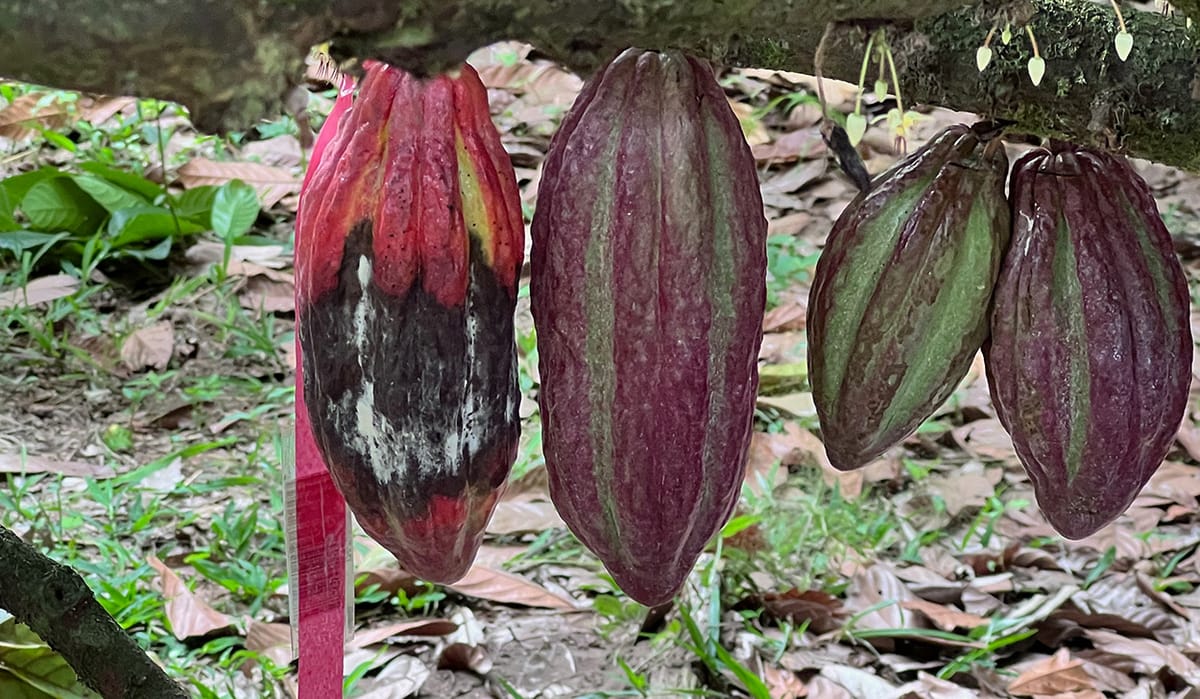
Vincent said WCF’s approach is to “connect the work being done, identify gaps, and only step in directly if needed.”
The larger strategic question facing the next president may be geographic.
With around 60% of global cocoa production concentrated in Ghana and Côte d’Ivoire, companies are increasingly exploring diversification into Ecuador, Peru, Nigeria and Cameroon. Yet Vincent was clear that diversification must not mean disengagement.
“It’s about balance,” he said. “Growth in other origins must be sustainable from the outset. But Ghana and Côte d’Ivoire will always remain central to the supply chain.”

What Would Failure Look Like?
Asked what failure would mean for the WCF a decade from now, Vincent paused.
“If we look back and say that in 2024, 2025, 2026, everyone recognised the systemic challenges, talked about collaboration — but didn’t deliver results,” he said. “That would be failure.”
For now, he plans to focus on completing WCF’s strategic delivery phase before returning to Europe and likely reentering the financial sector. He says he will miss West Africa “absolutely.”
The Board has not disclosed criteria for its successor. Industry observers note calls for leadership representation from the Global South and from women in senior roles, but WCF confirmed the selection process rests solely with its Board.
For an industry confronting climate risk, regulatory transformation and supply volatility, leadership continuity may be as significant as leadership change.
For the WCF, with rumours of the ‘Big Five’ companies: Hershey, Mars, Nestle, Mondelez and Lindt, swirling around Amsterdam last week of plans to move forward on their own-branded sustainability efforts, the main question for the next WCF president must be: what is the real role that WCF can play that would make a difference in this space?
Wouldn’t it be more efficient for the cocoa industry to concentrate its efforts through one funding vehicle?
Whether the next chapter of the WCF delivers measurable impact — or simply refined language — will be closely watched.