

Day Trading Attention: Why Confectionery Marketers Must Move Faster in a Volatile Economy
At the National Confectioners Association’s (NCA) State of the Industry Conference (SOTIC), two very different speakers delivered a shared message for brands navigating today’s market: the pace of change has accelerated — and companies that fail to adapt quickly risk being left behind.
Financial journalist Ron Insana opened with a sobering economic outlook, describing a global landscape shaped by geopolitical volatility, energy shocks and labour market disruption. Later, serial entrepreneur Gary Vaynerchuk took the stage with his trademark energy to argue that in a world where trends can ignite overnight, brands must learn to compete for consumer attention in real time.
Advertisement
Together, their perspectives framed the challenge facing confectionery and snack companies today: operating in an increasingly unpredictable economy while fighting for relevance in a rapidly evolving media environment.
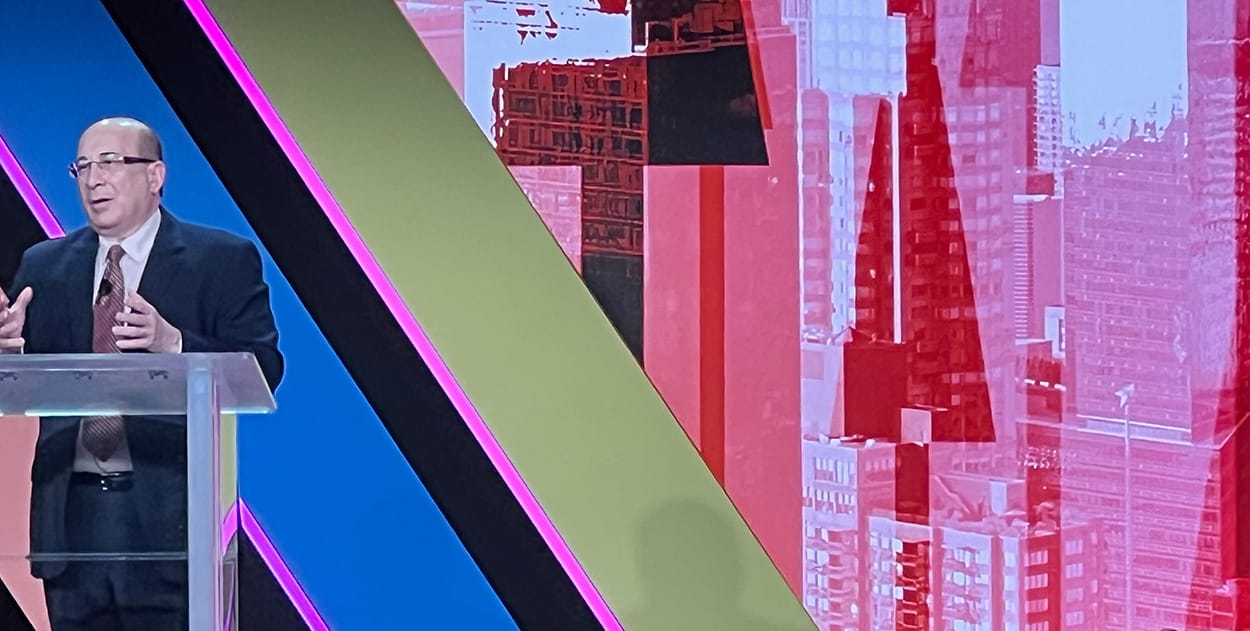
The Economic Backdrop: Volatility Everywhere
Speaking in a session titled Everything, Everywhere, All at Once: An Economic Outlook for a World in Motion, Insana urged industry leaders to prepare for continued turbulence.
“You’ve got to keep your head on a swivel,” Insana told attendees, describing how developments in geopolitics, energy markets and technology now ripple through the global economy almost instantly.
Energy prices are one of the most immediate risks. Insana pointed to a dramatic surge in oil prices, which jumped roughly 30% to around $120 a barrel in just 12 hours — the largest single-day percentage increase on record. The spike followed escalating tensions between the United States, Israel and Iran, echoing the market disruptions seen during the 1970s oil crises.
The shock reverberated through financial markets, with the Dow dropping roughly 500 points and the S&P 500 falling about 5%. If sustained, Insana warned, higher energy costs could push inflation higher again and increase the risk of “mini-stagflation” — sluggish growth combined with persistent price pressures.
Meanwhile, the US labour market is showing signs of strain.
Although headline GDP figures do not yet indicate a classic recession, Insana noted that job creation has effectively stalled, with the US economy adding no net new jobs since April of last year. Around 92,000 jobs were lost last month, including about 31,000 linked to a nurses’ strike.
Even accounting for that disruption, hiring momentum has slowed markedly.
Insana described the current situation as a “labour market recession” — a rare scenario in which employment weakens while the national unemployment rate remains relatively low at around 4.4%. A shrinking labour force, partly driven by immigration and deportation dynamics, is masking the slowdown.
Looking ahead, he expects modest growth of roughly 1–2% with inflation hovering around or above 3%, still above the Federal Reserve’s target.
But with geopolitical tensions, energy markets, tariffs, immigration policy and artificial intelligence all shifting rapidly, forecasting has become increasingly difficult.
“My forecast window has shrunk to about three months,” Insana said.
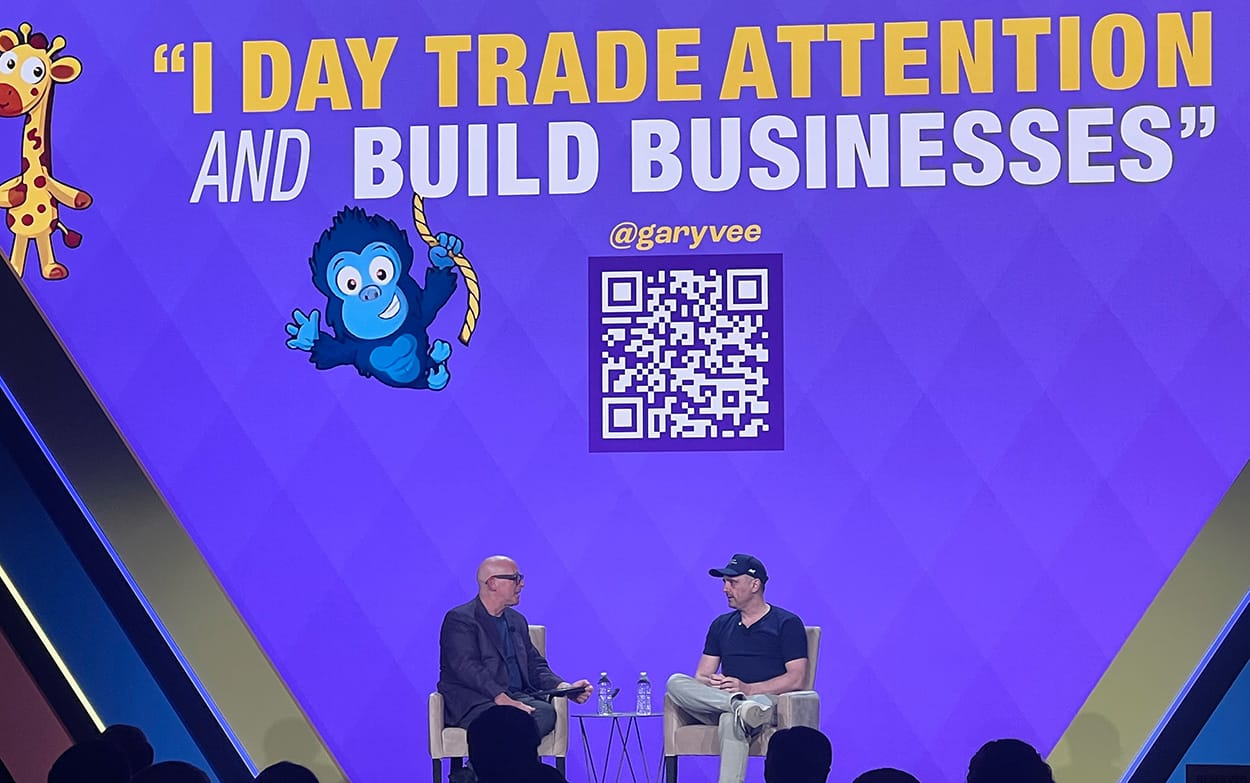
Day Trading Attention - Rapid Growth of live Social Commerce
If Insana outlined the economic uncertainty brands must navigate, Vaynerchuk focused on the marketing reality within it.
Speaking in conversation with conference host Mark Jeffries, the VaynerMedia CEO argued that success in impulse-driven categories like confectionery will increasingly depend on speed, creativity and a deep understanding of where consumer attention lives.
“We’re all battling for attention,” he said.
In categories built around treating and discovery, that battle can be won or lost in seconds.

The Rise of Live Social Shopping
One of Vaynerchuk’s strongest predictions centred on the rapid growth of live social commerce.
“The thing that would probably catch this room off guard the most on what could actually affect their P&L in 2026 is live social shopping,” he said.
The model, he explained, functions as a kind of “QVC within social media”, where creators host livestreams and sell products directly to audiences in real time.
The format has already become massive in Asia. In China alone, live commerce is projected to generate around $800bn in gross merchandise value by 2026.
While adoption in the US is still developing, Vaynerchuk believes confectionery brands are particularly well positioned to benefit.
“It’s an incredible category for impulse,” he said. “This industry will be wildly affected by that medium.”
A single viral moment can quickly translate into product sales. Vaynerchuk pointed to one example where a TikTok clip drove a nationwide sell-out of a Walgreens gummy product.
“Attention is the only thing that’s happening here,” he said.
Creators vs Corporations
A central theme of Vaynerchuk’s talk was the growing power of individual creators relative to traditional corporate marketing.
“The human being with a large audience has remarkable leverage compared to corporations — much bigger than people realise,” he said.
That shift means brands must rethink their marketing approach. Instead of relying on large, infrequent campaigns, companies need a constant stream of creative content that mirrors how creators communicate online.
“We as big companies need to start acting more like the creators — not the reverse.”
Many established brands, he argued, still underinvest in creative output while overspending on distribution.
“The creative is the variable of success,” he said. “You can waste unlimited money on social media if the creative isn’t right.”
Why Big Brands Move too Slowly
For Vaynerchuk, the biggest challenge facing large companies is not budget — it is speed.
“Big brands do big brand things,” he said, describing how long decision cycles and complex approval processes slow marketing execution.
In contrast, smaller brands often outperform because they can experiment quickly and respond to emerging trends.
“Big brands that have 50 times more money than small brands are getting outspent in actualisation of relevance and attention consumption,” he said.
The solution, he argued, is to become “obnoxiously consumer-centric” — focusing relentlessly on where attention actually lives rather than relying on legacy marketing structures.
AI as a creative accelerator
Artificial intelligence was another major theme of the discussion.
Rather than framing AI as a threat, Vaynerchuk described it as a powerful productivity tool that will dramatically accelerate marketing workflows.
“AI is electricity. AI is the internet,” he said.
The technology will allow brands to generate far more creative variations, test ideas rapidly and produce content at a scale that traditional production models cannot match.
“In the short term, it is not AI that’s taking anyone’s job,” he added. “It’s a human being who uses AI that’s going to take your job if you’re not using it.”
Faster Marketing in an Uncertain World
Taken together, the two sessions highlighted the dual pressures facing consumer brands. The economic outlook may be increasingly unpredictable, but the pace of marketing and media is only accelerating.
For confectionery brands — built around impulse purchases, discovery and treating — that creates both risk and opportunity. The companies that win, Vaynerchuk suggested, will be those able to move at the speed of culture.
In today’s attention economy, the real-time market is not just financial — it is cultural. And brands, increasingly, must learn to trade in it every day.
cocoaradar.com is:
- Official Media Partner - CAA International Cocoa Conference
- 'From Our Desk. To Yours. Daily'
- Sign-up here for free and choose your plan.