
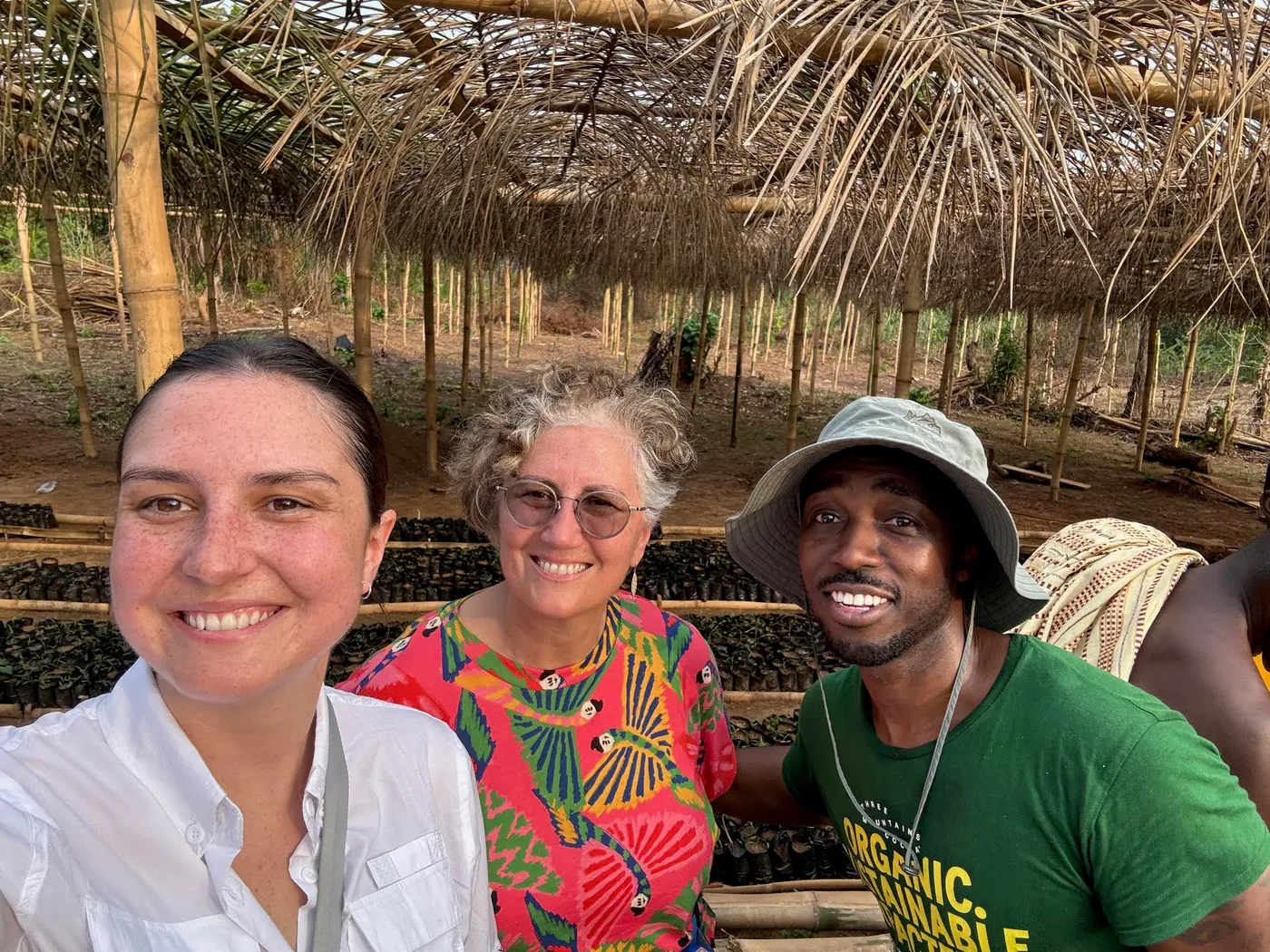

Most cocoa sustainability projects begin with a predefined solution. A team somewhere – usually far from the farm – identifies a problem, designs an intervention, secures funding and arrives in a growing community ready to implement. Women for Chocolate was built on a different premise: start by asking farmers what they actually want and then commit to figuring it out together.
At its core, this is not just a different approach – it is a long-term commitment to the supply chain. It also makes commercial sense: the deeper a company understands its supply chain, the better it can sustain it.
Strengthening Long-Term Relationships Between Buyers and Farmers
The cocoa sector has no shortage of sustainability programmes. And yet, the structural challenges facing cocoa farmers in West Africa have not meaningfully improved. Poverty persists. Women remain sidelined in decision-making despite undertaking significant cocoa labour. Climate pressures are intensifying.
Part of the problem is design. There is often a vast gap between the people designing sustainability programmes and the lived realities of farmers. Priorities that matter most to farmers get overlooked. Resources go to the wrong places.
Women for Chocolate takes a different approach – one that is farmer-led. The project started by listening to the farmers, which enabled targeted solutions to emerge.
The Partners: Who’s Involved and Why it Matters
The public-private Women for Chocolate project brings together four distinct actors: the chocolate company, cocoa cooperatives, the NGO and the growing communities themselves – not as passive beneficiaries but as the people whose stated priorities fully shape everything else.
Maeve Chocolate (formerly Seattle Chocolate), a self-described woman-owned company, is the long-term funder and market partner. Its leadership was motivated by a desire to have a meaningful impact in West Africa and a commitment to understanding the supply chain at source.
Starting in 2020, Three Mountains Cocoa built the cocoa cooperative structures in eight communities in Ghana’s Ashanti Region. With staff members working consistently in those communities, Three Mountains has led the cooperatives in organic cultivation. The company’s close collaborations with farmers and local chiefs, within traditional leadership structures, ensured that Women for Chocolate project activities had a strong foundation of community trust.
Global NGO Rikolto is the implementing partner (supported by the Belgium Development Cooperation (DGD) and has begun work in West African cocoa in 2019. Rikolto’s role is to facilitate community engagement and provide the kind of patient, adaptive support that commercial actors rarely have the bandwidth or incentive to offer.
The Specialty Cocoa and Chocolate Associates (SCCA), led by Dr Kristy Leissle and Bill Guyton, provide the overall guidance and partnership relations for the projects. This combination of stakeholders creates added value for everyone involved, aligning commercial incentives with community priorities in a way that is rarely achieved.
Saying Yes Without a Roadmap
What makes Women for Chocolate unique is that each partner committed before outcomes were guaranteed. There was no predetermined set of deliverables, no rigid theory of change – only a shared belief that genuinely listening to communities would lead somewhere useful, and a willingness to trust that process even when it was uncomfortable.
For Rikolto, this adaptive approach is second nature. But for a mid-sized chocolate company like Maeve, committing resources without a fixed output requires something less common: a leadership culture that values progress over certainty.
Why a ‘Listening Tour’ Changed Everything
Before the project formally launched, Jean Thompson, CEO of Maeve Chocolate, and Ellie Thompson, Jean’s daughter and the company’s Marketing Director, travelled to Ghana to visit the communities – not for a polished supply chain visit but for a deliberate listening tour. They visited farmers, asked open-ended questions and made space for important issues to surface.
Commenting on the experience, Jean noted: “The welcome we received was unlike anything I’ve ever experienced – so much gratitude, so much hospitality. It’s something that will stay with us for life. Every child from the school, every single person in the community came out to meet us. After that trip, we found a way to source beans directly from that very community, completing a full-circle partnership – a truly powerful win-win.”
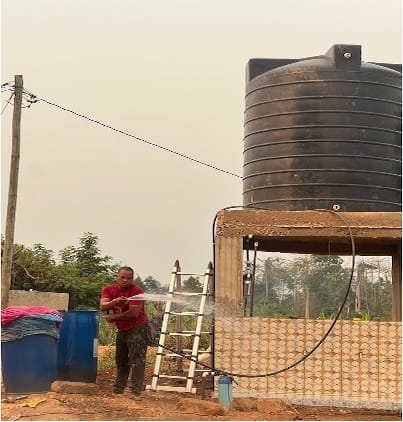
One of the most striking insights was simple but profound: the benefits of enhanced access to clean water. This insight led to the installation of a new borehole and refurbishment of another in the Subinso community (this year, the project funded another new mechanical borehole in the Teshie Praso community). The impact of these boreholes has created a magnifying effect across the local area. In addition to saving time and labour, clean water access helped to power a bakery, as well as supporting a piggery project and seedling nursery.
According to Alhassan Issahaku, Rikolto's Programme Manager, Maeve’s physical presence built trust in a way that no formal partnership agreement could. "It was an unusual occurrence," he noted. "And that made all the difference."
Centring Women Without Tokenism
The name ‘Women for Chocolate’ is intentional, but the project goes far beyond symbolic inclusion. Ensuring that women have equitable opportunities within the cocoa value chain depends on understanding structural barriers such as time constraints, access to finance, and social norms – and designing around them.
Women and young people hold leadership positions within farmer groups. Savings and loans programmes provide financial buffers during non-harvest months. And, critically, women’s voices directly shape project priorities.
Learning Instead of Scaling Too Fast
In under two years, Women for Chocolate has formed 20 community savings groups, and established three livelihood diversification businesses. Despite this meaningful progress, the partners are deliberate about not treating early momentum as a signal to rush expansion.
In development programming, pressure to demonstrate impact often pushes projects toward reporting successes rather than interrogating assumptions. Women for Chocolate is different: monthly calls with all the partners create space for honest reflection and course correction. The logic here is simple but underappreciated – scaling a model before it's properly understood risks replicating its failures at greater cost.
At the same time, this structured yet flexible approach has allowed new ideas to emerge organically. Infrastructure investments and community engagement have enabled diversification into small businesses – a bakery, ginger farming and soap-making – creating additional income streams.
What Chocolate Consumers Rarely See – and Why It Matters
There is a profound disconnect between the experience of consuming chocolate and the reality of producing it. Closing that gap requires companies to highlight the true costs and complexities of cocoa farming.
Companies like Maeve, who have visited the farms, seen the conditions and can speak to them with authority, can be ambassadors for a more honest public conversation about what cocoa farming actually involves. Through this proximity, these companies have the potential to reshape consumer understanding and, ultimately, support more sustainable pricing models.
Looking Ahead: Hope, Risk and Staying the Course
Women for Chocolate is an evolving experiment grounded in trust, learning and long-term commitment.
The early signs are promising: 20 community savings groups, three small businesses, strong partnerships, and a growing ecosystem of community-led initiatives.
But the risks remain: climate change, currency and price volatility and structural inequities will continue to shape outcomes.
What sets this project apart is a refusal to pretend that sustainability is simple. Women for Chocolate is grounded in a determination to close the distance between leadership and on-the-ground realities. Most importantly, it shows that a listening-led approach isn’t just principled – it’s smart business.
- Sponsored content: This article was created in collaboration with SCCA. While it aligns with our audience’s interests, the ideas and content are provided by SCCA, which retains copyright and editorial responsibility. We’re sharing it to offer our readers relevant information and perspectives.