Held in June, the Stakeholder Engagement Workshop convened under the auspices of The Côte d'Ivoire–Ghana Cocoa Initiative (CIGCI) and supported by the EU Sustainable Cocoa Programme brought together representatives from Côte d'Ivoire's Le Conseil du Café-Cacao (CCC) and the Ghana Cocoa Board (COCOBOD) alongside stakeholders from across the cocoa value chain.
The workshop focused on how ARS-1000 can be implemented in ways that reflect the realities and priorities of producing countries while strengthening sustainability, traceability and transparency across cocoa supply chains. Participants also examined how the regional standard can help producers meet evolving international market requirements, including emerging regulatory expectations.
The discussions come at a pivotal moment for the cocoa sector. Only days before the Brussels meeting, the presidents of Côte d'Ivoire and Ghana reaffirmed their commitment to deepen cooperation through CIGCI, strengthening the alliance that has become the leading voice for producer-country coordination in global cocoa markets.
The Future of Cocoa Governance
Since its establishment in 2021, CIGCI has evolved beyond a bilateral initiative into a platform shaping the future of cocoa governance. Building on the 2018 Abidjan Declaration and the introduction of the Living Income Differential (LID), the partnership has championed coordinated farmgate pricing, joint action on cocoa diseases, greater market transparency and the development of ARS-1000 as Africa's regional sustainability and traceability framework.
The Brussels workshop represents another milestone in that strategy. Rather than importing sustainability requirements designed elsewhere, ARS-1000 aims to establish a producer-led framework that places farmers at the centre of sustainability while giving cocoa-producing countries a stronger role in setting international standards.
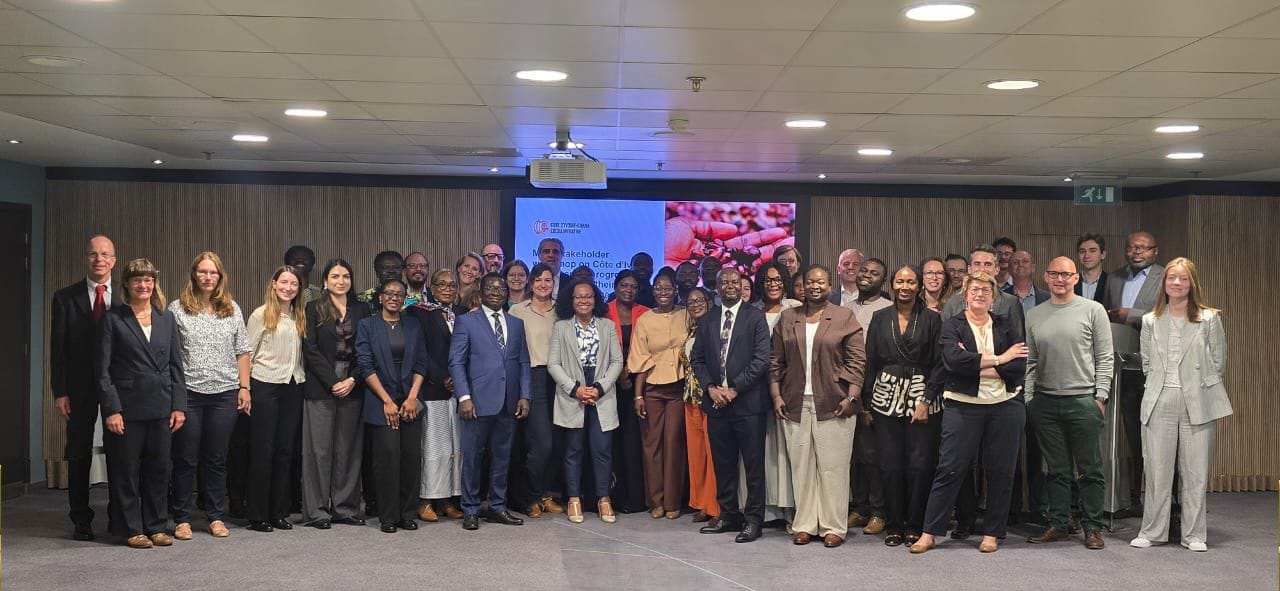
Participants agreed that stronger collaboration between governments, industry and development partners will be essential to building a more equitable, resilient and transparent cocoa economy that improves farmer livelihoods while responding to changing market demands.
Sustainable Investment Facilitation Agreement (SIFA)
The timing is also significant given the European Union's growing engagement with Côte d'Ivoire on sustainable investment and resilient cocoa value chains. In July, the European Commission launched negotiations on a Sustainable Investment Facilitation Agreement (SIFA) with Côte d'Ivoire. Alongside the existing Economic Partnership Agreement, the proposed deal aims to encourage sustainable investment while strengthening cooperation on traceability, sustainability and resilient cocoa supply chains.
For the EU, cocoa remains central to its economic partnership with Côte d'Ivoire, where agriculture accounts for a significant share of European investment. The new agreement is expected to reinforce cooperation on responsible investment and support long-term development across strategic sectors, including cocoa.
Against this backdrop, the Brussels workshop demonstrates how sustainability standards are increasingly becoming part of a wider strategy that links producer-country leadership, investment, market access and value creation. With Côte d'Ivoire and Ghana producing approximately 60% of the world's cocoa – and actively expanding CIGCI to include other African producers – the implementation of ARS-1000 is emerging as a key pillar of Africa's ambition to shape the future governance of the global cocoa sector.
As the joint platform of the Governments of Côte d'Ivoire and Ghana, CIGCI says it remains committed to advancing the vision of both heads of ztate by placing farmers at the centre of sustainability efforts and ensuring cocoa-producing countries play a leading role in defining the future of the industry.
- This article was created in collaboration with CIGCI. While it aligns with our audience’s interests, some of the content was provided by CIGCI. We’re sharing it to offer our readers relevant information and perspectives.