
From our desk to yours. Daily.
Join our growing community of members and receive a free version of our daily newsletter on what really matters in cocoa.
No spam. Unsubscribe anytime.
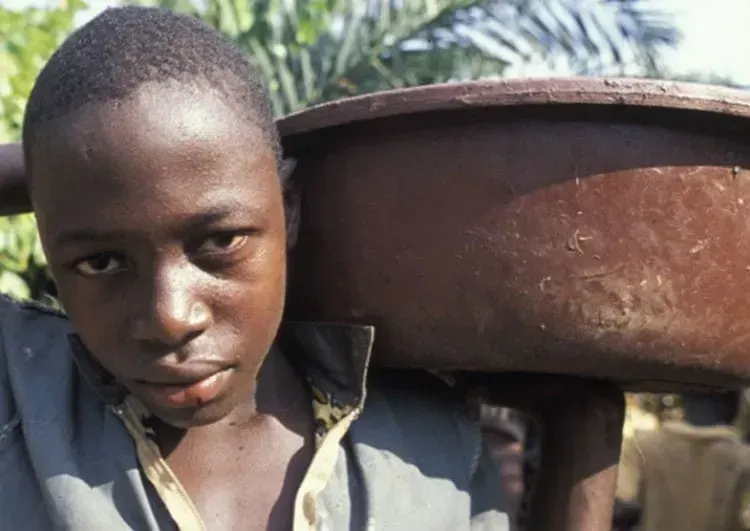
While child labour remains widespread across West Africa, advocates increasingly argue that the issue cannot be solved through supply-chain audits alone. Instead, they say that lasting change requires stronger local institutions, higher incomes for farmers, and greater accountability.
The debate comes as new partnerships and emerging trade policies put renewed attention on labour practices in global supply chains.
Advertisement

Beyond Audits: A Broader Child-Protection Challenge
An initiative announced by International Justice Mission (IJM) and the Government of the Netherlands seeks to strengthen efforts against child trafficking and exploitation in cocoa-growing communities. Rather than focusing solely on corporate compliance programmes, the partnership aims to reinforce local child-protection systems and criminal justice institutions.
Speakers involved in the initiative argued that trafficking and forced labour are often less visible than child labour itself. Children may be moved across communities or borders and exposed to hazardous agricultural work that is difficult to detect through traditional supply-chain monitoring.
The programme focuses on training police, prosecutors and social welfare officers, improving case identification and ensuring traffickers are held accountable. It also emphasises prevention through community awareness, education and support services for vulnerable families.
Participants stressed that governments, companies, civil society and communities all share responsibility. No single actor, they argued, can eliminate child exploitation alone.
Poverty Remains A Central Driver
According to the International Labour Organization, an estimated 160 million children worldwide remain involved in child labour, with more than 54 million engaged in hazardous work. Sub-Saharan Africa accounts for nearly two-thirds of all cases.
Campaigners point to several underlying causes:
- Low farmer incomes and poverty.
- Limited access to education.
- Weak child-protection systems.
- Inadequate law enforcement and social services.
- Social norms that may normalise children’s participation in dangerous work.
The theme for World Day Against Child Labour 2026 — ‘Red card to child labour: Fair play for children, decent work for adults’ — reflects growing recognition that addressing poverty and creating decent employment for adults are essential to protecting children.

Tony’s Chocolonely Offers A Transparent Case Study
Few companies report on child labour as openly as Dutch chocolate maker Tony’s Chocolonely.
In its recent annual report, the company disclosed that the number of child labour cases identified through its Child Labour Monitoring and Remediation System rose to 3,448 during the latest reporting period. At first glance, the increase appears alarming. However, Tony’s attributes much of the rise to expanded monitoring as additional cooperatives joined its Open Chain programme.
Importantly, the company reports significantly different prevalence rates between long-term partner cooperatives and newer suppliers. Child labour prevalence averages around 4% among established partners, compared with roughly 13% in newer cooperatives. By comparison, studies have estimated the prevalence of child labour across the wider cocoa sector at approximately 46.7%.
Tony’s approach does not involve automatically excluding affected families from its supply chain. Instead, remediation focuses on school attendance, household support and long-term engagement, with most cases addressed within nine months.
The figures illustrate both progress and complexity. Greater transparency often results in more cases being identified, not fewer. Experts argue that finding cases should not necessarily be interpreted as failure, but as evidence that monitoring systems are functioning.
Questions remain, however. Investors and observers continue to ask how many identified cases are fully remediated and what barriers prevent prevalence from falling below the current 4% level among long-term partners.
Belinda Borck, External Affairs & Reporting lead, at Tony's Open Chain, told CocoaRadar: “Bringing child labour prevalence below 4% is not just a matter of comprehensive monitoring of all households and remediation, we further support community child protection structures to ensure a holistic approach beyond our supply chain.
“Driving the prevalence rate down also fundamentally requires addressing the structural conditions that make child labour persist in the first place. The biggest barrier remains farmer poverty, which requires sustained, sector-wide collaboration from governments, industry, and civil society to ensure living incomes, structural farming services, and shared accountability across the entire cocoa value chain are enabled.”
Mondelēz releases Human Rights report
Mondelēz International is also observing World Day Against Child Labour by releasing its 2025 Human Rights Due Diligence and Modern Slavery Report, which outlines the company’s continued progress in helping prevent, identify, and address potential human rights and modern slavery risks across its operations and value chain.
“We continue to believe that helping to drive positive change at scale across the communities our business touches is an integral part of value creation. Simply put, we believe that more sustainable business is, and always will be, good business,” said Darren O’Brien, Chief Corporate & Government Affairs Officer & Chief Cocoa Officer, Mondelēz International. “That’s why an enhanced human rights due diligence approach enables us to increase focus and scale, meeting our long-term goals and addressing systemic human rights issues in ingredient supply chains through meaningful partnerships.”
As part of its focus on prioritised ingredients, Mondelēz continued scaling its signature cocoa sustainability programme, Cocoa Life, in 2025 and claims to have reached its 2025 goal of ~100% Child Labour Monitoring & Remediation Systems (CLMRS) coverage of Cocoa Life communities in West Africa – representing approximately 2,300 communities.
Trade Tensions Add Another Layer
Labour issues are also becoming increasingly intertwined with international trade policy.
The United States recently proposed new tariffs on imports from dozens of economies, arguing that countries have not done enough to prevent goods produced with forced labour from entering global supply chains. The move has prompted criticism from several trading partners, including the European Union, which maintains that it already operates some of the world’s strictest due diligence rules.
The debate highlights how labour standards are evolving from a corporate social responsibility issue into a geopolitical and regulatory concern.
Progress Remains Uneven
Despite years of certification programmes and corporate commitments, child labour has not disappeared from cocoa production. Yet experts increasingly believe the solution lies not simply in auditing farms, but in strengthening the institutions that protect children and addressing the economic realities facing farming families.
The challenge is unlikely to be solved quickly. But the emerging consensus among governments, NGOs and companies is that lasting progress depends on combining transparency, law enforcement, education and higher incomes for farmers.
Finding more cases, advocates argue, may ultimately be a sign that systems are beginning to work – provided those cases lead to meaningful remediation and prevention.