
From our desk to yours. Daily.
Join our growing community of members and receive a free version of our daily newsletter on what really matters in cocoa.
No spam. Unsubscribe anytime.
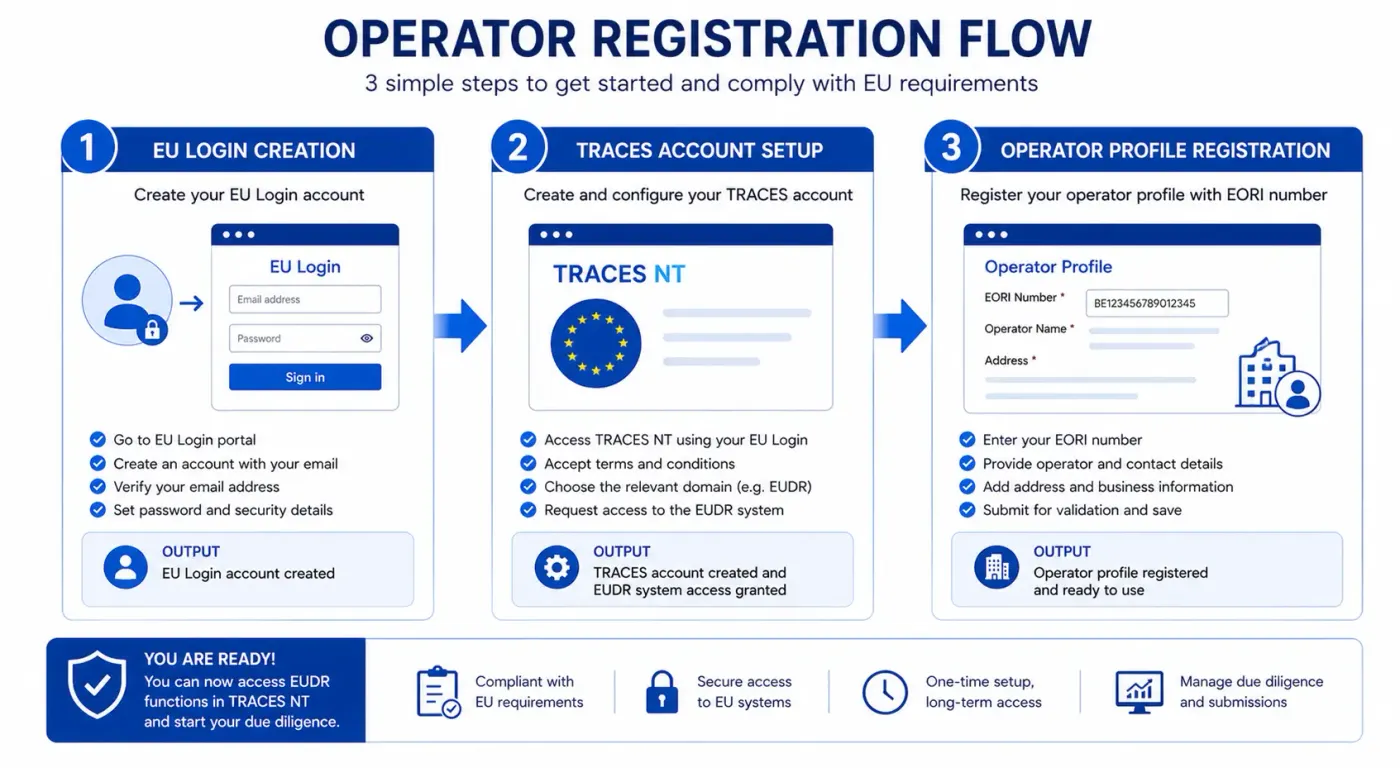
The Implementing Act sets the technical rules for the digital platform through which operators will submit due diligence statements and simplified declarations. According to the Commission, the updated system includes operational simplifications requested by Member States and industry, including simplified declarations for micro and small primary operators and updated application programming interface (API) specifications to facilitate automated reporting.
The Commission says further system functionality will be added later this summer. The Information System reopened at the end of June following technical updates, with training sessions for companies due to begin at the end of July.
 Anthony Myers
The adoption comes after more than a year of scrutiny over the readiness of the digital infrastructure underpinning the EUDR.
Arnaud Dupuis from Farmforce said: “The system getting easier to file into doesn't mean there's more time. If anything, a working system removes the last excuse to wait on testing your own data flows before December.”
Earlier this month, Dutch investigative journalism platform Follow the Money (FTM) published an extensive investigation, based on internal correspondence and Commission documents, alleging that officials had been aware of significant weaknesses in the Information System for several years before the implementation was delayed.
Advertisement

According to FTM's reporting, companies, Members of the European Parliament and industry groups repeatedly warned the Commission that the system was not ready to support the regulation at scale.
FTM reports that internal documents suggest concerns about the capabilities of the underlying TRACES platform were raised as early as 2023, while questions remain about whether sufficient stress testing was ever conducted.
The investigation also examines whether political considerations – including pressure from trading partners and lobbying by several Member States – may have contributed to the repeated postponements.
The European Commission has consistently maintained that implementation decisions were taken to ensure effective and workable application of the legislation.
The Commission's latest announcement makes no reference to the previous delays but states that the new measures are intended to provide businesses, Member States and partner countries with "greater legal certainty and predictability" ahead of implementation.
Product Scope Updated
Alongside the Information System rules, the Commission adopted a Delegated Act updating Annex I of the regulation, refining the list of products covered by the EUDR.
Several products have been removed from the scope, including cattle hides, skins, and leather; retreaded tyres; soybeans for sowing; articles of vulcanised rubber; conveyor and transmission belts; and aircraft and motor vehicle seats.
Meanwhile, soluble coffee, certain palm oil derivatives and frozen cattle tongues have been added. Newly added products will not become subject to the regulation until 30 December 2027, giving businesses an additional year to prepare.
The Delegated Act also clarifies that samples used for testing and analysis fall outside the regulation, while introducing targeted exemptions covering specific waste streams, used and second-hand products, certain packaging materials and products used in the manufacture of medicinal products.
The Commission emphasised that these amendments affect only the list of products derived from the seven regulated commodities – not the commodities themselves.
Completing The Simplification Package
The two legal acts complete the Commission's simplification package announced in May 2026, alongside revised Guidance and Frequently Asked Questions that have now been adopted in all official EU languages.
Environment Commissioner Jessika Roswall said the package provides "the clarity and predictability that businesses, Member States and our international partners need" ahead of implementation.
Under the current timetable, the EUDR will apply from 30 December 2026 for large and medium-sized operators, as well as micro and small operators already covered by the EU Timber Regulation. Other micro and small operators will follow on 30 June 2027.
Uncertainty Remains
For companies across cocoa, coffee, palm oil, soy, rubber, timber and cattle supply chains, the Commission's latest measures remove several outstanding legal uncertainties around product scope and digital reporting requirements.
However, questions surrounding the Information System itself are unlikely to disappear quickly.
As highlighted by Follow the Money, businesses have already invested heavily in developing deforestation-free supply chains while navigating shifting implementation dates and evolving compliance requirements.
The publication's investigation argues that unresolved questions about the management of the Information System – and the reasons behind the repeated postponements – continue to affect confidence in one of the EU's flagship environmental regulations.
With less than six months before large operators are expected to begin submitting due diligence information, industry attention will now turn to whether the Commission can demonstrate that the Information System is capable of handling the scale and complexity required for full implementation.
- From the Desk of CocoaRadar is the official media partner ECA 9th European Cocoa Forum.
- 'From Our Desk. To Yours. Daily.'
- Sign-up here for free and upgrade to an annual plan.