The cocoa sector has spent decades saying farmers need to earn more. When cocoa prices rose sharply, and some farmers finally did, the industry called it a crisis.
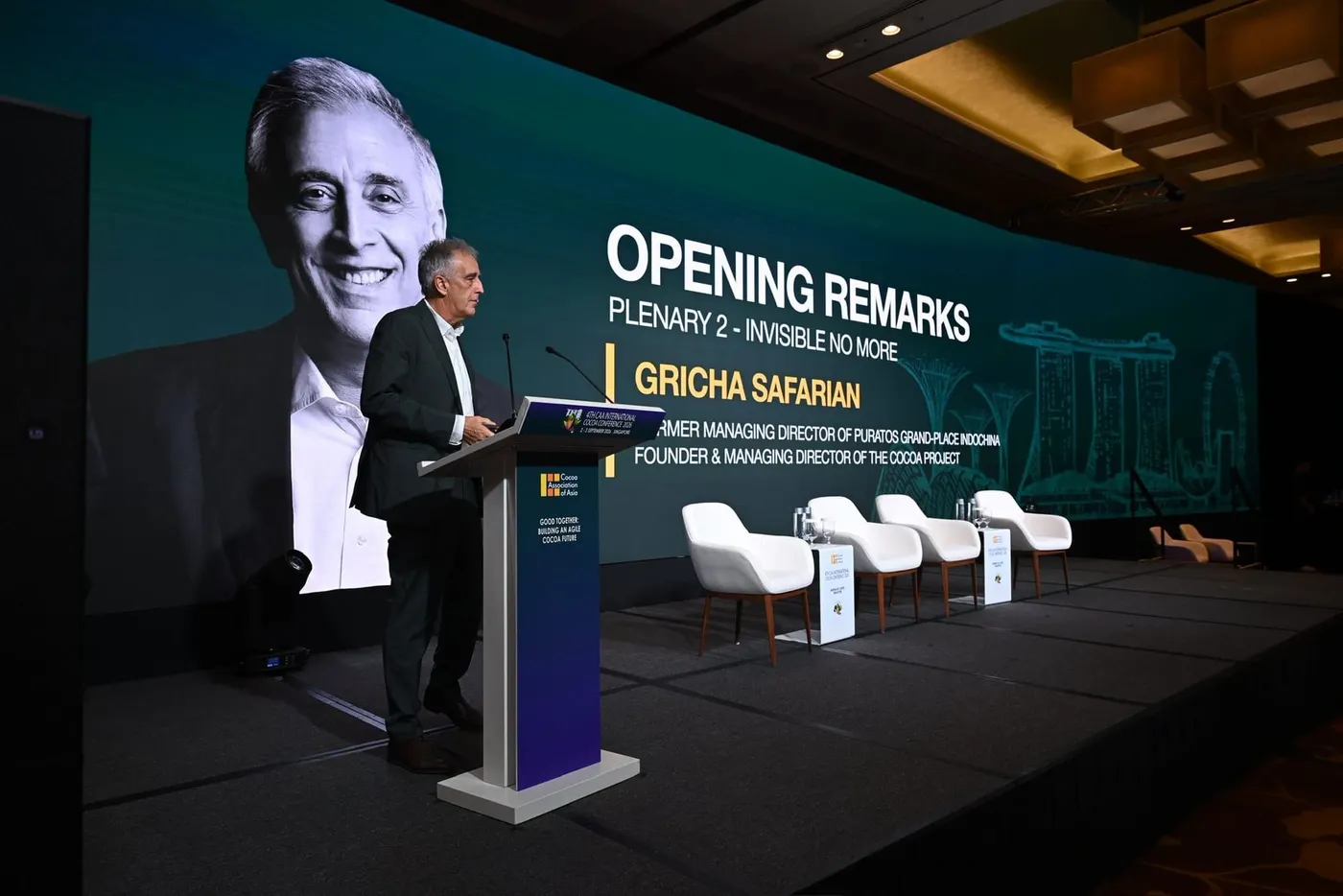
To Gricha Safarian, founder and general manager of The Cocoa Project and a shareholder and former general manager of Puratos Grand-Place Indochina, that contradiction sounds like two musical notes that do not belong together.
Opening a plenary session on farmers, women and young people at the recent CAA International Cocoa Conference in Singapore, Safarian returned to a question he had put to delegates two years earlier.
Advertisement

“Do we make sense? Do we, as an industry, as a cocoa and chocolate supply chain, do we make sense? Today I have the answers. We totally don't make sense. We are a very, very strange supply chain.”
Safarian described the resulting tension in musical terms.
“Dissonance is when you have two musical notes that don't fit together,” he said. “Dissonance is about tension, and we have serious dissonance in our supply chain.”
A Crisis for Whom?
In Safarian’s analysis, the first discordant note is the sector’s response to higher cocoa prices.
For years, companies and sustainability programmes have highlighted low farmer incomes as one of the industry’s defining problems. But when prices rose in 2024, allowing farmers in Vietnam to receive more for their crop, the reaction elsewhere in the supply chain was alarm.
“Our supply chain calls this the most terrible crisis we ever had in our life,” Safarian said. “The crisis was paying farmers for the right price.”
His argument was not that volatility creates no difficulties. Rapid price movements can pressure manufacturers, disrupt contracts, and force companies to reconsider products and pricing. His concern was that the language of crisis revealed whose interests the industry placed first.
He argued the same tension could be seen in the growth of cocoa alternatives. While companies speak about securing cocoa’s future, research and development budgets are increasingly being directed towards products designed to use less – or no – cocoa.
Safarian described this as “cocoa-free chocolate, which I decided to call farmer-free chocolate”.
He also criticised manufacturers’ response to higher input costs, claiming reformulation had reduced the cocoa content of chocolate products worldwide by approximately 10% (his estimate).
“So I don't know where this is going, but not in the right direction,” he said.
Turning Value Into a Virtuous Circle
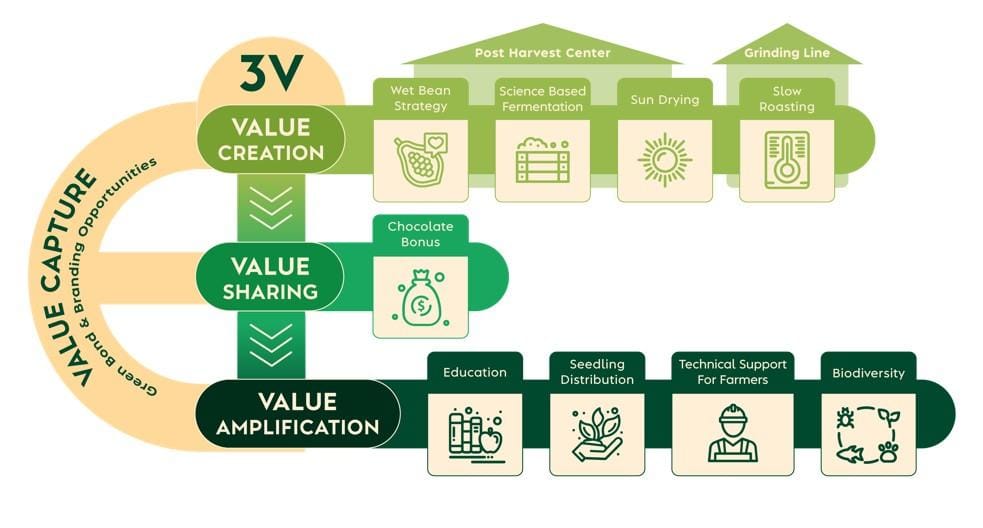
Safarian’s proposed answer is a three-part business model built around value creation, value sharing and value amplification – the ‘3V’ framework.
Value creation begins with the product itself. Instead of treating cocoa principally as a cost to be minimised, Safarian argued that companies should generate more value by producing better-tasting chocolate.
For Vietnam’s cocoa sector, that has meant focusing on science-based fermentation, slow roasting, and a tightly controlled process that turns fruit on the tree into finished chocolate within 60 days.
Safarian was not modest about the results.
“Vietnam, which is very low on the map of cocoa-producing countries, is actually where I believe – I don't want to offend any of my competitors here – but the best chocolate in the world today is made in Vietnam,” he said.
The broader comparison is with wine. Over generations, the wine sector has taught consumers to recognise differences in origin, varieties, processing and flavour. Those distinctions allow producers to move beyond a commodity proposition and capture more value.
Safarian argued that cocoa should follow a similar path: focusing innovation on flavour and provenance rather than simply finding ways to reduce or replace its defining ingredient.
Creating value, however, is only the first step. The 3V framework holds that some of the additional value must be shared with those responsible for producing the cocoa.
The approach underpins Puratos’s Cacao-Trace programme, which began in Vietnam and now operates in eight cocoa-producing countries. Puratos says the programme pays farmers a quality premium for suitable beans and collects a Chocolate Bonus for every kilogram of Cacao-Trace chocolate sold. It returns the money to farming communities either as direct payments or through community projects.
The third component, value amplification, is intended to extend the benefits beyond an individual product or transaction through education, research and wider collaboration.
Safarian pointed to Puratos’s €1bn sustainable financing transaction as evidence that a model combining commercial value with social and environmental goals could also attract large-scale capital. Puratos said the 20-year financing would support purchases of more Cacao-Trace-certified beans directly from farmers, as well as investment in post-harvest centres and grinding capacity.
From Silicon Valley to Cocoa Valley
Safarian’s most ambitious proposal borrows its name from the technology sector: Cocoa Valley.
The analogy with Silicon Valley is deliberate. Instead of concentrating technology companies, venture capital, and software expertise in one place, Cocoa Valley aims to bring together researchers, farmers, companies, and educational institutions around the future of cocoa.
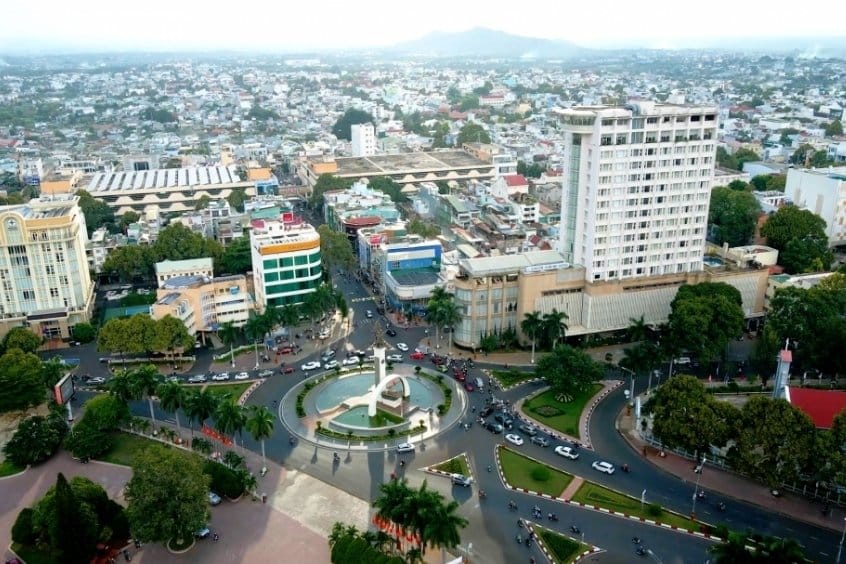
Launched in Dak Lak, Vietnam's coffee capital, the initiative is a collaboration between Puratos Grand-Place Indochina, The Cocoa Project, Tay Nguyen University and the Western Highlands Agriculture and Forestry Science Institute.
Safarian describes it as a farmer-centred, pre-competitive platform. Its work includes fine-cocoa agronomy, intercropping strategies, clone selection, flavour, biodiversity and farmer incomes.
“Today, everybody understands the future of the cocoa supply chain has to go through a pre-competitive collaboration between all the stakeholders,” he told delegates.
Pre-competitive collaboration means companies working together on problems affecting the entire sector before competing in the marketplace. In this case, the ambition is to build shared knowledge on how to grow and process cocoa more successfully, rather than keeping that research within one company.
The plans include a two-year university curriculum for the next generation of cocoa farmers, as well as a research centre examining which combinations of cocoa and other crops can produce the best economic outcomes for growers.
For now, he said, his organisation was funding the initiative itself. But its research and programmes were not intended to remain proprietary.
“All this is open to all our competitors right now,” he said.
That openness is central to the Cocoa Valley proposition. Safarian argues that the most persistent problems in cocoa – from farmer poverty and biodiversity loss to inconsistent quality – cannot be solved by individual sustainability projects operating in isolation.
Women as an Existing Workforce
Safarian also addressed the role of women, although in a notably different way from speakers who frame gender equality principally as a future objective.
“Women in Cocoa, I don't have much to say because in my company we have 65% women, and Vietnam is a country that is driven by women,” he said.
His remark presented women’s participation as an existing feature of his Vietnamese business rather than a new target. The talk did not identify which company the 65% figure referred to, but Safarian said women were already central to Vietnam's business and economic life.
Education received greater emphasis as the mechanism for bringing a new generation into cocoa. The proposed university curriculum would give young farmers access to scientific and business knowledge, while the intercropping research would seek to identify farming systems that can support more resilient incomes.
Advertisement

Safarian also challenged the assumption that increasing yield should always be the sector’s primary objective. Greater production without sufficient demand or mechanisms for sharing value could place downward pressure on farm-gate prices, he argued.
For him, the future rests not on producing the greatest possible volume of undifferentiated cocoa, but on equipping farmers to produce higher-value cocoa on diversified, environmentally resilient farms.
Resolving the Dissonance
Safarian’s presentation offered the industry two divergent paths.
One leads towards lower cocoa content, reformulation and alternatives that separate chocolate-like products from cocoa farmers. The other seeks to make cocoa more valuable by investing in flavour, scientific processing, farmer education and shared prosperity.
The second path does not reject commercial performance. The 3V proposition is that better products, stronger farmer incomes and viable businesses can reinforce one another.
That is the ‘consonance’ Safarian set against the tensions in the current supply chain: farmers receiving more because better cocoa creates more value; companies succeeding because they share enough of that value to sustain production; and research spreading beyond one company through a common platform.
Cocoa Valley is still in its early stages, and questions remain about its scale, governance, and ability to attract competitors. But its premise is clear. If the industry wants a secure cocoa future, Safarian believes it must stop treating the people who grow cocoa as a cost to be engineered out of the product.
The challenge is not simply to keep chocolate affordable. It is to build a chocolate economy in which the fruit, the farmer and the finished product are finally playing the same tune.
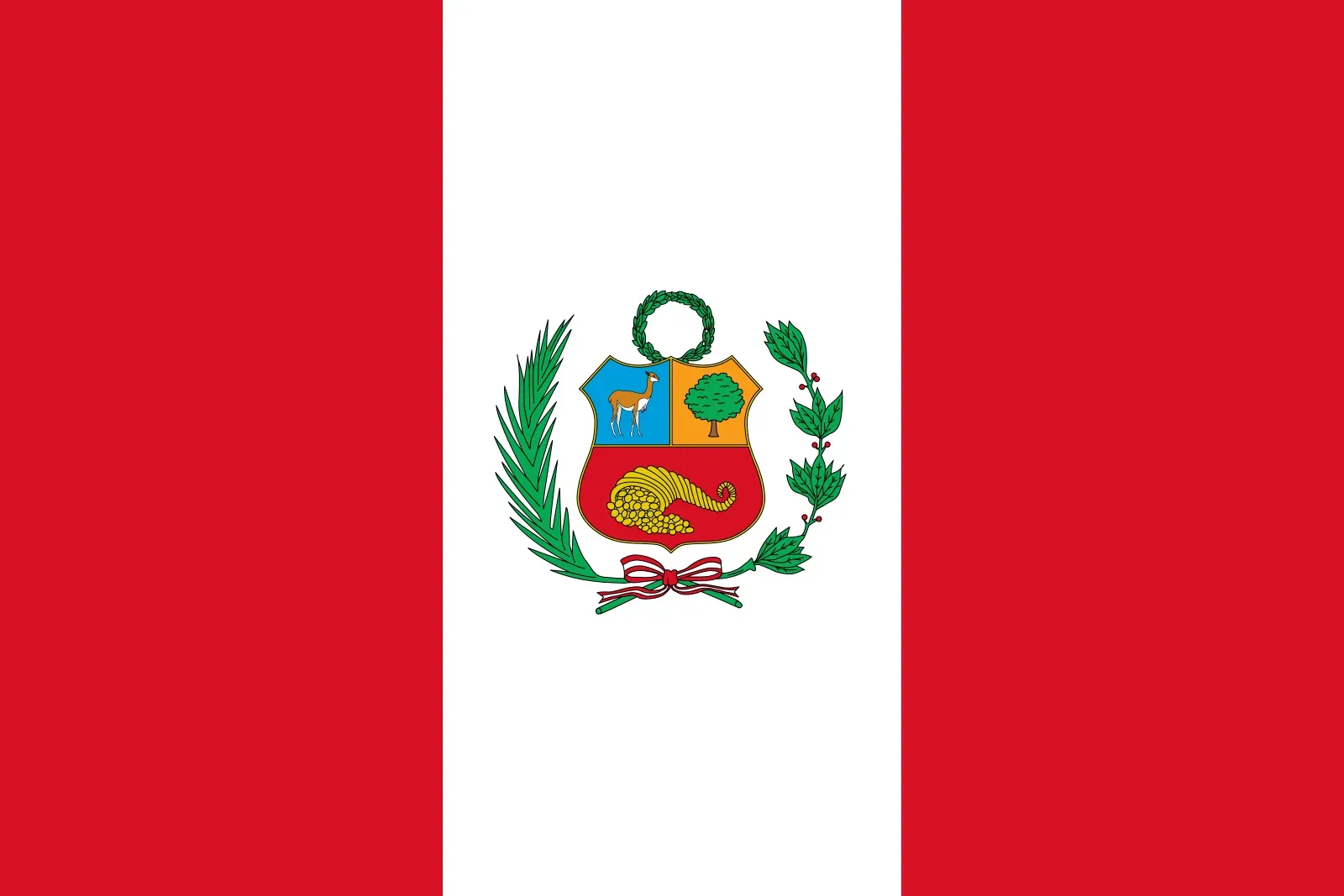
CocoaRadar in Peru
During October 2026, CocoaRadar will publish a series of articles exploring the Peruvian cocoa economy.
Commercial: philippe@cocoaradar.com Editorial: tony@cocoaradar.com