
Our latest impact report reveals that almost 70,000 hectares were planted in agroforestry over three seasons, representing approximately 60% of targets reached since the programme’s launch in 2018.
Between 2023 and 2025, AGROMAP NBS, the group’s subsidiary dedicated to nature-based solutions, moved from pilot projects to large-scale programmes. Its impact report shows how this growth has been accompanied by a consistent focus on traceability, measurement and benefits for producers.
The context makes the report particularly timely. With traceability and zero-deforestation requirements, climate pressure on plantations and chocolate makers’ growing expectations of verifiable impact, the sector needs operators capable of acting on the ground and providing evidence of their results.
Cocoa Agroforestry Enters a New Dimension
Over the period, some 40,000 producers were supported, bringing the number of beneficiaries to nearly 70,000 since 2018. The principle is simple: to reintroduce trees in and around cocoa plots to restore soil fertility, store carbon and make farms more resilient to climatic hazards.
What has changed is the scale.
The system relies on field teams in six countries in West and Central Africa and close monitoring of the plots.
As Patrice ADAYE, Founder & CEO of AGROMAP Group, said: "We don't measure our impact by the number of trees planted, but by the trust built, the income consolidated and the ecosystems restored."
More Resilient Producers, Not Just More Trees
The report emphasises one conviction: the sustainability of a programme depends on its ability to improve households’ economic situation over the long term.
More than three in four households supported now undertake a complementary activity, such as livestock farming, market gardening or running a small business.
In addition, most projects include a mechanism for payments for environmental services, made via mobile money.
On the ground, the effects can be seen in the plantations. Kouassi Michel, a cocoa farmer who has received support for seven years, says his yield has increased from roughly 450kg to nearly 600kg of cocoa per hectare, with improved bean quality and income that has more than doubled.
Traceability and Science: Proving the Impact
For buyers, a result that cannot be verified counts for little. The group states that all the village plantations it supports are geolocated. Its subsidiary, AGROMAP Technology, helps everyone in the supply chain comply with EUDR regulations and the ARS 1000 standard through the AKIDOMPRO tool.
The effort also extends to research. Work carried out by AGROMAP on estimating tree height using airborne laser scanning, published in the journal Sustainable Forestry, confirms the technology’s potential to monitor cocoa-based agroforestry systems and estimate their carbon stocks.
Biodiversity is also beginning to respond: three years after the establishment of a community reforestation plot in Agnéby-Tiassa, a harnessed bushbuck, a sub-Saharan antelope, was recorded by a camera trap a sign of the return of species that depend on forest habitats.
KARIDJA: Towards Restoration at the Landscape Scale
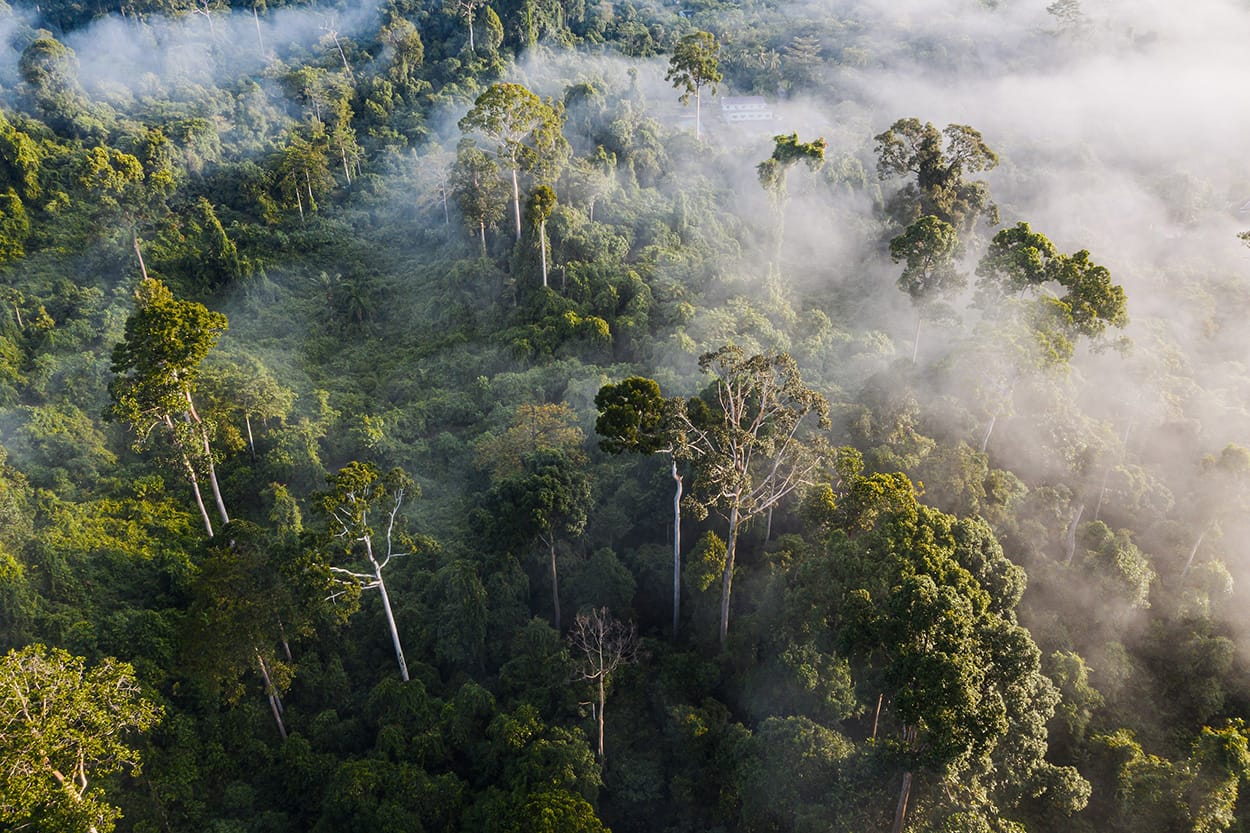
The period ended with a major milestone: the Ivorian Council of Ministers’ adoption, on 3 December 2025, of the concession agreement for the KARIDJA project, dedicated to rehabilitating degraded areas and conserving biodiversity in the Haut-Sassandra Agro-Forest.
Covering 70,000 hectares, the project aims to generate an estimated climate impact of 35 million tonnes of CO₂ equivalent, while contributing to ecosystem restoration and the socio-economic development of local communities.
Alongside its environmental objectives, the project provides for support for 13,000 farm managers directly affected, the creation of at least 2,000 direct and indirect jobs, and improvements to the living conditions of nearly 100,000 people.
In 2026, the first phase of implementation began, with 100 hectares reforested.
The momentum will continue with targets of 1,412 hectares in 2027 and 5,000 hectares in 2029, in accordance with the development plan, which aims eventually to reach about 24 million seedlings across the project’s entire 70,000 hectares.
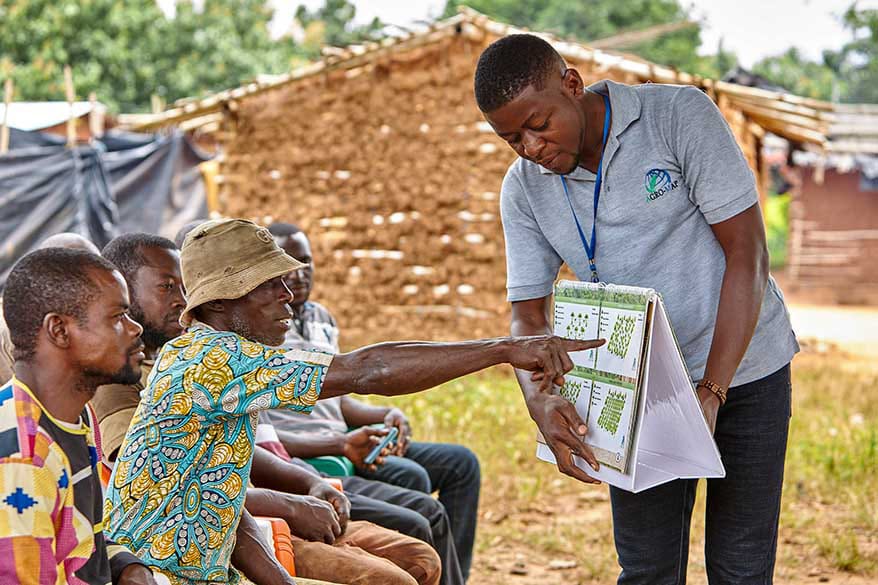
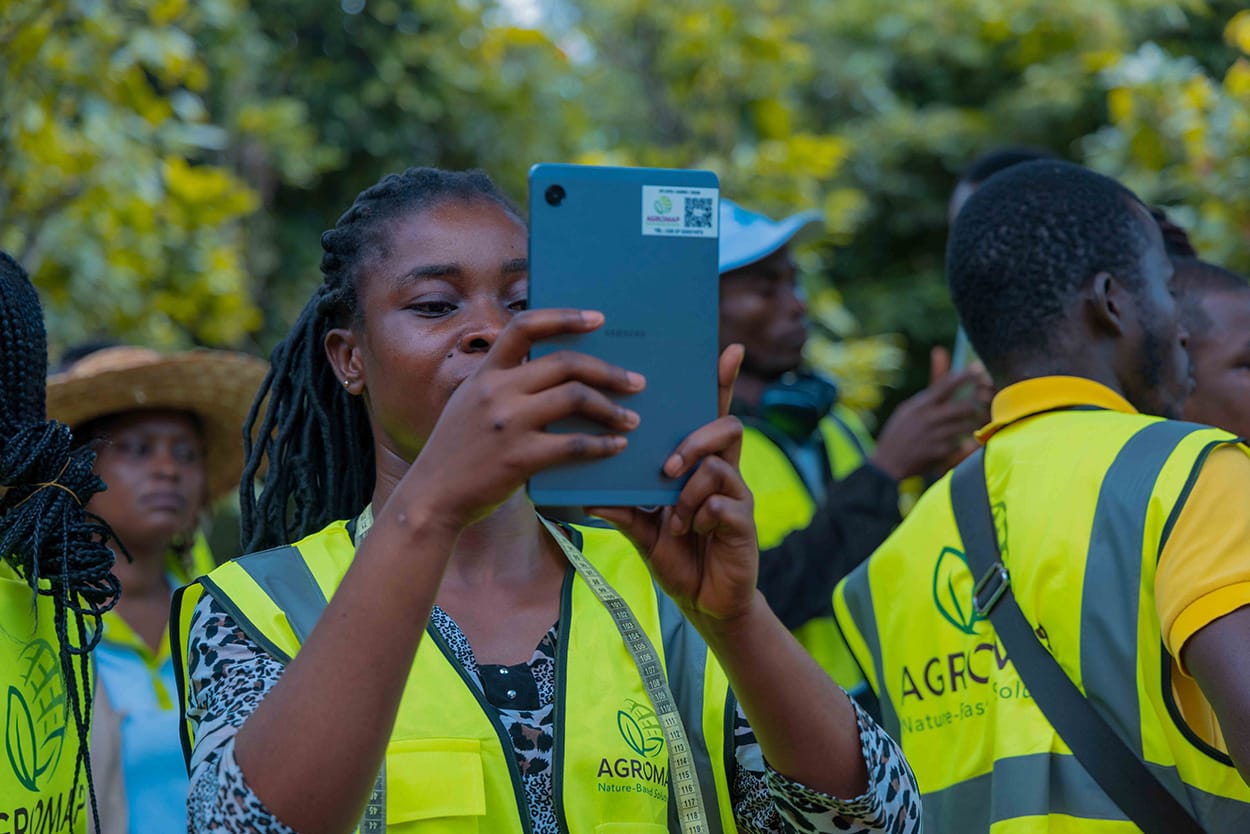
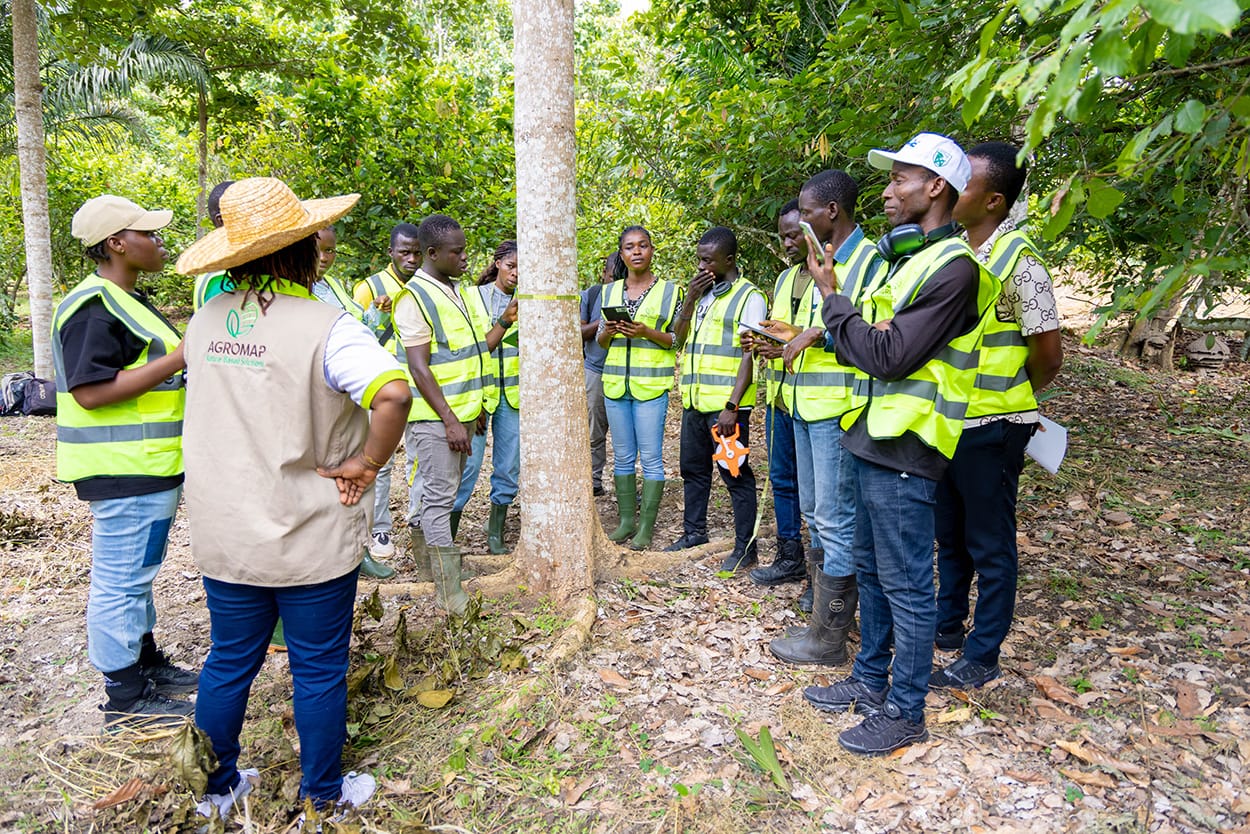
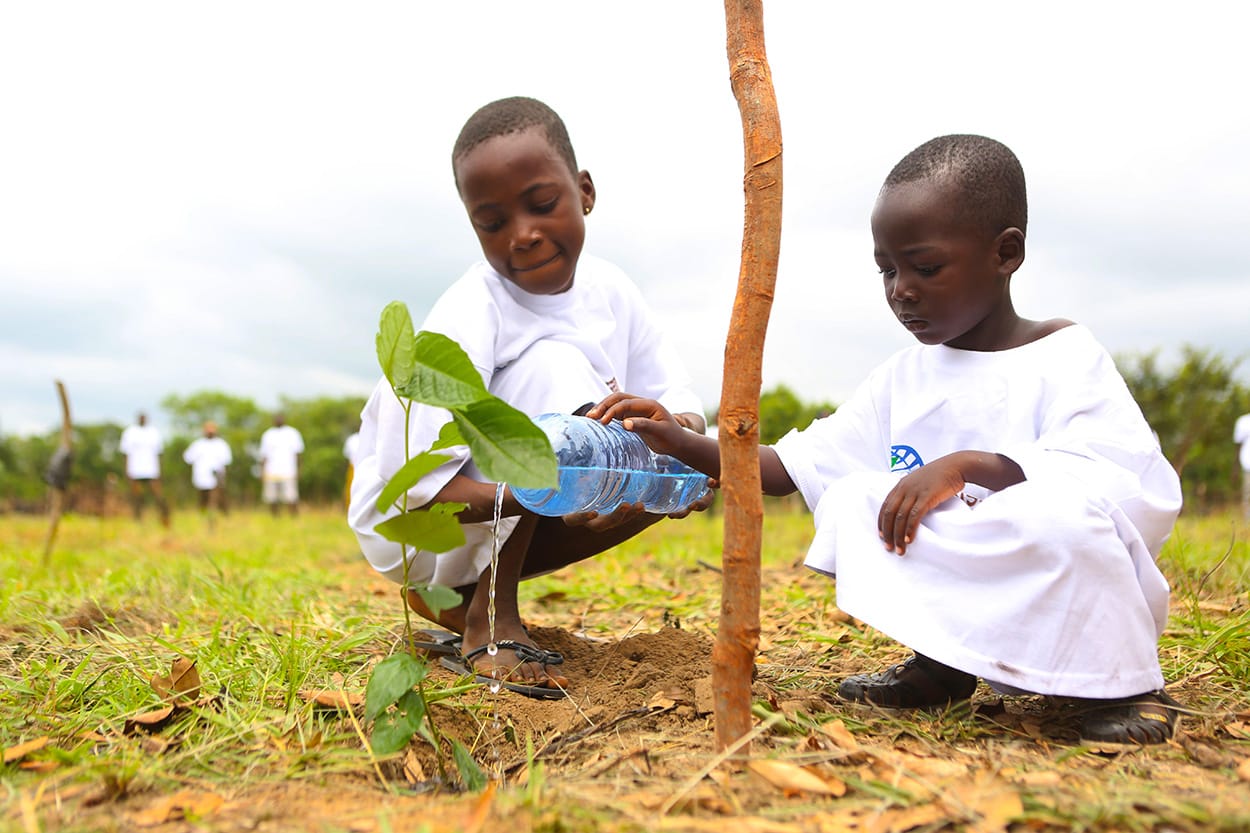
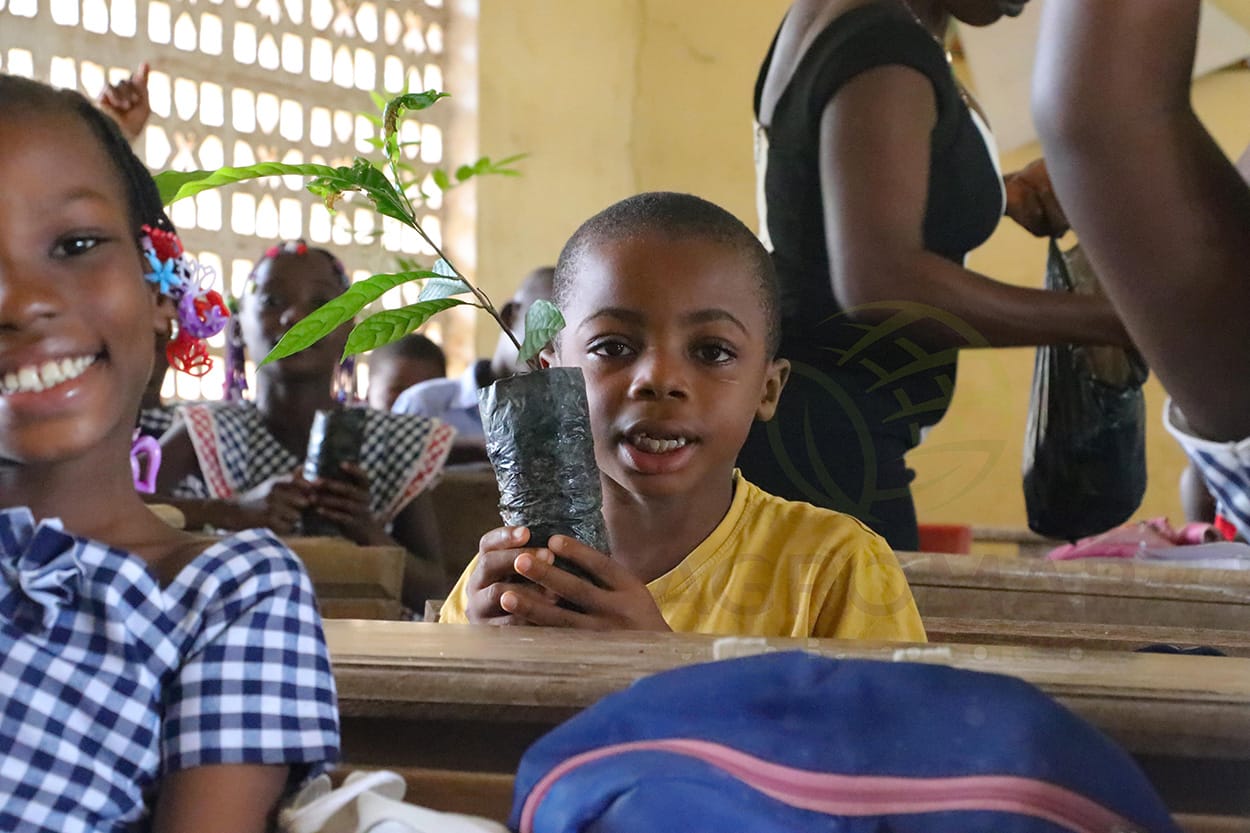
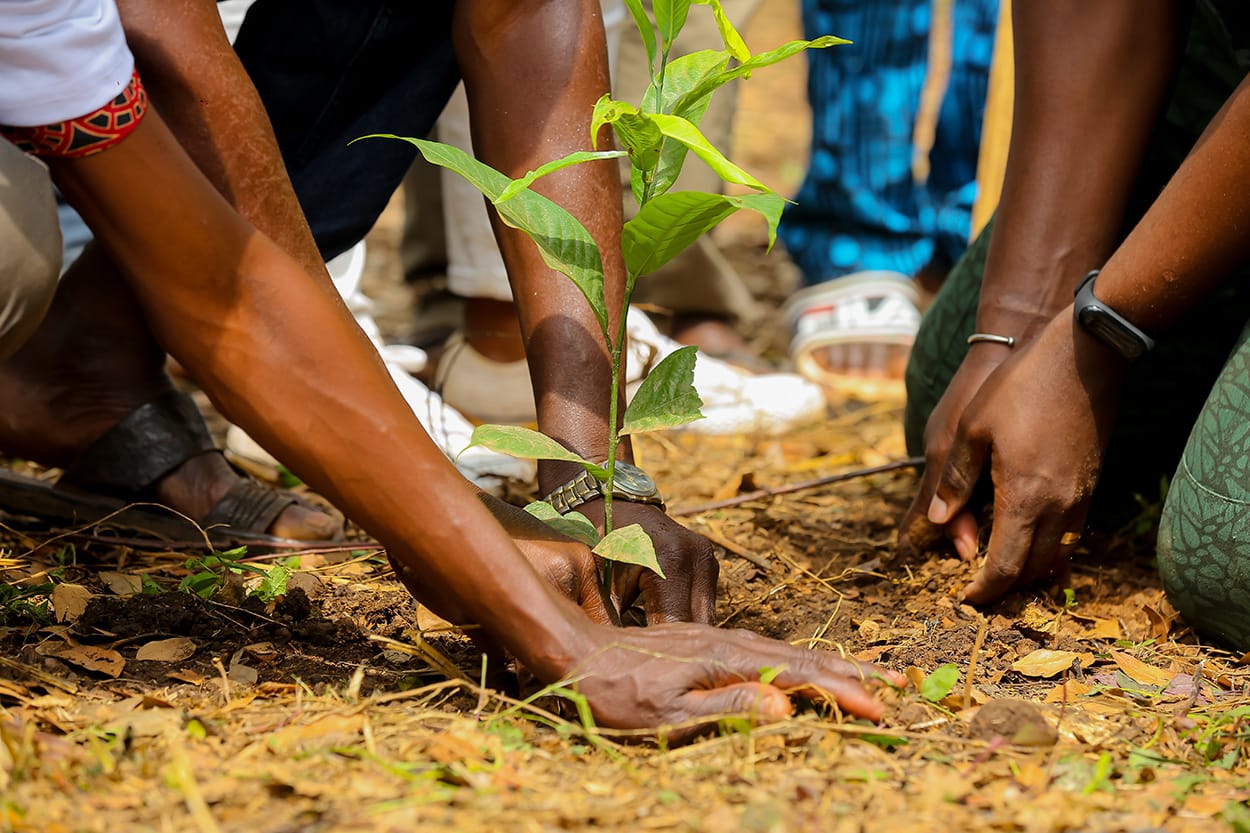
AGROMAP's various programmes help everyone in the supply chain produce sustainable cocoa. Image: Agromap
A Proven Implementation Partner
Throughout its campaigns, the AGROMAP Group has collaborated with chocolate makers, traders, certification bodies and development partners, including the World Bank, GIZ, UNDP and FAO.
It is also the Organization for Biodiversity Certificates’ (OBC) Country Leader for Côte d’Ivoire and a member of the International Platform for Insetting (IPI).
In 2023, the group won first prize in the National Award of Excellence for the Best Reforestation Actor in Côte d’Ivoire, a distinction that contributed to its elevation, in 2025, to the rank of Commander of the Ivorian Order of Agricultural Merit.
The next step is to consolidate these achievements: roll out broader programmes, structure innovative financing and keep producers at the centre of environmental solutions.
Special Edition: Impact Report 2023–2025
The 2023–2025 Impact Report presents all the indicators for the period, the monitoring methodology, the theory of change, producer testimonies and the activities carried out in each country of operation.