
From our desk to yours. Daily
Now's the time to join our growing community of PRO members and benefit from a 10% discount on an annual licence as we celebrate our 2ND birthday!
No spam. Unsubscribe anytime.
Five years since the UK left Europe, few sectors illustrate that ambition more clearly than novel foods –and few companies embody it better than London-based Win-Win.
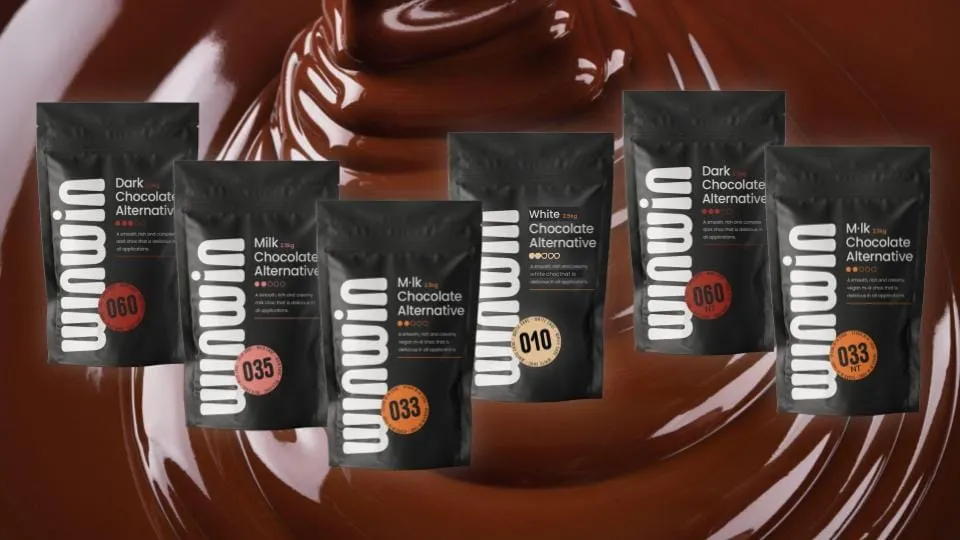
Founded in London in 2021, Win-Win has developed a cocoa-free alternative to chocolate at a time when the traditional cocoa supply chain is under unprecedented pressure from climate change, disease and price volatility. Using a proprietary rice-based fermentation process, the company has moved from laboratory concept to commercial production, supplying bakery, ice cream and dessert manufacturers in the UK and Europe with six product formats spanning milk, dark and white alternatives.
For chief executive Mark Golder, who joined the company in 2024 after a three-decade career in food, the mission is not to replace chocolate but to provide the industry with a resilient alternative.
Advertisement

“We’re here to provide a more sustainable alternative for the industry so consumers can continue to enjoy the chocolatey treats they’re accustomed to enjoying, but with fewer issues,” he says.
A Post-Brexit Opportunity
The Brexit vote 10 years ago left Britain with the EU’s inherited novel foods framework, but with greater flexibility over how it is applied. The Food Standards Agency has increasingly sought to engage with emerging food technologies and, in 2025, launched what has been described as Europe’s first regulatory sandbox for cell-cultivated products.
That more innovation-friendly approach has helped create an ecosystem in which companies developing alternative ingredients – from cultured fats to fermentation-derived products – can scale more quickly.
Win-Win sits squarely within that movement.
"For us at Win-Win, Brexit hasn't been a defining factor in our innovation journey. We've focused on developing delicious cocoa-free alternatives using established food processes that can be scaled commercially, and ultimately, demand for alternatives is being driven by structural challenges in cocoa rather than changes to the regulatory landscape," says Golder.