
From our desk to yours. Daily.
Join our growing community of members and receive a free version of our daily newsletter on what really matters in cocoa.
No spam. Unsubscribe anytime.
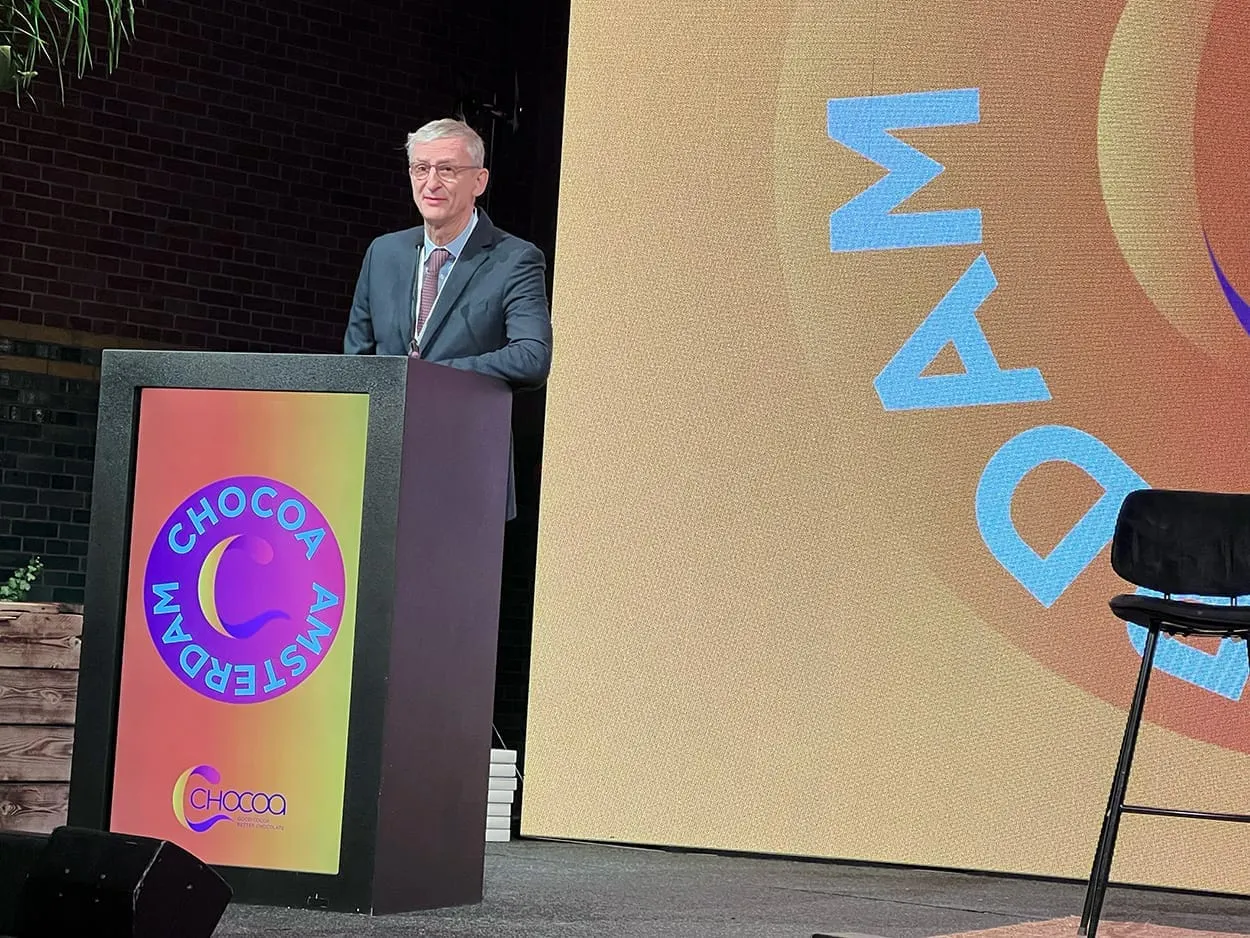
What was, until recently, a strategic narrative is now evolving into operational reality. The recent emergence of a new consultancy role – Project Director for ‘The Italian Vision for a Sustainable Cocoa Value Chain’ comes after Italian Minister Plenipotentiary Stefano Gatti outlined a decisive shift in Italy’s approach to agricultural development – particularly in cocoa and coffee - at the Chocoa 2026 Conference in Amsterdam (first reported by cocoaradar.com)
 Anthony Myers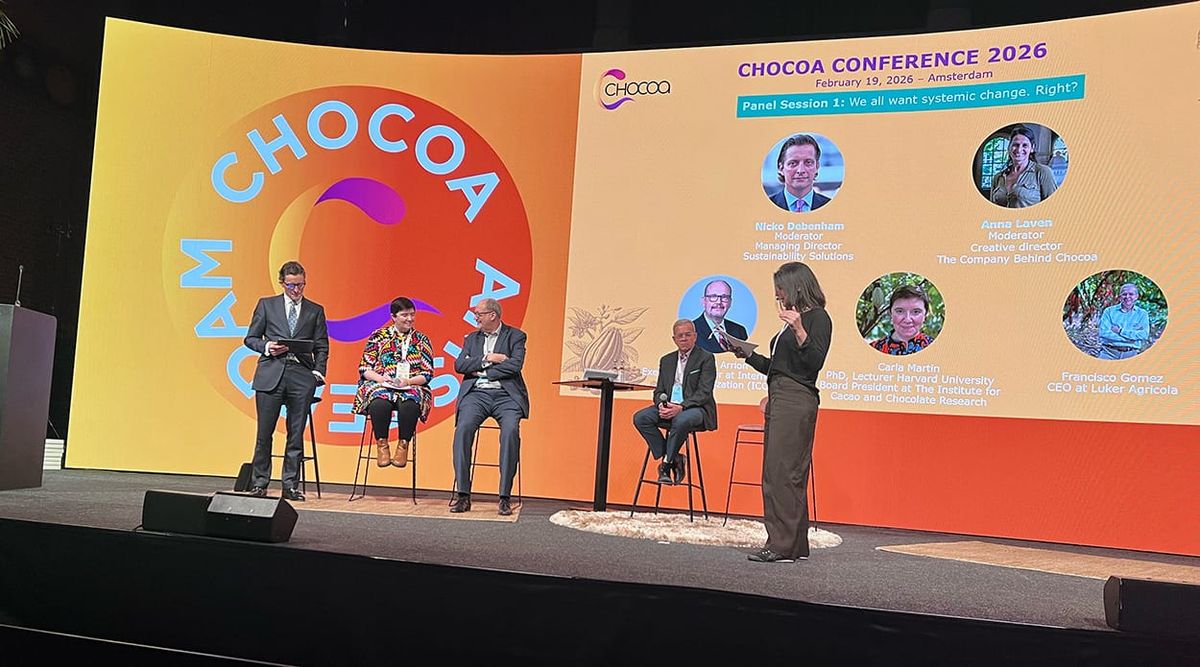
With a domestic cocoa industry valued at €6.6 billion and annual imports of approximately 200,000 metric tonnes, Italy is repositioning itself not merely as a buyer, but as a long-term development partner.
Central to this strategy is a move away from traditional aid models toward co-investment and shared value creation. Backed by a €4.4 billion climate fund and an Africa-focused policy framework, Italy is investing in:
- Agricultural modernisation, education, and health across 23 African countries
- National resilience plans for coffee in Ethiopia and Uganda
- A forthcoming public–private coffee fund in coordination with the World Bank
The message was clear: future partnerships must deliver mutual economic growth and long-term resilience, not short-term development gains.
Advertisement

The Emergence of ‘Italy’s Cocoa Platform’
That strategic direction is now materialising as a new initiative – informally referred to as Italy’s equivalent of a national sustainable cocoa platform (ISCO).
Led by the Alliance of Bioversity International and CIAT, and supported by key partners including Ferrero and Save the Children Italy, the programme aims to establish the Italian Sustainable Cocoa Platform (ISCP) as a long-term public–private partnership.
Promoted by the Italian Ministry of Foreign Affairs and International Cooperation under the Mattei Plan for Africa, the initiative is explicitly aligned with EU frameworks such as Global Gateway and broader international sustainability standards.
Its ambition is clear: to position cocoa as a driver of climate resilience, inclusive growth, and social equity in West and Central Africa – while reinforcing Italy’s leadership in sustainable sourcing.
A New Kind of Role for a New Kind of Strategy
The Project Director position offers a revealing window into how seriously Italy is approaching implementation.
Far from a symbolic appointment, the role is designed to anchor the initiative at multiple levels – strategic, diplomatic, and operational. Responsibilities include:
- Providing overall strategic leadership aligned with Italian and EU policy frameworks
- Coordinating a complex ecosystem of governments, NGOs, corporates, and research institutions
- Leading the creation and positioning of the Italian Sustainable Cocoa Platform
- Overseeing programme delivery, funding alignment, and stakeholder engagement
- Representing the initiative in high-level international and diplomatic settings
The scope reflects a broader reality: this is not a traditional development programme, but a multi-stakeholder investment platform operating at the intersection of policy, finance, and supply chains.

What This Signals for the Cocoa Sector
Italy’s cocoa initiative should not be viewed in isolation. It is part of a wider geopolitical and economic repositioning – one that links European demand with African production through structured investment partnerships.
For industry players, several implications stand out:
1. Early-Stage Influence
As a newly forming platform, the initiative offers companies a rare opportunity to help shape standards, governance models, and investment priorities.
2. Blended Finance Access
With public capital deployed to de-risk private investment, corporates may gain improved access to frontier markets under more favourable conditions.
3. Deeper Supply Chain Integration
The emphasis on local processing, resilience, and value addition suggests a shift toward upstream engagement, beyond traditional sourcing models.
4. Increased Coordination Complexity
The multi-stakeholder model – spanning governments, NGOs, multilaterals, and private actors – will require stronger alignment and more sophisticated partnership management.
From Aid to Investment Partnerships
At its core, Italy’s approach represents a structural shift:
- From aid to investment partnerships
- From fragmented programmes to scalable value chain platforms
- From policy ambition to operational delivery
The launch of this consultancy role is a small but significant milestone – evidence that Italy is beginning to operationalise its vision.
The real test now lies ahead: whether this model can deliver measurable impact across sustainability, resilience, and shared economic value in the cocoa sector.
cocoaradar.com is:
- Official Media Partner - CAA International Cocoa Conference
- 'From Our Desk. To Yours. Daily'
- Sign-up here for free and choose your plan.