
TARAPOTO, Peru — Machu Picchu Foods is developing a cadmium-risk map intended to guide cocoa sourcing, testing and farm-level interventions across Peru, the company’s head of sustainability told CocoaRadar.
The initiative is part of a broader sustainability strategy spanning traceability, community development, climate action and organic agriculture. It also reflects a challenge running through the cocoa supply chain: European cadmium limits apply at the finished-product stage, but their commercial effects can reach exporters and farmers long before cocoa becomes chocolate.
“Cadmium is a big challenge for our market,” Jonathan Murga, head of sustainability and projects at Machu Picchu Foods, told CocoaRadar during an interview at the company’s offices in Tarapoto.
Advertisement

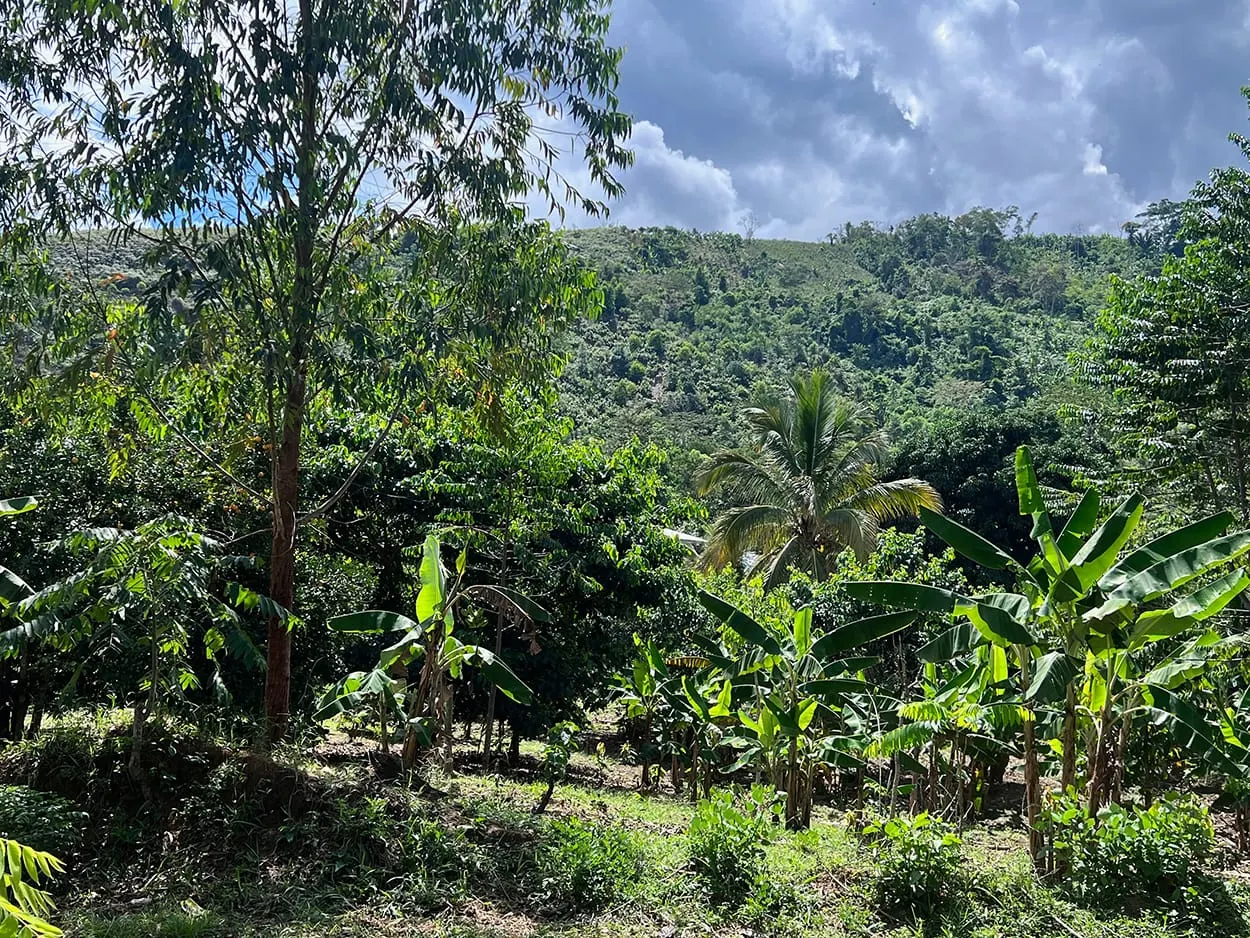
Murga’s presentation followed a CocoaRadar visit with the MPF team to one of its producers’ farms, providing a view of the conditions behind a problem often discussed principally in regulatory and laboratory terms.
Cadmium occurs naturally in the Earth’s crust, and cocoa trees can absorb it from the soil. Concentrations vary with factors including geology, soil characteristics, rainfall, genetics, and farm management, so elevated cadmium is not necessarily evidence of industrial pollution or poor agricultural practice.
EU rules set maximum cadmium concentrations for chocolate and consumer cocoa powder, rather than raw cocoa beans. The limits range from 0.10 milligrams per kilogram for milk chocolate containing less than 30% total cocoa solids to 0.80mg/kg for chocolate containing at least 50% cocoa solids.
A limit of 0.60mg/kg applies to cocoa powder sold to consumers or used in consumer drinking-chocolate products. The thresholds are set out in EU Regulation 2023/915.
For suppliers, the absence of a single EU limit for raw beans means acceptable purchasing specifications may depend on the intended product, its cocoa content, processing effects and any other cocoa inputs used in the recipe.
MPF’s proposed response is to identify where higher cadmium concentrations may be more likely before cocoa enters its processing and export channels.
“We can regulate or act in areas that we can measure with spatial precision,” Murga said, describing the principle behind the work.
The US does not set product-specific federal maximum cadmium concentrations for cocoa beans, chocolate or cocoa powder.
Instead, the Food and Drug Administration assesses whether cadmium levels make a food unsafe under federal food-safety law, using a toxicological reference range of 0.21–0.36 micrograms per kilogram of body weight per day in its health assessments. Some states, like California, apply a separate, exposure-based regime including a daily-exposure threshold rather than a concentration limit for chocolate.
According to Murga, MPF is combining its internal geographic information with an external cocoa-diversity map and applying a random forest modelling technique to data including topography, climate and soil characteristics.
The resulting map classifies areas as having low, moderate or high potential cadmium concentrations, Murga said. Still in its early stages, it already gives the company a clearer geographical picture to base future decisions on.
If validated, such a tool could help MPF determine where additional soil or bean testing is needed and where to concentrate agricultural support. It could also help the company avoid treating cadmium as a uniform problem across Peru’s highly varied cocoa-growing regions.
Independent national research supports the view that Peru’s cadmium challenge varies by region.
A 2023 study drawing on more than 2,000 soil and cocoa-bean samples used random forest models to predict cadmium concentrations across land suitable for cocoa cultivation. It found elevated risk concentrated mainly in northern Peru and Loreto, with localised pockets in Huánuco and San Martín.
The researchers estimated that fewer than 20% of cocoa-growing households nationwide might be affected by cadmium restrictions, although the proportion could reach 89% in Piura, the most exposed department in the model.
Soil cadmium was the strongest predictor of concentrations in cocoa beans, while geology, rainfall seasonality, soil pH and rainfall were also important at the national level. The study was published in Science of the Total Environment and summarised by the Alliance of Bioversity International and CIAT.
The Alliance has also predicted soil and bean cadmium availability through its Cacao Diversity platform. MPF has developed a predictive model intended to be adapted to its own sourcing and operational processes. The model remains under development and is designed to help identify and classify potential risk within its cocoa supply chain.
MPF is also pursuing field measures intended to improve the conditions in which cocoa is grown. Murga referred to composting and environmental projects aimed at limiting soil erosion, improving soil health and protecting water resources.
He linked those measures to the company’s response to cadmium, although he did not present field-trial results or quantified reductions in soil or bean concentrations during the interview.
This is an important qualification. Cadmium uptake is shaped by interacting soil, environmental and genetic factors, and no single mitigation measure offers a universal solution. Interventions therefore need to be selected and tested under local conditions.
MPF places the programme within a sustainability framework organised around four pillars.
The first, integrity and transparency at source, centres on traceability. MPF says it uses geographic information systems to map farms, record cocoa purchases and trace certified cocoa through processing. The company’s website says all its certified cocoa is georeferenced.
The second pillar, community development, covers education, health and producer wellbeing. Murga presented these programmes as part of MPF’s relationship with cocoa-growing communities rather than as activities separate from sourcing.
Climate action, the third pillar, includes measuring emissions, reducing waste and restoring the environment. Organic agriculture (the fourth pillar) completes the framework and, for MPF, links to soil management and support for women farmers.
MPF’s public sustainability material identifies the same four areas and describes projects covering women’s economic participation, school infrastructure, regenerative agriculture, reforestation and irrigation.
The Test Will Be at Farm Level
The approach illustrates how interdependent cocoa supply-chain challenges have become. Traceability establishes where cocoa originated. Spatial analysis may show where cadmium risk is greater. Testing can then assess particular farms or lots, while technical support can be directed towards producers facing the greatest exposure.
For farmers, however, the value of the exercise will depend on what follows the map: the reliability of its predictions, access to affordable testing, the effectiveness of recommended interventions and the availability of technical and financial support.
Cost distribution will also matter. A risk map could help companies use resources more precisely, but it could also disadvantage farms labelled as higher-risk if the classification is not supported by adequate sampling or accompanied by workable mitigation options.
Advertisement

MPF’s initiative remains under development. Its attempt to connect spatial data with sourcing and farm support nevertheless shows how cocoa businesses are translating an end-market contaminant limit into decisions made much closer to the soil.
Cadmium compliance cannot be managed solely at the factory gate. Whether MPF’s map becomes a meaningful tool will depend on validation against field and bean data – and on evidence that the interventions following it reduce risk without placing an unreasonable burden on farmers.