
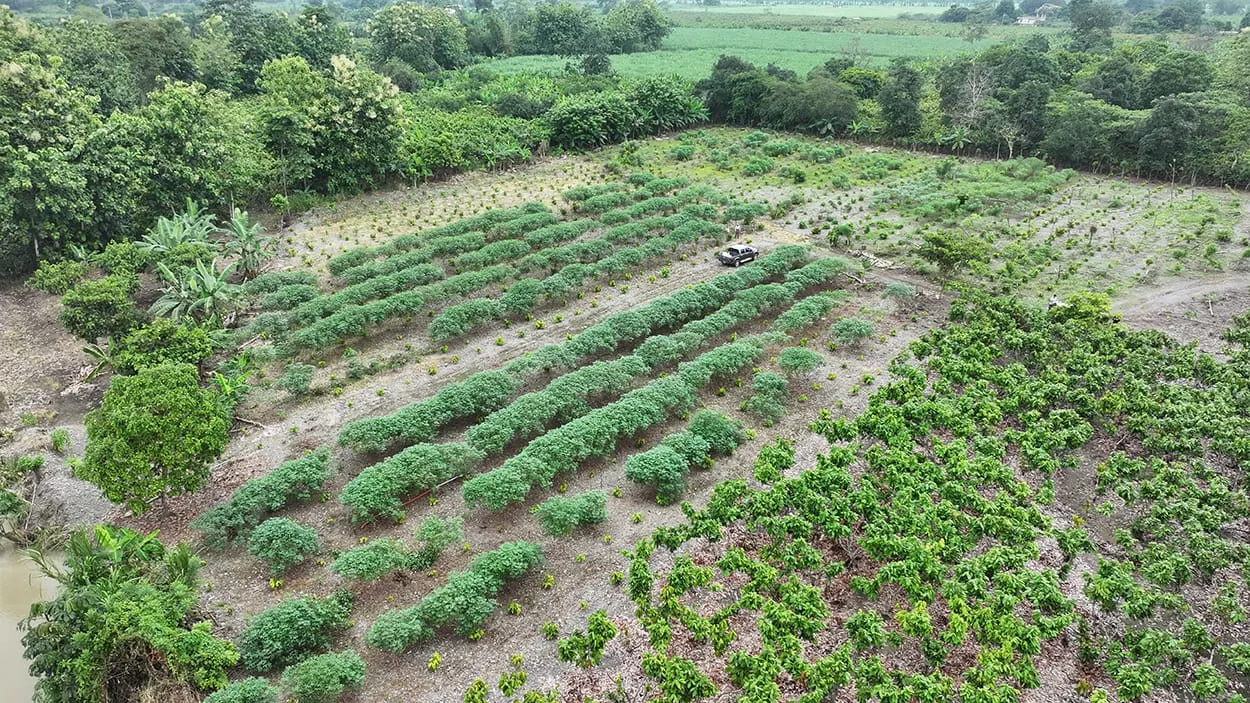
The recently announced partnership between Mars, Incorporated and Olam Food Ingredients (ofi) to advance Net Zero cocoa production in Ecuador reflects a broader shift in the cocoa sector toward climate-conscious sourcing and farmer-centred sustainability.
On paper, the initiative brings together many of the right elements: long-term collaboration, science-based targets, and a focus on regenerative agriculture.
Yet while the direction of travel is encouraging, the details reveal both meaningful strengths and important limitations that will determine whether this effort becomes a model for systemic change – or remains a well-executed but ultimately contained programme.
Advertisement

“Building on our long-standing collaboration in cocoa sourcing, this effort demonstrates our belief that when companies share common goals, they can deepen cooperation and drive more meaningful impact at scale,” said Benjamin Guilbert, Global Vice President of Cocoa at Mars.
Where The Initiative Stands Out
One of the clearest strengths of the partnership is its continuity and time horizon. Rather than launching a new, isolated pilot, the programme builds on more than a decade of work in Ecuador. This continuity matters in agriculture, where trust, behavioural change, and ecosystem restoration all require time.
The emphasis on climate-smart practices – including agroforestry and biochar – aligns with current scientific consensus. Moving away from full-sun monoculture toward diversified systems has the potential to deliver multiple co-benefits: improved soil health, greater biodiversity, and increased resilience to climate shocks. These are not marginal gains; they go to the core of long-term cocoa viability.
Equally important is the explicit focus on farmer livelihoods. By aiming to reduce input costs and create new income opportunities, the initiative acknowledges a critical truth: sustainability efforts in agriculture succeed only when they make economic sense for farmers.
Finally, the partnership reflects a wider industry evolution toward shared responsibility across the supply chain. Collaboration between a global brand and a major supplier signals a move beyond fragmented interventions toward more integrated approaches.
Andrew Brooks, Head of Cocoa Sustainability at ofi, emphasised the practical impact on farmers: “By making regenerative practices more accessible, we aim to reduce implementation barriers and costly inputs while creating opportunities that strengthen farmer resilience and secure the future supply of cocoa.”
Where Questions Remain
Despite these strengths, several aspects of the initiative remain underdefined, leaving open questions about its ultimate impact.
1. Scale versus ambition
The programme targets around 960 farmers across 9,000 hectares. While significant at a local level, this footprint appears relatively modest when set against the scale implied by ‘accelerating Net Zero cocoa’.
Without clarity on what proportion of total sourcing this represents, it is difficult to assess whether the initiative will materially reduce emissions – or primarily serve as a foundation for future expansion. The distinction is important: pilot programmes are essential, but they are not the same as systemic transformation.
The Reality of Farmer Adoption
The initiative presents regenerative practices as increasingly accessible and beneficial. However, in practice, transitions to agroforestry systems can involve short-term trade-offs, including increased labour demands, delayed financial returns, and technical complexity.
The success of the partnership will depend heavily on whether these practices deliver tangible, near-term economic benefits for farmers – not just long-term environmental gains. If adoption relies heavily on external support, there is a risk that progress could stall once programme incentives are reduced.
Measuring Impact And Proving Outcomes
The partnership commits to measurable reductions in greenhouse gas emissions and improved livelihoods, but offers limited detail on how these outcomes will be quantified and verified.
Key questions include:
- What baseline emissions are being used?
- How will carbon sequestration be measured and validated?
- What indicators will define “improved livelihoods”?
- How will external factors, such as market price fluctuations, be accounted for?
Without clear methodologies and transparent reporting, even well-intentioned programmes can struggle to demonstrate credible impact.
The Bigger Picture
This initiative should be understood as part of a broader transition within the cocoa sector, where companies are increasingly aligning with science-based climate targets and responding to growing demand for sustainable sourcing.
In that context, the Mars–ofi collaboration is directionally strong. It combines technical innovation with on-the-ground engagement and reflects a willingness to invest in long-term solutions.
However, its ultimate significance will depend on three factors:
- Scalability: whether the model expands beyond its initial footprint
- Farmer economics: whether it delivers consistent, compelling value to participants
- Credibility of impact: whether outcomes are rigorously measured and transparently reported
A Cautious But Constructive Outlook
The partnership represents a meaningful step forward, but not yet a definitive breakthrough.
If successfully implemented and scaled, it could provide a replicable model for low-carbon cocoa production. If not, it risks joining a long list of sustainability initiatives that show promise but fail to achieve systemic change.
For now, the initiative sits in an important middle ground: a credible foundation that still needs to prove its transformative potential.
cocoaradar.com is:
- Official Media Partner - CAA International Cocoa Conference
- 'From Our Desk. To Yours. Daily'
- Sign-up here for free and choose your plan.