From our desk to yours. Daily.
Join our growing community of members and receive a free version of our daily newsletter on what really matters in cocoa.
No spam. Unsubscribe anytime.
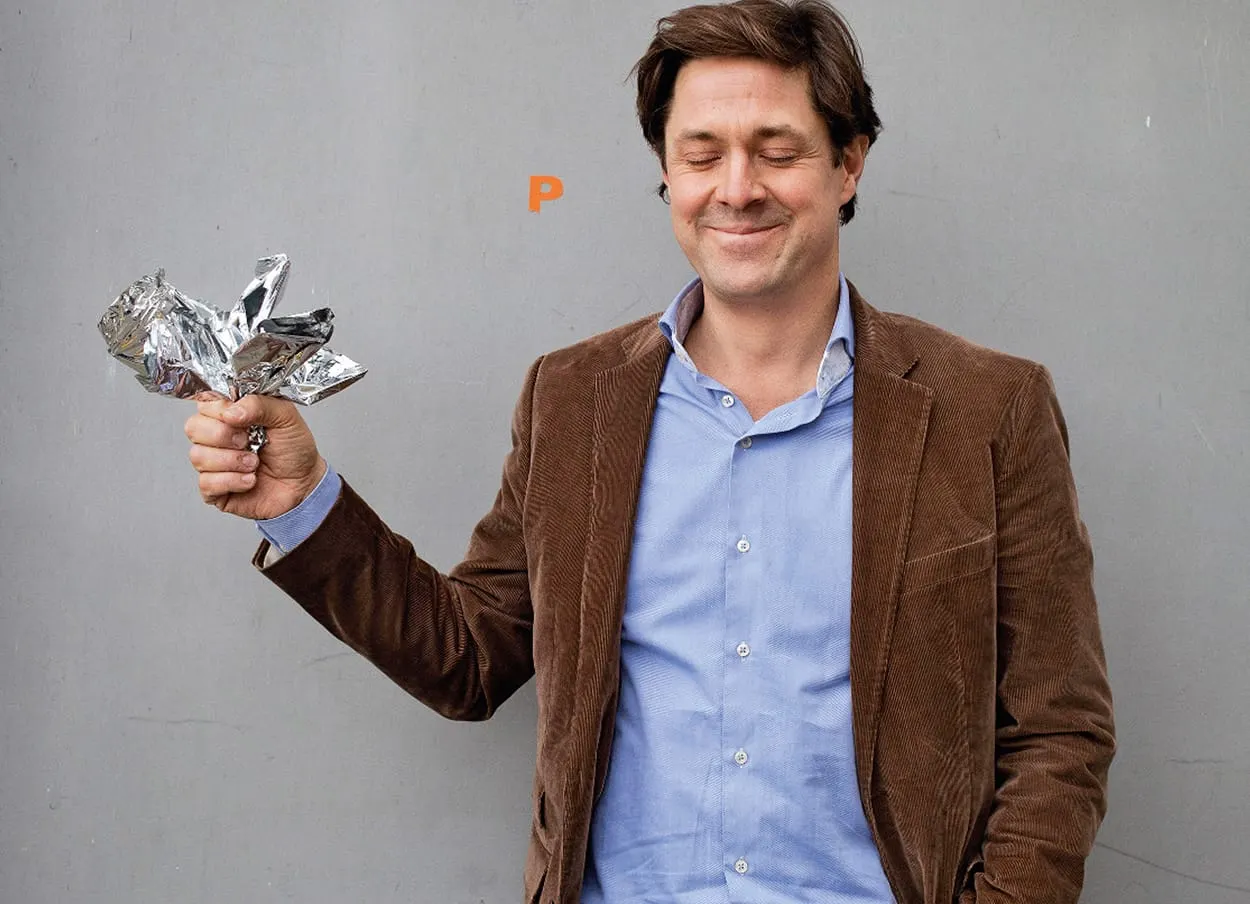
Philipp Kauffmann is not especially interested in sounding triumphant. Original Beans, the company he founded in 2010 and still chairs, has just been named recipient of the 2026 Good Egg Award, the highest distinction from the Chocolate Scorecard.
For many companies, that would be a moment for polished celebration. For Kauffmann, it is instead a prompt to ask why so much of the chocolate industry still struggles to look honestly at itself.
The award recognises Original Beans as one of the strongest performers in traceability, living income, deforestation prevention, agroforestry, climate action, pesticide control and biodiversity protection.
Advertisement
It confirms what the Amsterdam-headquartered company has long argued: that chocolate can be built around forests, farmers and flavour rather than volume alone. But Kauffmann’s larger point is less comfortable. The cocoa industry, he says, is now living through the consequences of warnings it has been hearing for years.
“What has been predicted has actually occurred,” he says. Ageing farmer populations, depleted soils, income insecurity, climate stress, and fragile supply chains have converged with extreme price volatility.
What Kind of Cocoa Economy Do We Want?
The first instinct of companies, he accepts, is to protect themselves. “Save your ass,” as he puts it. But he is struck by how little the deeper conversation has shifted. Businesses are busy being “in the business”, fighting fires, sourcing beans and defending margins. Too few, he argues, are working “on the business” — asking what kind of cocoa economy they want to create.
That distinction sits at the heart of Original Beans. The company was built against the logic of anonymous commodity cocoa. Its name reflects a commitment to origin, to rare cacao varieties, and to long-term relationships with grower communities.
Kauffmann began with sourcing in Virunga (Democratic Republic of the Congo), Beni (Bolivia) and Piura (Peru) – before expanding to Tanzania, Ecuador’s Pacific coast, northern Colombia and other Peruvian origins such as Chuncho.
The philosophy has remained strict: single varietal, single chocolate, no blending to smooth away differences.
“We don’t blend,” Kauffmann reiterates. “The idea has always been to show that cacao is a very different thing than people assume.”
Latin America’s Long Cacao Traditions
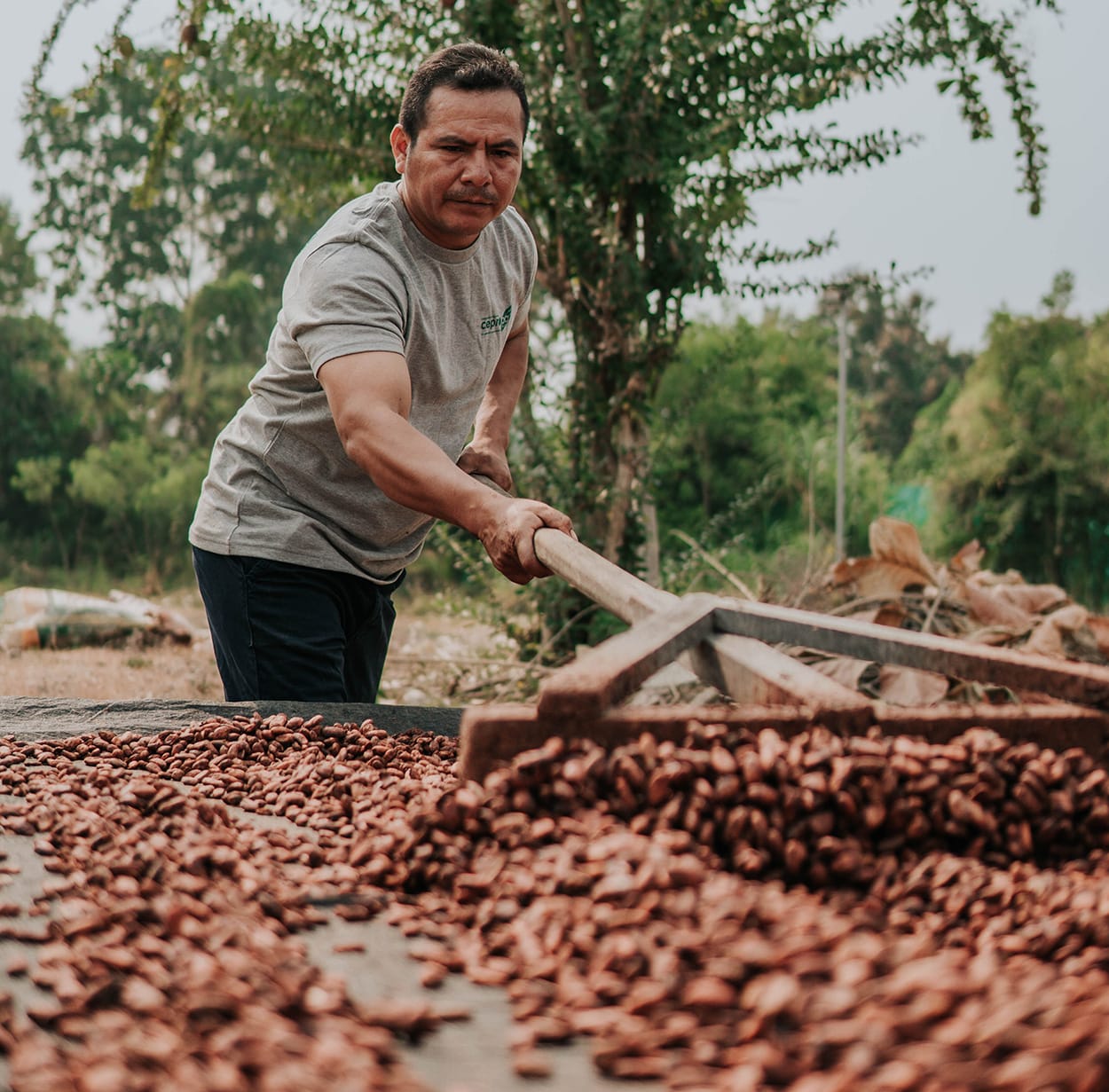
For Kauffmann, this is not simply about premium flavour. It is about restoring cocoa to the ecological systems in which it evolved. He speaks admiringly of Latin America’s long cacao traditions, stretching back thousands of years, and of fertile lands in southern Mexico where cacao, maize and other crops still grow in complex agroecological systems. These are not nostalgic curiosities, he argues, but working models of resilience: systems that feed families, protect soil, store carbon, preserve biodiversity and produce distinctive cocoa.
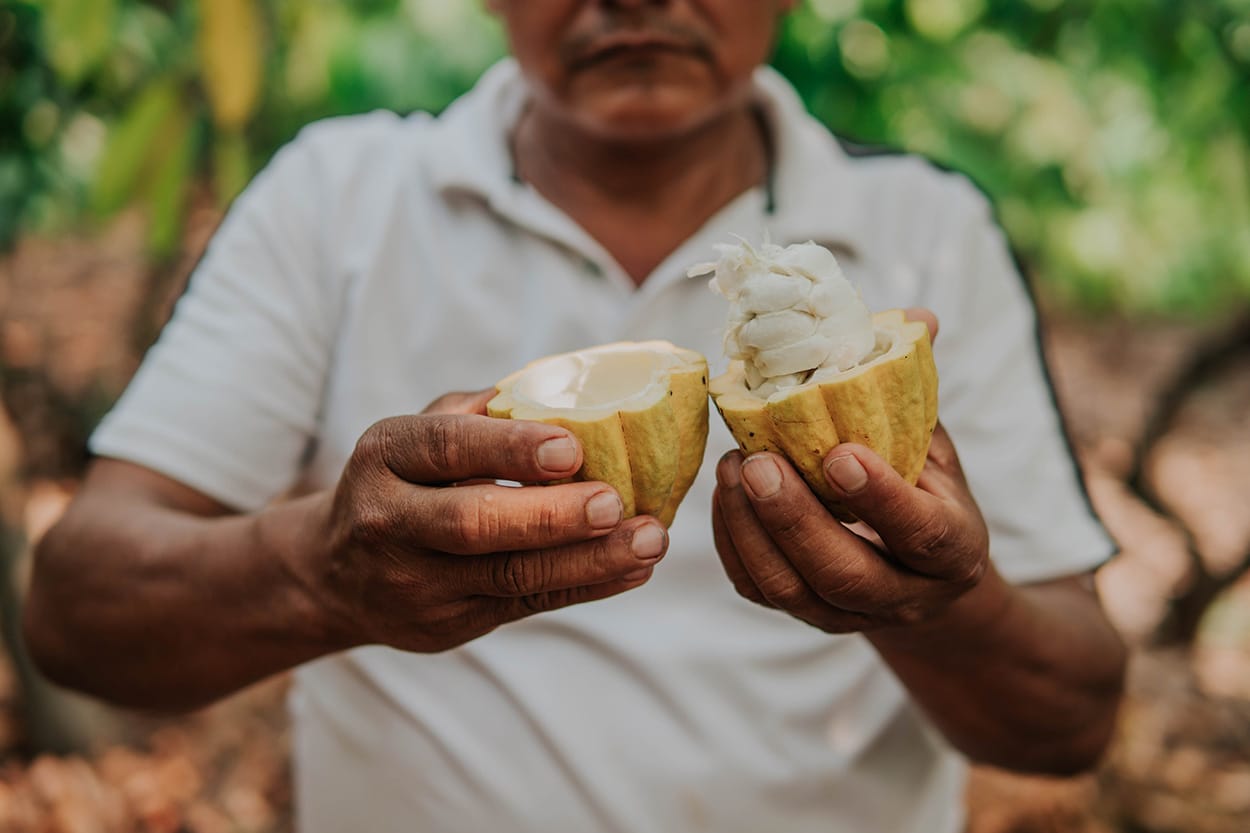
Original Beans calls this regenerative sourcing, though Kauffmann is wary of allowing the term to become another corporate slogan. In practical terms, it means growing cacao in rich ‘cacao forests’ rather than monocultures.
He contrasts the two sharply. A monoculture may be green, but it is biologically thin. A cacao forest contains canopy trees, companion crops, varied root systems, and rich soil microbial life. The point, he says, is not chaos but design: each tree has a purpose.
The striking part of his argument is that such systems need not sacrifice productivity. Kauffmann says studies comparing monoculture cocoa with traditional agroforestry systems show that dry bean yields can be similar, while biomass, carbon storage and ecological richness are vastly greater in diverse systems.
“We are talking about a totally different way of thinking about cacao,” he says. In his view, the regenerative opportunity is not marginal. It is a route to better flavour, stronger communities and a more durable supply base.
This conviction has made Original Beans an outlier in a sector still dominated by bulk cocoa flows. The company sources less than 1,000 tonnes of cocoa annually – a fraction of the volumes handled by global processors – yet works directly with more than 3,000 smallholder farming families.
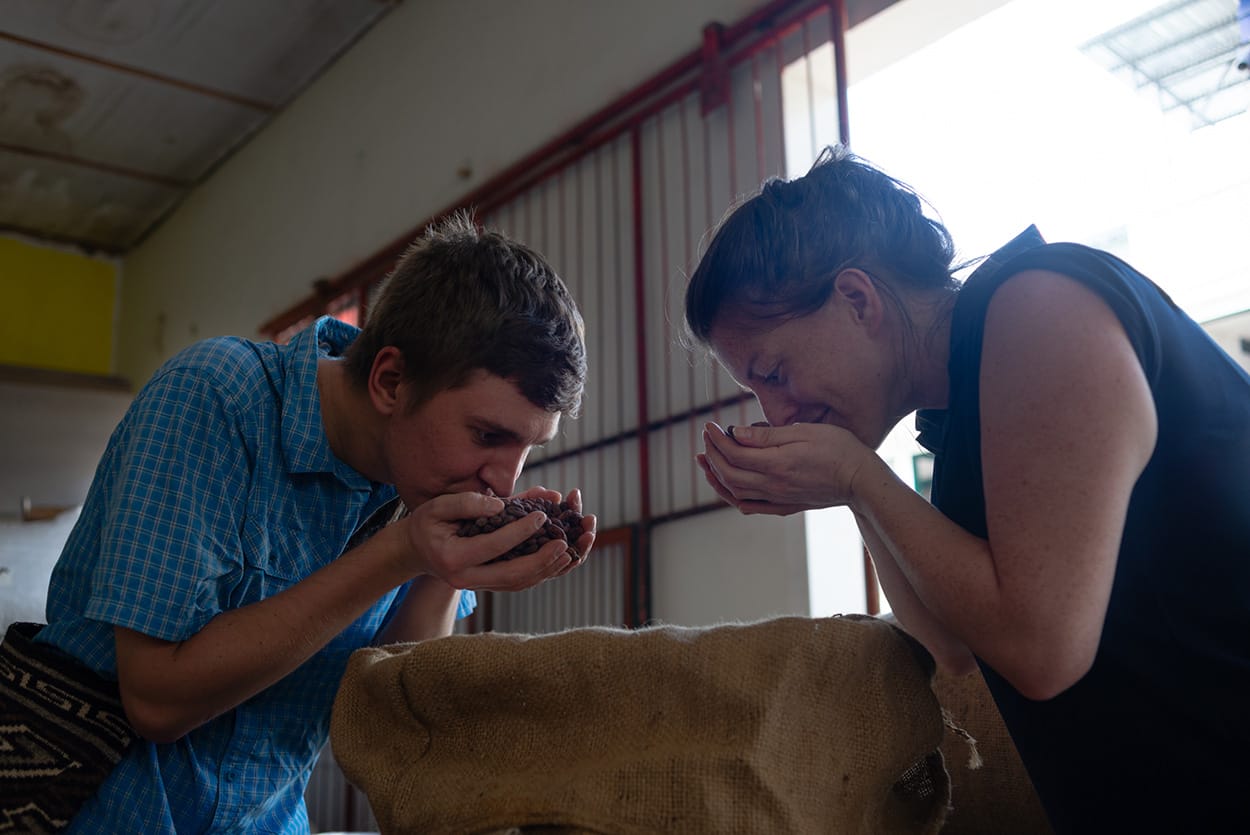
It employs around 30 people, including agronomists in Latin America and Africa. The company does not own farms, warehouses or factories in the conventional sense. Kauffmann describes the company instead as a “choreographer”: aligning farmers, co-operatives, logistics providers, processors, chocolatiers and customers around a common standard.
“We don’t own plantations. We don’t own trade infrastructure. We work with people we know very well and who are mission-aligned.”
A Complex Choreography
That choreography is complex. Beans are received through established trading infrastructure, including in the Netherlands, and processed in Switzerland by Felchlin under a co-processing arrangement that allows Original Beans to use its own beans and recipes. Retail bars are moulded by Bernardin Schokolade, a long-standing Swiss organic and Fairtrade specialist.
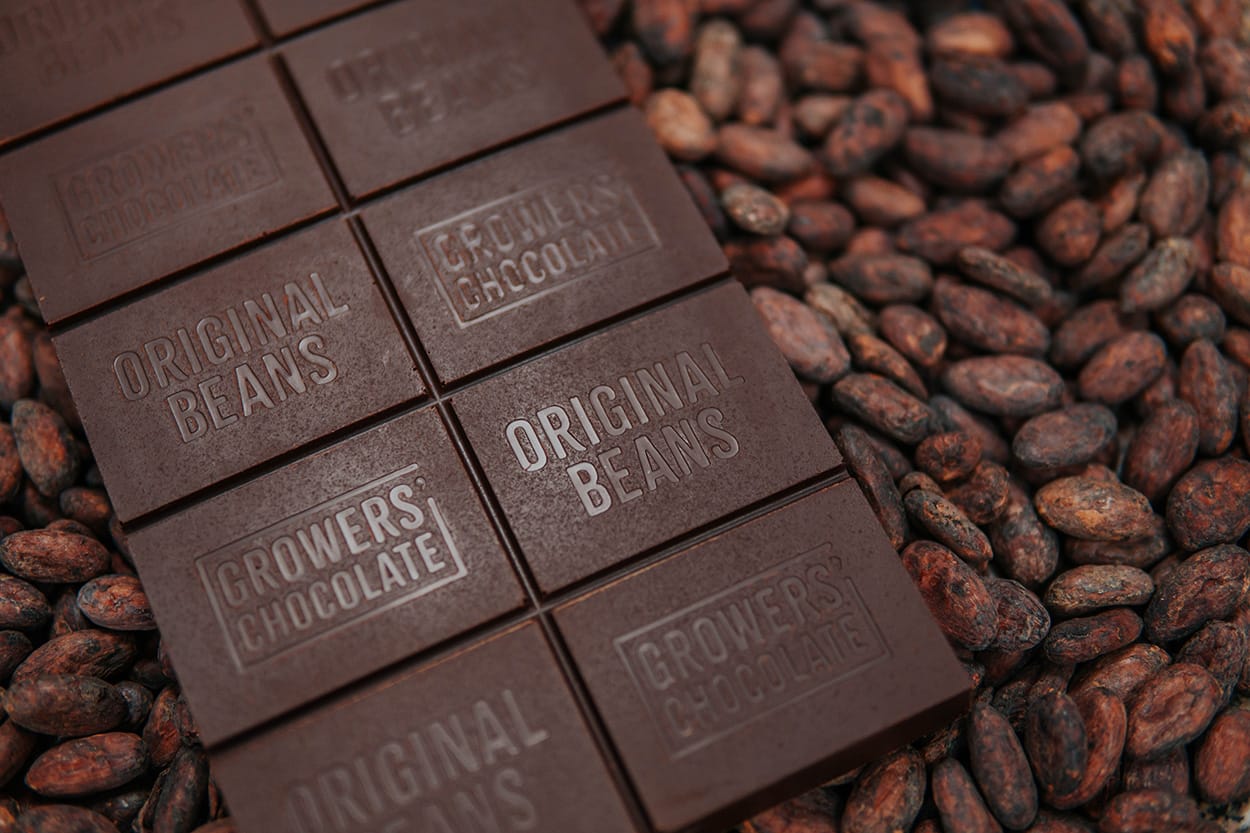
In Peru, Original Beans has gone a step further, investing alongside its long-term partner Norandino in a farmer-owned chocolate production facility in the north of the country. Through its Growers' Chocolate initiative, cacao is transformed into finished chocolate entirely at origin, allowing more value creation, expertise and economic benefits to remain in Peru rather than being exported abroad.
- Kauffmann describes the result as a "world-class" couverture cooperatively made by cacao growers who live in villages without electricity – proof, he says, that exceptional chocolate begins with exceptional beans, not merely expensive machinery.
The company’s commercial base reflects that positioning. Much of its business is B2B, supplying chefs, bakers, ice-cream makers, chocolatiers and other premium food professionals. Its retail presence spans organic and fine-food stores in Germany, Austria, Denmark and, increasingly, the US. It has also acquired Scottish craft chocolate brand Ocelot, adding a more consumer-facing platform to a business that has traditionally been strongest among professionals.
Yet the past two years have tested even this carefully built model. The cocoa price spike rippled far beyond West Africa. Latin American origins, despite not causing the supply contraction, rose sharply with the market. For Original Beans, the first question was liquidity. If the same volume of cocoa costs several times more, can the company still pay?
Cash Challenge
Can it pay quickly enough when growers are being offered cash elsewhere? Can it continue to demand fermentation, quality and organic integrity when the market is paying high prices even for poorly handled beans?
“We didn’t cause the problem, but we had to pay the price,” Kauffmann explains.
The challenge was cash. Buying the same quantity suddenly required multiples of the capital.
Then came another problem. Growers wanted faster payment.
“If it’s a supplier’s market, they say, ‘I don’t only want to be paid that price, I want to be paid on time — and before harvest.’”
Original Beans maintained purchases, quality standards and organic sourcing throughout.
Kauffmann says the answer depends on alignment. Original Beans has a relatively simple shareholder structure, with himself and an aligned investment fund as principal owners. Its board, management and suppliers understand the long-term project.“We are cultivating long-termism. “Nature needs time, communities need time, investment needs time,” he says.
That made it possible to continue buying organic, maintain quality and protect relationships during the spike. Now that prices are falling, the test is reversed: whether the company will avoid squeezing growers when cheaper options return.
Organic Market
The organic market is one of the most immediate strategic challenges. Original Beans has treated organic certification as a baseline for traceability and sustainability, particularly because it is a legal standard in the EU and offers batch-level accountability from field to shelf. But the price boom distorted incentives. Some grower groups allowed certifications to lapse because conventional markets were paying so well. Historical organic premiums of about $250 per tonne have, in some cases, become premiums of close to $2,000 per tonne. For buyers committed to organic, that is a tenfold increase in the premium alone.
At the same time, pesticide contamination has become harder to manage. Kauffmann says the real world is getting messier while European regulations, laboratories and paperwork are becoming ever more precise. Even committed organic growers can struggle to remain contamination-free in landscapes where pesticide use is widespread. For a company such as Original Beans, this is not a side issue. It goes to the heart of whether organic can remain a scalable foundation for regenerative chocolate.
 Anthony Myers
'The Good Egg Award'
The Good Egg Award, therefore, arrives at a revealing moment. The award, presented by the Chocolate Scorecard after assessing 49 of the world’s largest chocolate companies and retailers, recognised Original Beans as the industry's strongest performers across traceability, living income, deforestation, agroforestry, climate action and labour standards. (highest score of 90)
It validates the company’s approach, but it also highlights the weakness of the wider system. Kauffmann is not dismissive of big companies. He notes that some, including Nestlé and Mars, have serious people working on cocoa and have made meaningful commitments. He also recognises the logistical achievement of the commodity system: supplying chocolate confectionery daily to supermarkets around the world is, as he says, “unbelievable”. But admiration for efficiency does not remove the need to change direction.
Certifications such as Fairtrade, organic and Rainforest Alliance have added standards on top of commodity cocoa. Traceability requirements and incoming regulations have encouraged larger buyers to segregate supply and understand origins more closely.
Kauffmann sees value in that. But he argues the destination remains unclear. The industry has improved parts of the machine without agreeing on what the machine is ultimately for.
His preferred answer is decommoditisation: not abandoning scale, but embedding different values into the market. Cocoa should be priced not only as a bean, but as the product of a living system — one that can regenerate soil, hold carbon, sustain farmer families and preserve genetic diversity.
Cacao Genetics
He is particularly forthright about cacao genetics. The old simplification of cacao into three types — Forastero, Criollo and Trinitario — is, he says, inadequate. Today, many more genetic clusters are recognised, and their preservation matters not only for flavour but for resilience.
Relying too heavily on one narrow branch increases vulnerability. “Keep all these branches open,” he says.
This is where Original Beans’ premium positioning becomes strategic rather than decorative. Its customers are not buying the cheapest cocoa solids. They are buying identity, provenance and trust. But Kauffmann is clear that even premium chocolate is not insulated from market shocks.
Original Beans competes with larger suppliers, including Barry Callebaut and Valrhona, and must explain to customers why consistency and regenerative sourcing come at a premium. That, he says, is part of the work: taking customers “by the hand” and showing how the chain's economics actually function.
The broader consumer question, in his view, is not whether people can afford better chocolate. In wealthy markets, he argues, there is money available. The challenge is cultural and commercial: how chocolate has been marketed, how price has been explained, and how far consumers have been trained to expect cheap chocolate rather than valuable cacao. In countries such as Ecuador and Colombia, he notes, consumers with far lower average incomes often pay more for chocolate because they are closer to cacao traditions.
Next steps for Original Beans
Original Beans’ next phase will test whether this argument can grow without becoming diluted. The company has hired a new chief executive, Anne Schreuders, has a stable board and is looking five years ahead. It wants to expand while remaining disciplined: long-term pricing, direct relationships, rare varieties, organic where possible, regenerative systems and transparent impact reporting through its Chocolate Foodprint.
The ambition is not to become a miniature version of the commodity giants, but to show that another structure can be commercially resilient.
For the wider cocoa industry, Kauffmann believes the next four or five years will be decisive. West Africa cannot be abandoned, even as Ecuador and Latin America become increasingly attractive for buyers seeking stability, quality and more manageable supply chains. Farmer income remains unresolved. Regulations such as the EU Deforestation Regulation (EUDR) may improve accountability, though politics has already slowed and diluted implementation. Conferences, he suggests, still contain too much self-congratulation and too little reckoning.
"One can go to all these conferences, and it's the same old story. How great we are."
The Good Egg Award places Original Beans on the right side of that debate. But Kauffmann’s mood is less of a victory lap than a warning. The industry knows the problems. It has predicted many of them itself. The question now is whether it can move beyond emergency responses and build for the long term.
In cocoa, as in forests, resilience is not created in a quarter. It has been cultivated for years. “Consistency,” Kauffmann says, is what builds trust. “That’s what builds your ecosystem.”
And ecosystems, unlike commodity markets, are designed to last.
Original Beans’ bet is that the market will eventually reward those who stayed consistent when volatility made short-termism tempting.
