From our desk to yours. Daily.
Join our growing community of members and receive a free version of our daily newsletter on what really matters in cocoa.
No spam. Unsubscribe anytime.
The Rainforest Alliance has unveiled its 2025 Annual Report, positioning regenerative agriculture as the next evolution of sustainable cocoa production while reporting significant gains in farmer livelihoods, climate resilience and forest restoration across key cocoa-growing regions.
Published under the theme Regeneration Takes Root, the report marks a major milestone with the launch of the Rainforest Alliance Regenerative Agriculture Standard – a science-based certification framework designed to move beyond conventional sustainability compliance towards farming systems that actively restore ecosystems while strengthening farmer incomes.
Advertisement

The organisation says the first products carrying the new regenerative certification seal are expected to reach consumers during 2026, reflecting growing demand from both brands and consumers for measurable environmental outcomes rather than simply reduced impacts.
Cocoa Programme Continues To Expand
Alongside the annual report, the newly published 2025 Cocoa Certification Sector Report shows continued growth across the Rainforest Alliance cocoa programme.
Rainforest Alliance Certified farms produced approximately 2.7 million metric tonnes of cocoa in 2025, a 4% increase on the previous year, while certified cocoa sales rose 3% to 1.5 million metric tonnes, suggesting continued market demand despite ongoing supply chain pressures.
Certification participation also expanded, with around 1.56 million cocoa farms and 1.54 million farmers certified globally during 2025. Africa remains the dominant production region, accounting for more than one million certified farms – around 81% of the global total – highlighting the organisation’s strong presence across the world’s largest cocoa-producing countries.
Overall, Rainforest Alliance says it now works with 10.8 million farmers and farmworkers, reaching an estimated 28 million people through programmes focused on regenerative agriculture, rural livelihoods and responsible supply chains.
Ghana And Côte D’ivoire Deliver Encouraging Results
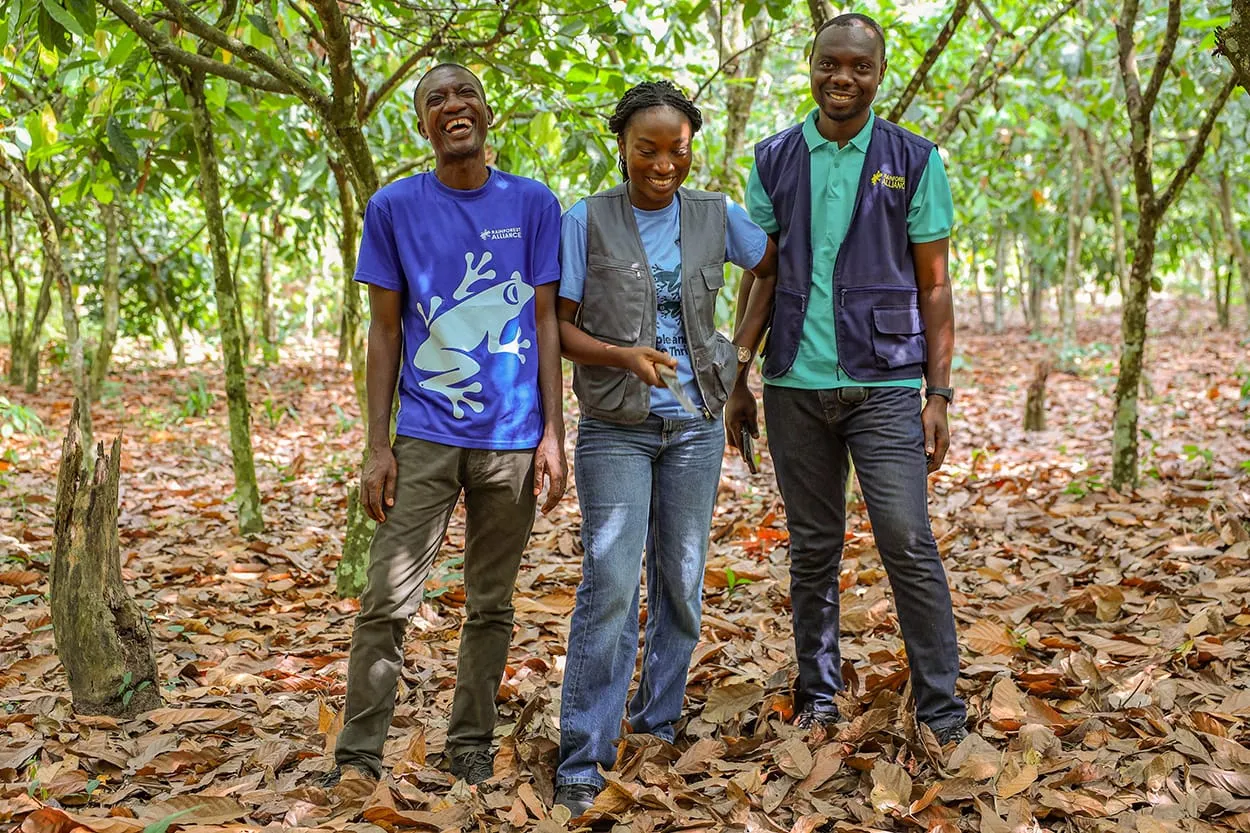
The report highlights progress in Ghana, where Rainforest Alliance-supported landscape programmes helped communities plant more than 1.3 million trees while implementing sustainable land management across 181,000 hectares. More than 1,100 community fire volunteers were also trained to improve resilience against climate-related wildfires and land degradation.
Meanwhile, early results from the Hershey Income Accelerator Program (HIAP) in Côte d’Ivoire suggest the approach could deliver meaningful productivity improvements. After three years, 89% of participating farmers completed their first-year Farm Enterprise Plan actions, while demonstration plots produced around 34% more cocoa pods per 20 trees than comparable farms outside the programme, indicating strong potential to improve both yields and household incomes.
Regeneration Moves From Concept To Commercial Reality
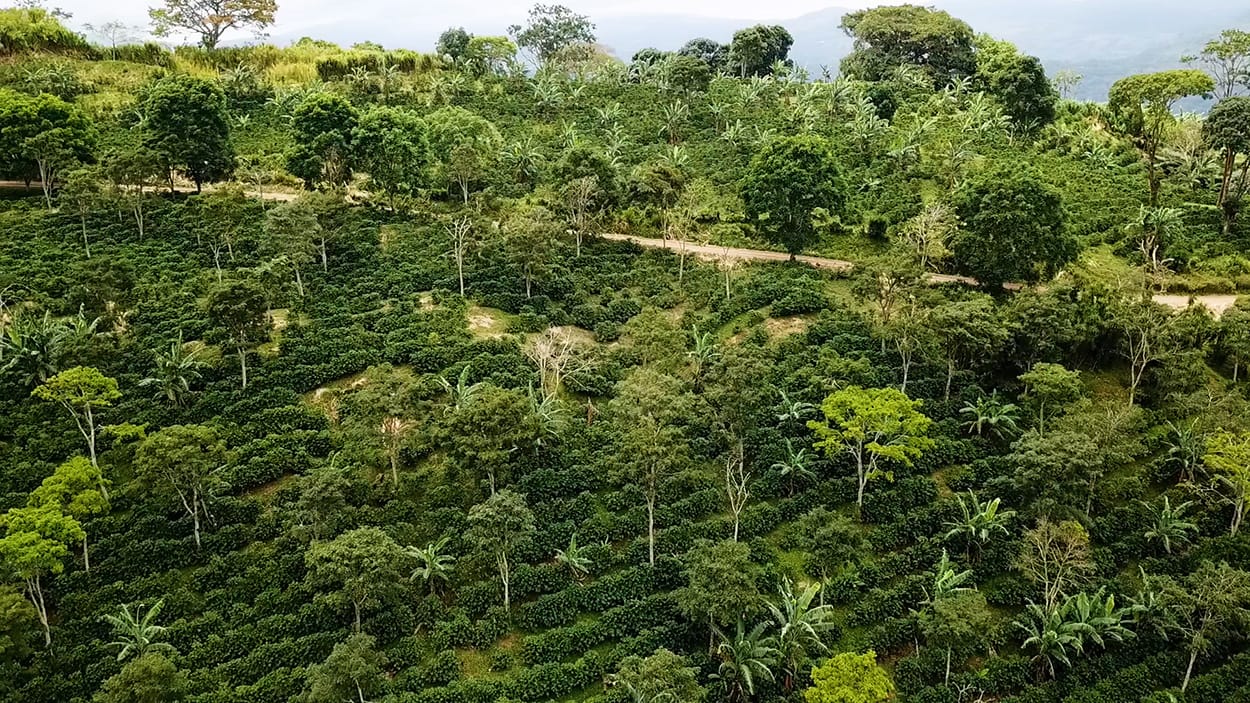
Rainforest Alliance argues that regenerative agriculture has become increasingly important as cocoa producers face mounting challenges from climate change, biodiversity loss and declining soil health.
Rather than simply minimising environmental harm, the new regenerative framework aims to restore soil fertility, improve biodiversity, strengthen water management and increase farm resilience while delivering measurable economic benefits for producers. The organisation says its certification programme is supported by a data-driven framework that allows companies and farmers to monitor environmental and social outcomes over time.
 Anthony Myers
Across all commodities, Rainforest Alliance reported 5.5 million tonnes of greenhouse gas emissions avoided or sequestered, 11.9 million hectares of ecosystems protected, restored or sustainably managed, and $2.22 billion in additional farm income generated through sustainability premiums and improved productivity.
Certified farms also achieved average yields around 28% higher than national averages, according to the organisation.
The report also confirms updates to the Sustainable Agriculture Standard through Version 1.4, simplifying certification requirements while strengthening data collection and incorporating compliance measures aligned with the European Union Deforestation Regulation (EUDR) for cocoa and coffee supply chains.
Lindt Adopts 100% Rainforest Alliance Certified Cocoa
The growing commercial momentum behind Rainforest Alliance certification has also been reinforced by one of the confectionery industry’s biggest sustainability announcements.
Swiss premium chocolate manufacturer Lindt & Sprüngli has confirmed that 100% of its cocoa is now sourced as Rainforest Alliance Certified under the company’s long-running Farming Program, making certification the global baseline for all of its cocoa procurement from 2026 onwards.
The Rainforest Alliance seal will now be introduced progressively across eligible Lindt product packaging.
Importantly, Lindt says certification is the foundation, not the limit, of its sustainability strategy. The company will continue investing in programmes beyond certification, including agroforestry, forest protection and restoration, community development and its Living Income Pilot Programme aimed at narrowing the living income gap for cocoa farmers.
The move reflects a broader shift across the cocoa industry as manufacturers seek to strengthen supply chain resilience, improve traceability and prepare for stricter regulatory requirements such as the EUDR.
As certification increasingly becomes a baseline rather than a differentiator, companies are placing greater emphasis on demonstrating measurable impact through farmer support, landscape restoration, and income-improvement initiatives.
Industry Collaboration Remains Essential
In his foreword to the annual report, Rainforest Alliance CEO Santiago Gowland said agriculture must become “a force for regeneration rather than environmental decline.”
He argued that lasting change will require governments, companies, farmers and investors to work together to address the root causes of deforestation, biodiversity loss and rural poverty rather than relying on isolated sustainability initiatives.
With more than four million farmers and workers participating in its cocoa certification programme across 24 producing countries, Rainforest Alliance believes regenerative agriculture will play an increasingly central role in helping the global cocoa sector meet rising expectations around climate resilience, biodiversity protection and transparent supply chains.
- Further reading: Rainforest Alliance 2025 Annual Report and impact data
- Rainforest Alliance 2025 Cocoa Certification Sector Report
cocoaradar.com is:
- Official Media Partner - CAA International Cocoa Conference
- 'From Our Desk. To Yours. Daily'
- Sign-up here for free and choose your plan.