
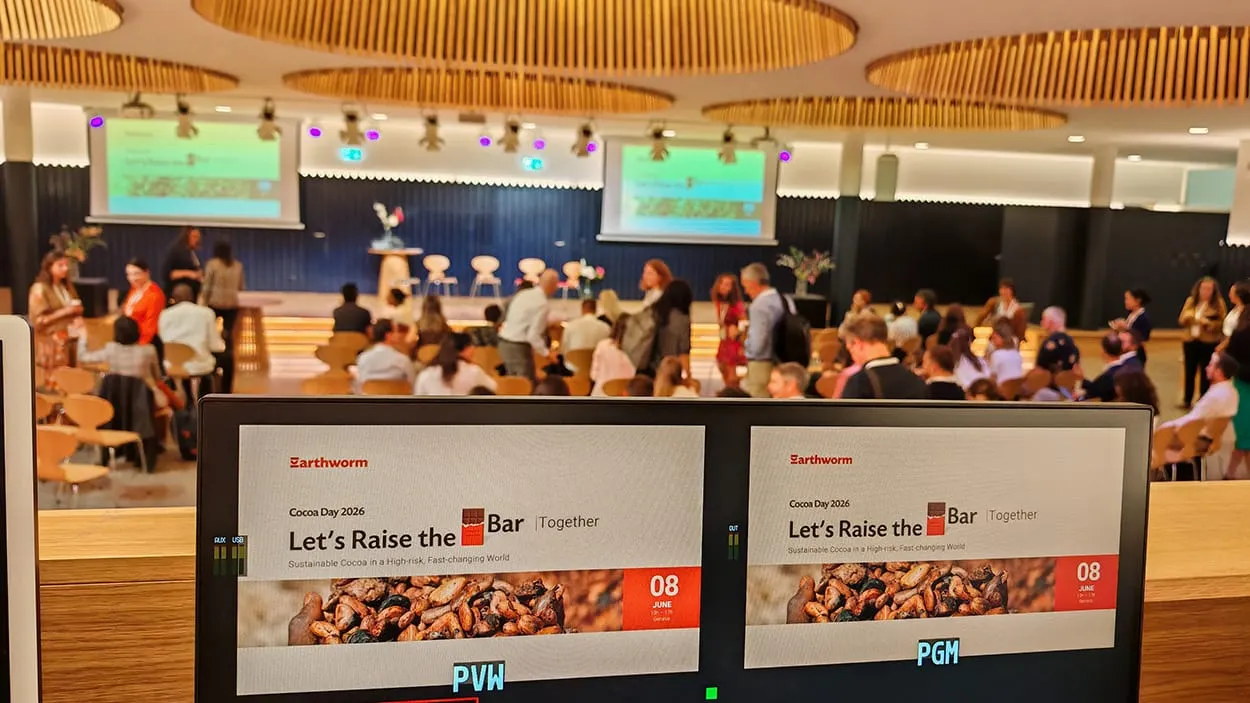

Behind every chocolate bar lies a complex supply chain facing mounting pressure from climate change, ageing farms, volatile markets, deforestation and evolving regulations.
Against this backdrop, more than 80 representatives from across the cocoa and chocolate sector gathered for Earthworm Foundation’s first ever cocoa-focused event, united by a shared question: what will it take to build a resilient, sustainable and equitable cocoa sector?
The answer that emerged was clear. Incremental improvements are no longer enough. The cocoa sector is facing a systemic crisis.
The conversation repeatedly returned to the need to move beyond fragmented projects and compliance-driven approaches towards long-term, landscape-scale transformation centred on farmers.
Five Themes Shaping Cocoa’s Future
1.Putting farmers at the centre
One of the strongest messages from the one-day event, held last month in Switzerland, was that improving farmer livelihoods can no longer be viewed as a secondary outcome of sustainability programmes – it must become the starting point.
Declining productivity, climate impacts, crop disease and persistent poverty continue to reinforce one another. Participants agreed that without addressing the underlying economics of cocoa farming, efforts to improve sustainability will struggle to deliver lasting results.
The discussion highlighted the importance of longer-term investment horizons – potentially spanning 10 to 20 years – alongside wider adoption of agroforestry, diversified farming systems and coordinated rehabilitation of ageing cocoa farms.
2.Compliance Alone Will Not Stop Deforestation
As cocoa production expands into frontier regions in countries including Liberia, Cameroon and Peru, delegates acknowledged that traceability systems and regulatory compliance remain essential – but are not enough on their own.
Deforestation in cocoa frontiers cannot be solved through compliance alone, was a recurring message throughout the day.
Instead, participants advocated for landscape-level approaches that balance conservation with rural development, involve local communities from the outset and create alternative livelihood opportunities that reduce pressure on forests. The consensus was that resilient landscapes depend on equally resilient communities.
3.Collaboration Is Essential
No organisation can transform the cocoa sector in isolation.
Drawing on experiences from Côte d’Ivoire’s Cavally landscape, Earthworm Foundation highlighted how collaboration between companies, governments and local communities can deliver measurable progress. But participants also recognised that lasting change requires transparency, trust, shared governance and financing models that extend well beyond individual projects.
No single actor can drive impact at scale alone participants agreed.
4.Learn From Other Sectors
Another recurring theme was that cocoa does not need to reinvent every solution.
Participants explored lessons from other agricultural commodities, including the value of shared frameworks, aligned commitments and embedding sustainability into core business and procurement strategies rather than treating it primarily as a reporting exercise.
The discussion reflected a growing desire to shift the conversation away from measuring compliance and towards building genuinely resilient production systems.
5.From Strategy To Action
Perhaps the strongest call of the day was to close the gap between ambition and implementation.
Participants encouraged companies to adopt a 'test-and-learn' mindset, scale interventions that have already demonstrated success and support more farmer-led innovation rather than relying solely on top-down programmes.
As discussions concluded, one message resonated across the room: the sector must move from analysis and compliance toward action and transformation.
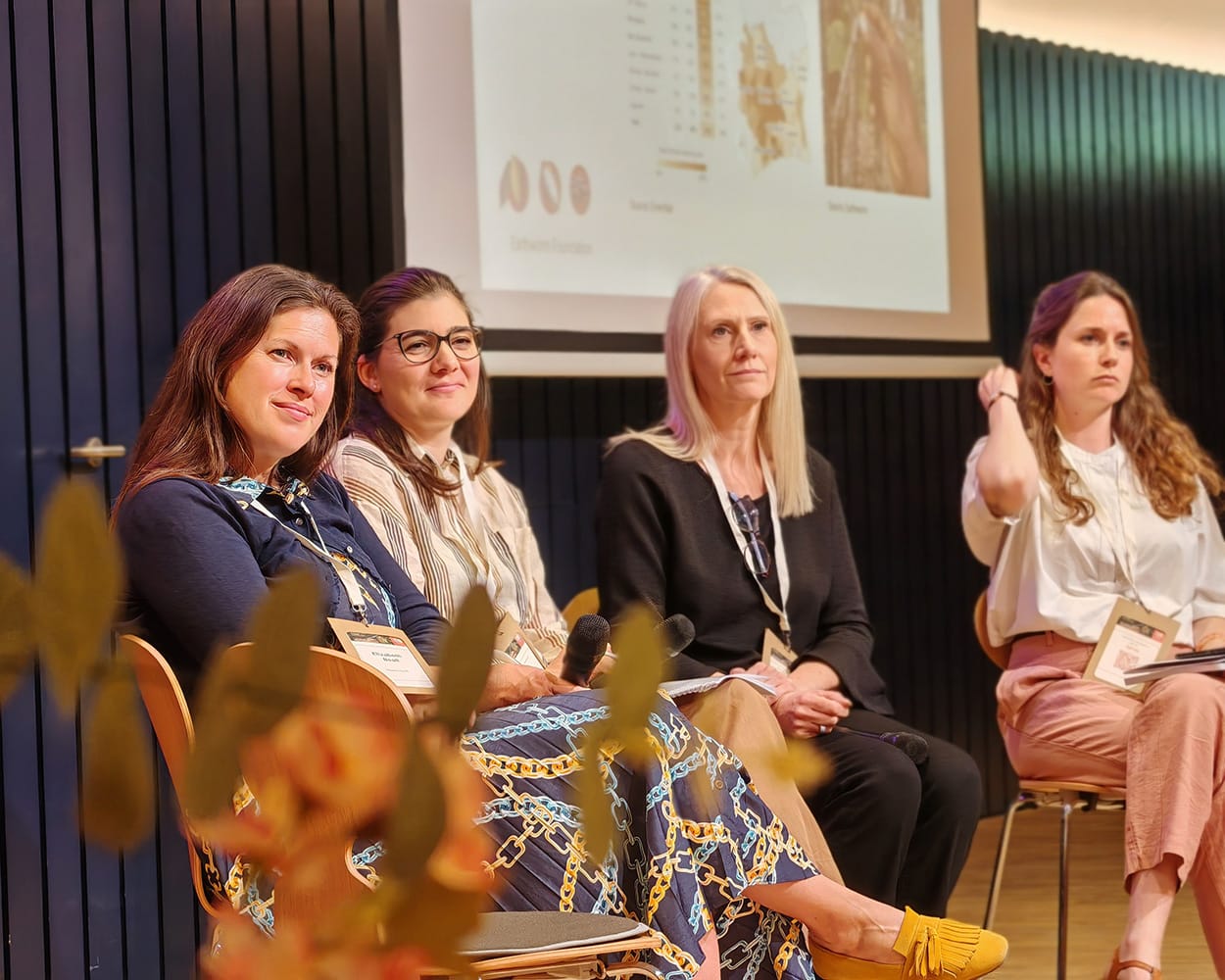
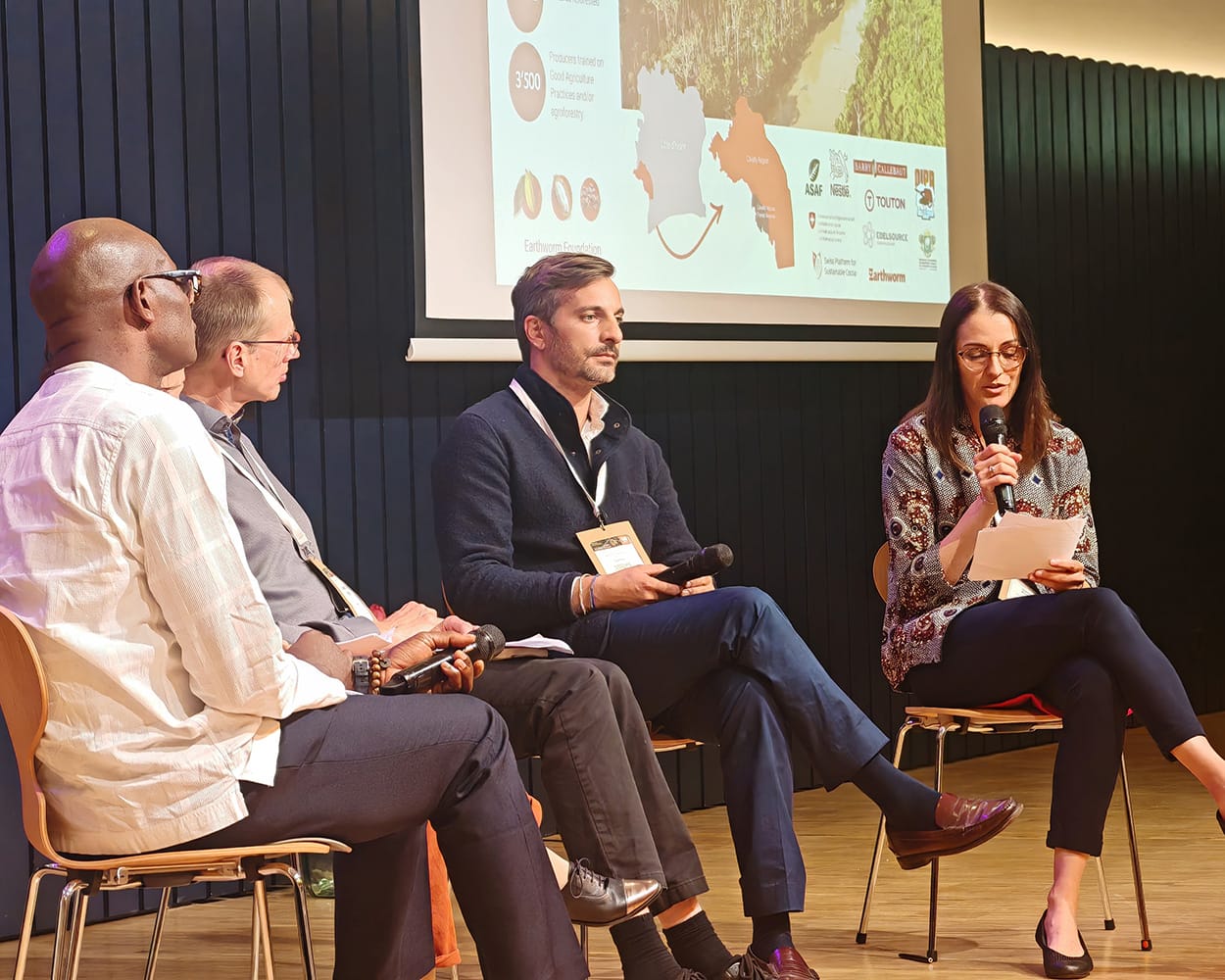
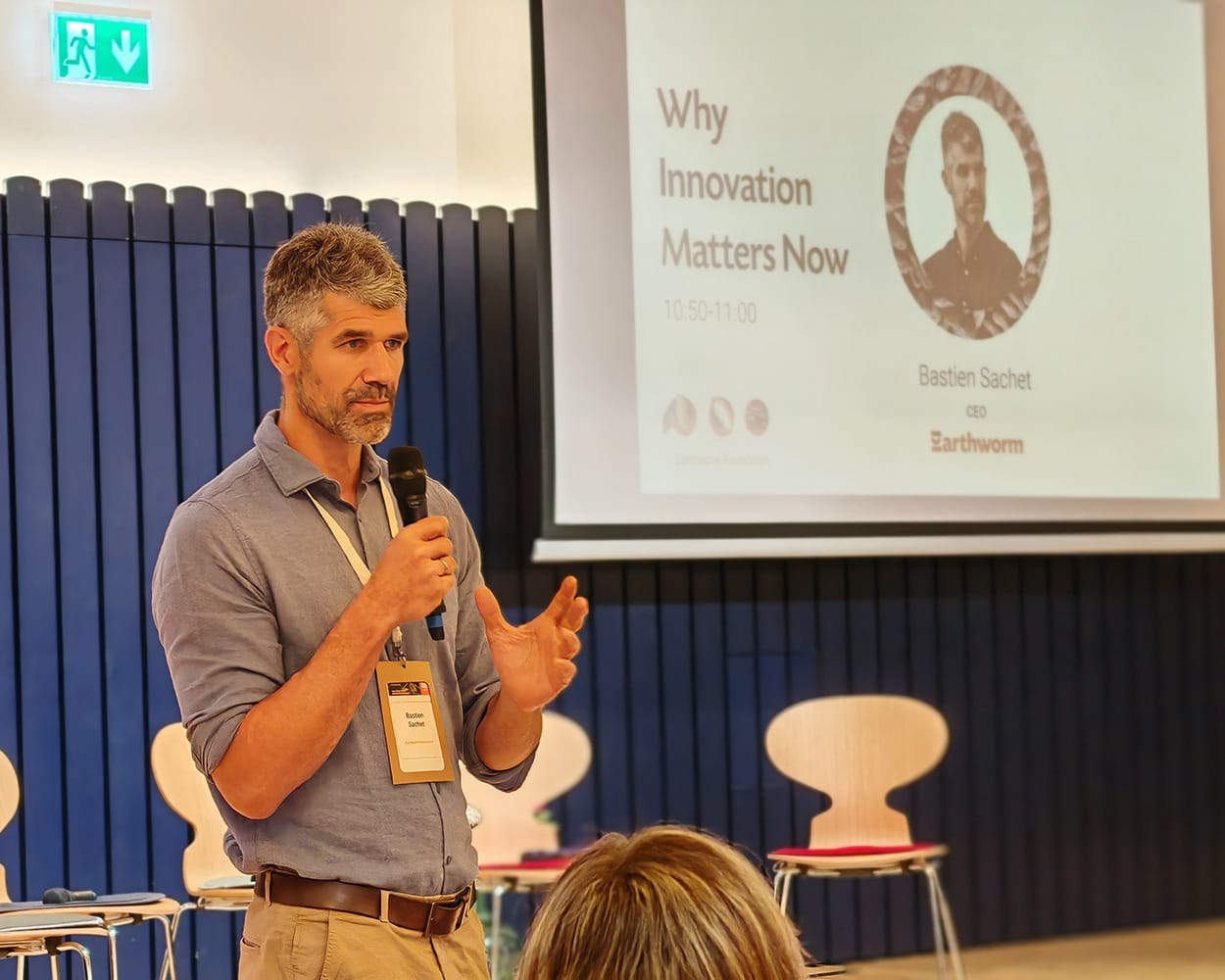
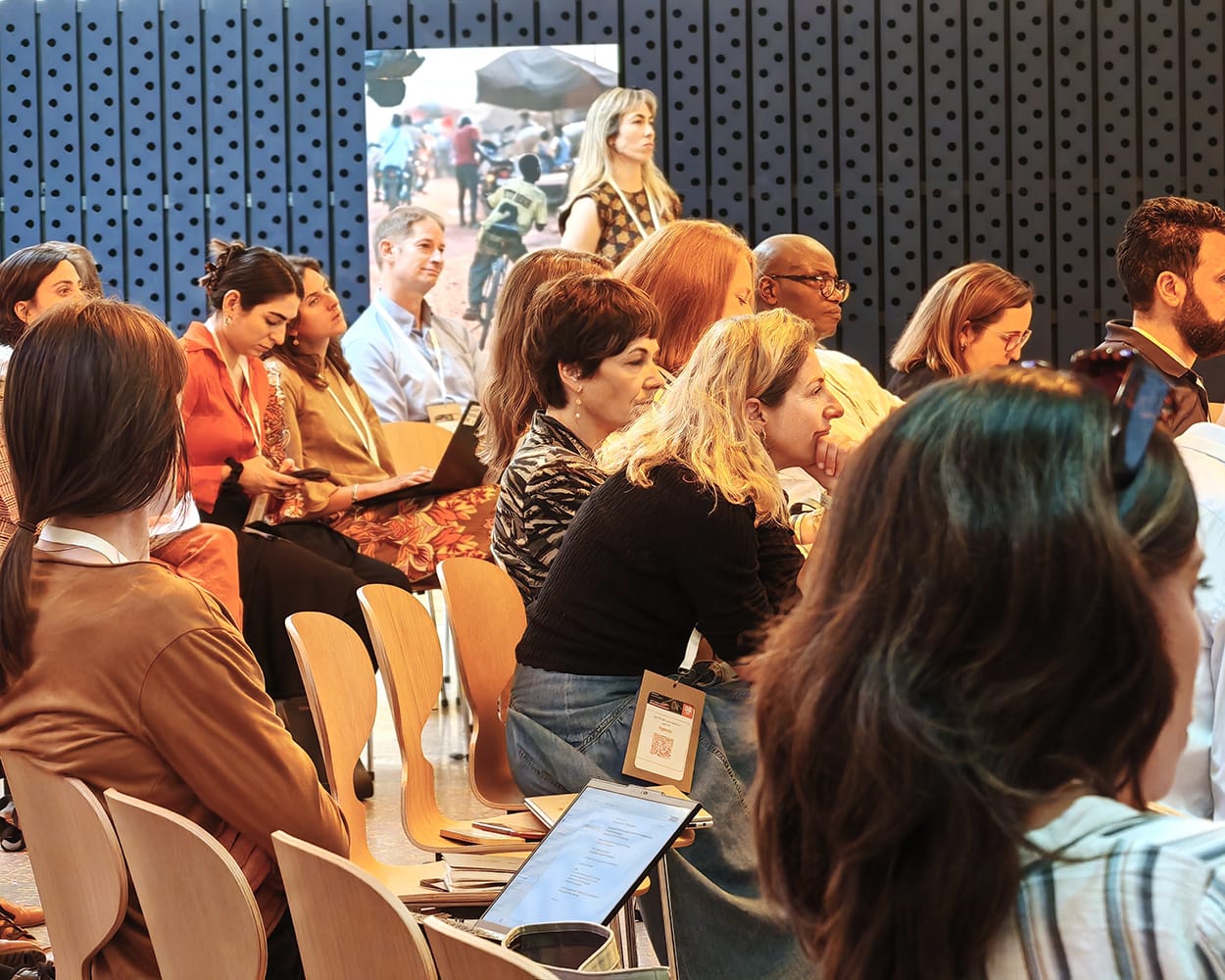
Delegates throughout the day were involved in key discussions on how to shift the dial forward and how best the industry can work together. Images. Earthworm Foundation
A Sector-Wide Transition
The event highlighted a broader shift that many believe the cocoa sector must now embrace:
- From supply chains to landscapes
- From compliance to resilience
- From small pilots to scalable solutions
- From top-down programmes to farmer-led approaches
- From short-term projects to long-term transformation
As World Chocolate Day shines a spotlight on chocolate’s enduring popularity, marking the introduction of chocolate to Europe in 1550, when cacao was first brought from the Americas, it also offers an opportunity to reflect on the future of the ingredient at its heart.
If cocoa is to remain viable for generations to come, the conversations taking place across the sector will need to translate into meaningful collaboration and sustained action.
For those gathered at Raise the Bar, the challenge is no longer understanding what needs to change. The priority now is ensuring the industry works together to deliver that change at the pace and scale the future of cocoa demands.
- More from the Earthworm Foundation:
- Key Learnings - Let's Raise the Bar
- Our Cocoa program
- Our Cavally project
- Sponsored content: This article was created in collaboration with Earthworm Foundation. While it aligns with our audience’s interests, the ideas and content are provided by Earthworm Foundation, which retains copyright and editorial responsibility. We’re sharing it to offer our readers relevant information and perspectives.