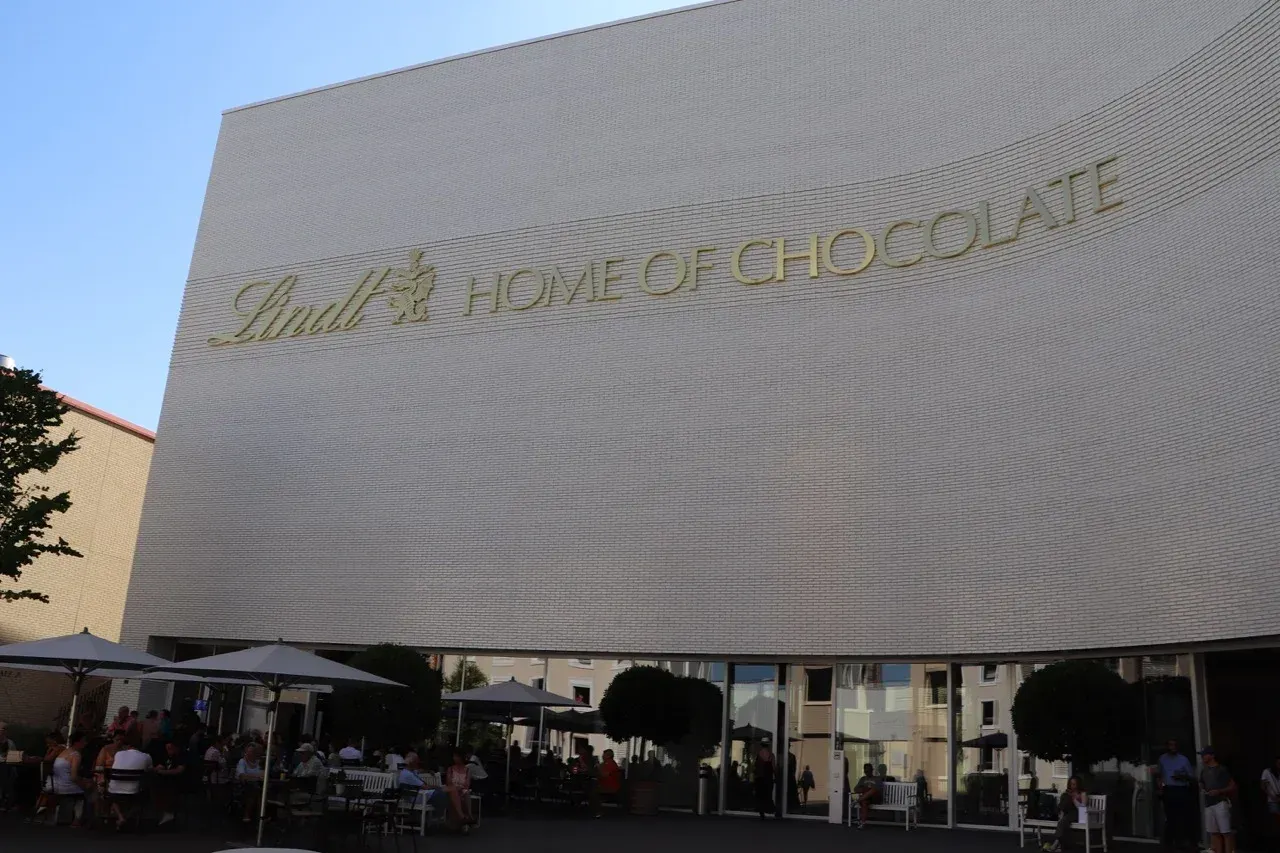
Designed to resemble luxury chocolate packaging, the document replaces familiar branding cues with stark messaging, accusing the cocoa industry of profiting from what it describes as ‘highly toxic’ practices in West Africa.
While advocacy campaigns targeting chocolate companies are not new, the specificity of the allegations – and their direct focus on a named company – marks an escalation in tone and targeting.
Advertisement

At stake is not only the reputation of one of Switzerland’s most recognisable brands, but broader questions about how multinational companies monitor supply chains that extend into some of the world’s most vulnerable farming communities.
A Campaign Delivered by Post
The leaflet (received by a CocoaRadar subscriber and sent to our editorial desk) appears to be part of a wider advocacy or fundraising campaign. It does not clearly identify its authors, but includes contact details linked to:
Coalition for Corporate Responsibility P.O. Box 3001 Monbijoustrasse 31 3001 Bern, Switzerland
A Swiss bank account number for donations is also listed, suggesting the mailing is tied to a fundraising effort focused on corporate accountability in cocoa supply chains.
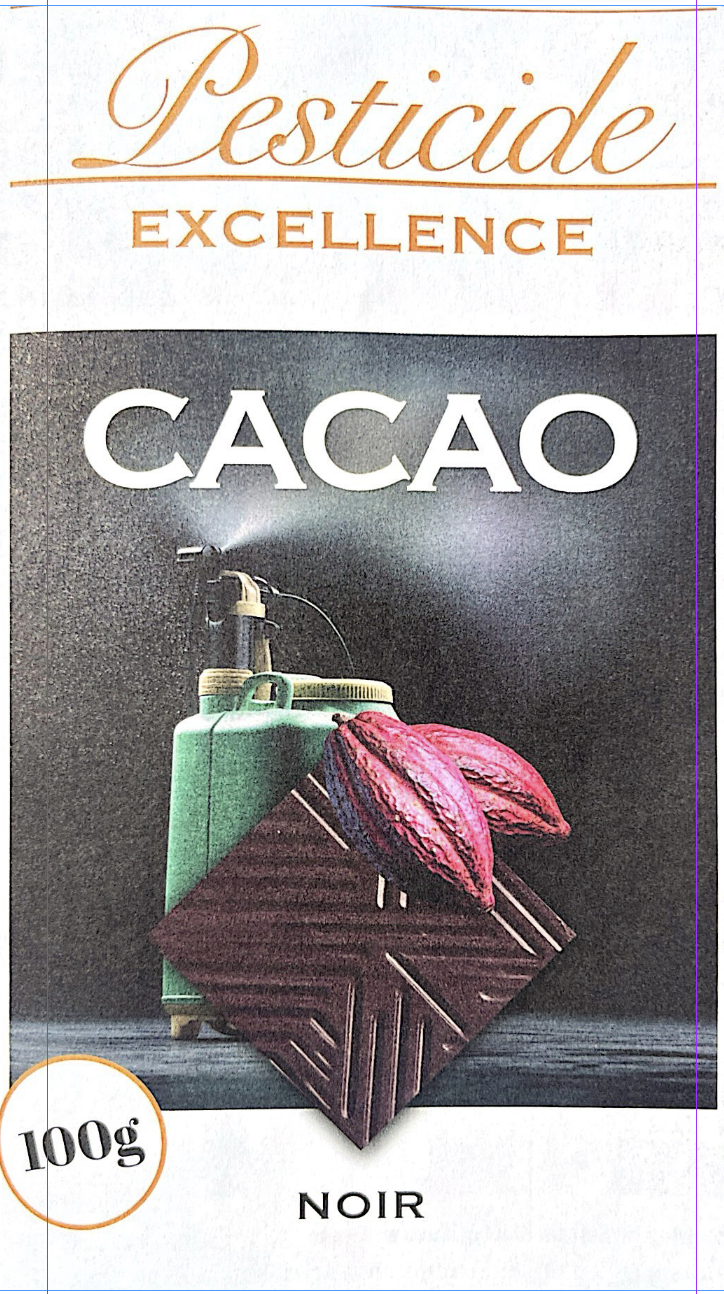
The document’s presentation is deliberate: its cover, styled like a premium chocolate bar, reads ‘Pesticide Excellence’, reframing luxury into critique. Inside, it outlines several allegations:
- Hazardous pesticide use in Ghana
- Child labour exposure
- Environmental damage, including deforestation and pollinator decline
- Economic inequality between cocoa farmers and multinational companies
The organisation behind the leaflet could not be independently verified at the time of publication.
What’s Verified – and What Isn’t
Many of the leaflet’s claims draw on widely documented industry issues, though their direct connection to Lindt remains, in some cases, unverified.
Pesticides: The leaflet highlights chemicals such as imidacloprid and thiamethoxam – neonicotinoids restricted in the European Union due to environmental risks. Scientific literature confirms that such pesticides, along with fungicides like mancozeb, are used in parts of West African agriculture. However, there is no public evidence directly linking these substances to farms supplying Lindt.
Child Labour: Estimates of approximately 1.5 million children working in cocoa production in Ghana and Côte d’Ivoire are supported by major studies, including research from NORC at the University of Chicago. Hazardous child labour remains a documented, industry-wide issue – not limited to any single company.
Pesticide Volumes: The leaflet claims that 9,700 tonnes of pesticides were used in Ghana in 2023, representing a sevenfold increase since 2010. While agricultural intensification trends support rising input use, this specific figure could not be independently confirmed.
Farmer Poverty: The contrast between multi-billion-franc revenues and low farmer incomes reflects a widely acknowledged disparity across the cocoa sector, supported by numerous studies on living income gaps.
Deforestation: Cocoa farming has been identified as a major driver of deforestation in West Africa, though companies and governments- including Lindt have made commitments to address the issue.
Lindt Responds to the Allegations
Lindt & Sprüngli provided detailed responses to Cocoa Radar addressing the specific claims outlined in the leaflet. The company’s answers are presented below in full.
Oversight of Sustainability Programmes
CocoaRadar: The document claims that Lindt & Sprüngli employs only one staff member in Ghana to oversee its entire sustainability program. Can you confirm how many staff are dedicated to sustainability and monitoring in Ghana?
Lindt: In Ghana, the Lindt & Sprüngli Farming Programme is implemented with the help of our suppliers’ 360 field staff.
CR: How is oversight structured on the ground?
Lindt: The programme is strategically managed by our cocoa team at headquarters; on the ground, we have staff members responsible for local oversight, who maintain close contact with our suppliers, other service providers, and their staff. The field staff implements the programme on the ground, carrying out activities including farmer monitoring, training, or coaching. They are in direct contact with the farmers.
Child Labour in Supply Chains
CR: It is alleged that approximately 1.5 million children work in cocoa production in Ghana and Côte d’Ivoire, with exposure to hazardous pesticides. What measures does Lindt take to monitor, prevent, and remediate child labor within its supply chain?
Lindt: We strongly condemn all forms of child labour. Lindt & Sprüngli employs a tailored strategy to mitigate risks in connection with child labour in our cocoa supply chain.
Our cocoa suppliers which implement the Farming Program (in countries of origin with a risk of child labour) are required to address child labour risks by implementing our Child Labour Monitoring and Remediation (CLRMS) guidance. A CLMRS aims to identify children in, or at risk of child labour, to provide appropriate remediation and follow-up measures and to ensure regular awareness-raising within the communities.
Starting in the 2025-26 cocoa season, we launched an update of our CLMRS in partnership with the International Cocoa Initiative (ICI). Our updated approach applies lessons learned from implementing our CLMRS over several years and aligns with the industry standard and best practices such as the ICI core criteria. We work with the ICI as a technical partner to guide and oversee the CLMRS implementation by our suppliers. For volumes sourced outside the Farming Program, we rely on the requirements of, and verification through, the Rainforest Alliance certification.
Since 2025, 100% of our cocoa volume from child labour risk countries were covered by a CLMRS or other due diligence system.
Additionally, we fund specific activities, aiming to address child labour at a more systemic level. For example, we have built or renovated around 100 school facilities in Ghana, Côte d’Ivoire and Madagascar. We also committed nearly 2 million Swiss Francs to collaborative initiatives in Ghana and Côte d’Ivoire which are investing in the education system more broadly.
In addition, with our 2030 Strategy, we have raised our ambitions. For cocoa alone, we plan to make additional investments of around CHF 300 million by 2030, with a large portion of the budget flowing into local community development. A central focus is on access to education, reintegration of children into schools, and promotion of educational quality in collaboration with NGOs. In agricultural value chains, especially in the cocoa sector in West African countries, child labor remains a persistent and complex challenge. Addressing it requires sustained, collaborative efforts from all stakeholders across the sector.
CR: Can you share recent data or findings from your Child Labour Monitoring and Remediation Systems (CLMRS), if applicable?
Lindt: In 2025, we reached our CLRMS target: 100% of our cocoa volume from child labour risk countries were covered by our CLMRS or other due diligence systems that are being rolled out or are already implemented. This also includes cocoa volumes sourced via the Mass Balance traceability system. Furthermore, in the cocoa reporting year 2024/25, suppliers reported that more than 2,000 children within the Farming Program received remediation support as part of the CLRMS process.
For further information and data, please see our latest Sustainability Statement (starting at page 24, see specifically section Workers in the value chain).
Use of Hazardous Pesticides
CR: The document states that highly toxic pesticides (including substances banned in the EU) are used in cocoa farming linked to global supply chains. What is Lindt’s policy on pesticide use among its suppliers? How do you ensure compliance with international safety standards?
Lindt: As of this year, 100% of our cocoa is sourced as Rainforest Alliance Certified. We believe this is an important measure to address grievances, partly thanks to additional controls. The Rainforest Alliance is one of the world’s most renowned non-profit organisations, committed to sustainable agriculture and improving the living conditions of small-scale farmers. Its standards regarding pesticide use are very detailed and cover integrated pest management, protection of pollinators (e.g., bees) and water bodies, as well as the provision of personal protective equipment and medical care. We thus reaffirm our commitment to cocoa farming and to the continuous improvement of the living and working conditions of cocoa farmers.
As part of the Farming Program, targeted training is provided to cocoa farmers, so that they understand the potential dangers of certain pesticides and how to use them properly, as well as emphasizing the importance of wearing appropriate protective clothing. The Lindt & Sprüngli Farming Program is implemented with the help of our suppliers’ field staff, aiming to address these concerns. In this spirit, we will continue to expand our engagement and plan to actively support local cocoa farmers, because in addition to imparting knowledge, it is essential to improve people’s living conditions so that they can earn a secure and healthy livelihood.
Despite our efforts, we are faced with the reality that the improper use of pesticides is a systemic and structural problem and is still widespread in certain countries. For many small farmers in the region the use of sometimes highly toxic pesticides seems to be the ‘easiest’ solution to protect their income. Crop failure means losing their most important source of income, so they often prioritize short-term yields over long-term sustainability.
Farmer Income and Economic Conditions
CR: The leaflet contrasts Lindt’s reported revenues with claims that many cocoa farmers in Ghana live in extreme poverty. What steps is Lindt taking to ensure farmers in your supply chain earn a living income?
Lindt: The Lindt & Sprüngli Farming Program strives to contribute to building resilient livelihoods for farmers, their families, and farming communities. Our goal is to help improve the income situation of the farmers in our cocoa value chain. We aim to address this issue through a combination of measures, focused on increasing farm productivity and resilience, and supporting income diversification and community investment. Though this goal applies across our Farming Program origin countries, measures and projects are defined based on the context of each country. As such, there may be local and regional variations.
Building upon the experience we have gained since the introduction of the Farming Program in 2008, we are piloting a Living Income Program aimed at helping to close the income gap toward a living income for cocoa farming households. The basis of this is multi-year support of selected farmer groups. To foster farm investment in productivity and resilience, we finance the direct provision of cash transfers to cocoa farming households. The financial incentives as part of the Living Income Program are structured to enable Good Farming Practices such as pruning cocoa trees to improve yields and to foster children’s school attendance. The Pilot Program aims to cover 5’000 farmers by 2027.
The pilot phase will be guided by a learning agenda to evaluate the effectiveness of core initiatives through structured monitoring and impact assessments. We will also conduct micro-pilots to test innovative solutions to addressing emerging challenges. Based on the insights generated and stakeholder input, we will drive ongoing refinement and adaptation of the Living Income Program.
For further information on the Living Income Program, please see Farming-Program-2026-2030.
 Anthony Myers
Also, the recently incorporated TogetherCocoa foundation aims to help close the living income gap for cocoa farmers in Ghana and Côte d’Ivoire.
CR: Could you provide data on improvements in farmers’ incomes linked to your programmes?
Lindt: We are now in the process of collecting data related to farmers’ incomes as part of our Living Income Program.
Pesticide Use Trends
CR: The document claims that pesticide use in Ghana has increased significantly in recent years. Does Lindt track pesticide usage trends among its partner farmers? If so, what have you observed?
Lindt: Pesticide use in countries of origin is difficult to measure because, particularly in West Africa, pesticides are not only applied by farmers but are also frequently used in mass sprayings carried out by the government. We regularly assess the application of Good Agricultural Practices and the use of agricultural inputs, such as pesticides and fertilizers, based on internal and independent third-party information. The targeted training provided to cocoa farmers as described under question 3 above helps to address potential trends in pesticide use on the ground. We also test for pesticide residues upon receipt of the beans and reject all shipments that exceed legal limits and do not meet our quality standards.
It is important to note that Lindt & Sprüngli strictly monitors its raw materials by conducting extensive laboratory tests on cocoa beans to detect any possible residues of pesticides. Lindt & Sprüngli’s quality and food safety requirements ensure that its entire product range complies with all applicable health and safety standards, making it safe to consume.
The Farming Program builds on the principle of continuous improvement. Our monitoring, evaluation, and verification approach is based on multiple complementary elements. These include certification, target setting, monitoring of outputs, a review of program quality, evaluation of program implementation by Lindt & Sprüngli, as well as periodic impact assessments. These elements are evaluated related to both the farms participating in the program and the implementation partners.
Deforestation and Environmental Impact
CR: There are also claims linking cocoa production to deforestation in West Africa. How does Lindt ensure its cocoa sourcing is deforestation-free?
Lindt: We commit to working towards no deforestation in cocoa and our other primary deforestation linked supply chains: palm oil, soy, and pulp- and paper-based packaging.
As part of our approach in working towards no-deforestation, we employ a risk-based approach. This allows us to proactively identify and mitigate risks associated with deforestation, ensuring that our supply chain remains aligned with our sustainability objectives.
Our methodology is built on the following four core implementation options used to determine whether the deforestation risk is sufficiently low to deem a raw material sourced as deforestation-free:
- Satellite and field verification
- Certifications
- Traceable to low-risk origins
- Compliance with the EU Deforestation Regulation (EUDR)
Together, these four implementation options form a comprehensive framework that not only helps us assess deforestation risks but also strengthens our ability to mitigate them systematically.
These implementation options can be applied individually to specific raw materials or adapted in combination to meet the unique challenges of each supply chain: e.g. we perform satellite verification monitoring on cocoa volumes that is also certified with an acceptable certification scheme.
For more information on our commitments and requirements to address commodity-led deforestation in our supply chains, see our No-Deforestation Policy. To learn more about the scope, the implementation approach, and governance to address commodity-led deforestation in our supply chains, see our No-Deforestation Guidelines.
In addition, 2026 is an important year for the cocoa sector as it prepares for the European Union Regulation on Deforestation-free Products (EUDR). The EUDR mandates traceability for sourcing and control measures to ensure relevant commodities are sourced deforestation-free and in compliance with local regulations. As part of this process, we have developed a robust system with respect to the current EUDR requirements including governance structures, a compliance policy, a risk assessment and mitigation framework, as well as an EUDR due diligence process. Our No-Deforestation Policy and our Responsible Sourcing Approach provide the basis for the requirements to be adopted under the EUDR.
We recognize that working towards no-deforestation in commodity supply chains cannot be achieved by Lindt & Sprüngli alone but requires ongoing collaboration within the sector with our suppliers as well as peers and other stakeholders to address systemic issues and develop common solutions.
CR: Are you able to trace your cocoa supply to farm level?
Lindt: 100% of Rainforest Alliance Certified cocoa is required to be traceable from farm to first point of purchase (first mile traceability).
We use different traceability levels depending on the cocoa product and market availability, and disclose the amount of volumes sourced under each model (see Metrics and targets in Resource use and circular economy, and Traceability levels in the Glossary of our Integrated Annual Report). For cocoa beans, Lindt & Sprüngli has a traceable supply chain which is considered as “Mixed Identity Preserved” or “Identity Preserved.” “Identity Preserved” means our cocoa beans are traceable from the first point of purchase to our factory doors, and must be supplied from registered Farming Program farmers. Our suppliers work with designated farmer groups that participate in the Lindt & Sprüngli Farming Program, and we aim to support these groups over multiple years.
CocoaRadar Comment
This leaflet is not, in itself, proof of wrongdoing. But it reflects a growing strategy among advocacy groups: targeting consumers in wealthy countries with highly specific, data-driven claims about global supply chains.
Whether all its assertions hold up to scrutiny or not, the campaign underscores a broader reality: The cocoa industry remains under pressure to demonstrate that sustainability commitments translate into measurable, verifiable change on the ground.
For companies like Lindt & Sprüngli , the challenge is no longer just to act — but to prove, with transparency and credible data, that those actions are delivering real impact.
- Contact: insights@cocoaradar.com for tips or corrections
cocoaradar.com is:
- Official Media Partner - CAA International Cocoa Conference
- 'From Our Desk. To Yours. Daily'
- Sign-up here for free and choose your plan.