
On supermarket shelves in some major markets, consumers can now buy a version of a chocolate snack in which every cocoa ingredient has been replaced. The substitute is made from oats and sunflower seeds. It is one product among many: since 2022, more than 150 million dollars has been invested in start-ups developing alternatives to cocoa butter, cocoa powder and chocolate itself — from fermented fava beans to cell cultures grown in bioreactors.
Behind them stand some of the largest names in the industry, as investors, partners and customers. The world's largest cocoa processor has made specialty ingredients, including cocoa substitutes, a pillar of its growth strategy.
Innovation in food is not, in itself, a threat. Producing countries have never feared science; we invest in it. But from where I sit, at the head of the Initiative that unites the two countries supplying nearly 60% of the world's cocoa, this trend raises a question the industry can no longer avoid: what does it mean to demand sustainable cocoa while engineering cocoa out of the product?
Consider what Côte d’Ivoire and Ghana have been asked to do in recent years. Under the European Union’s deforestation regulation, every bean sold into that market must be traceable to a geolocated farm plot. Our governments have mapped millions of farms, created national traceability systems, strengthened forest monitoring, and expanded due-diligence structures across the supply chain. This unprecedented compliance agenda was largely designed in importing markets, yet its cost and complexity have fallen mainly on producing countries.
We accepted it, we are implementing it, and we did so on a clear, if implicit, understanding that the chocolate reaching consumers would contain the cocoa these standards are meant to protect and reward.
Sustainability Costs
That understanding is now being tested. If premiums, traceability and sustainability requirements are justified in the name of cocoa and the farmers who grow it, then reformulation that strips out cocoa butter, powder or liquor weakens the entire compact. Producers carry rising sustainability costs; finished products carry less of the cocoa for which those standards were demanded. A chocolate bar can be marketed on the ethics of its supply chain even as the supply chain's share of the bar shrinks. That is not sustainability. It is arbitrage against it.
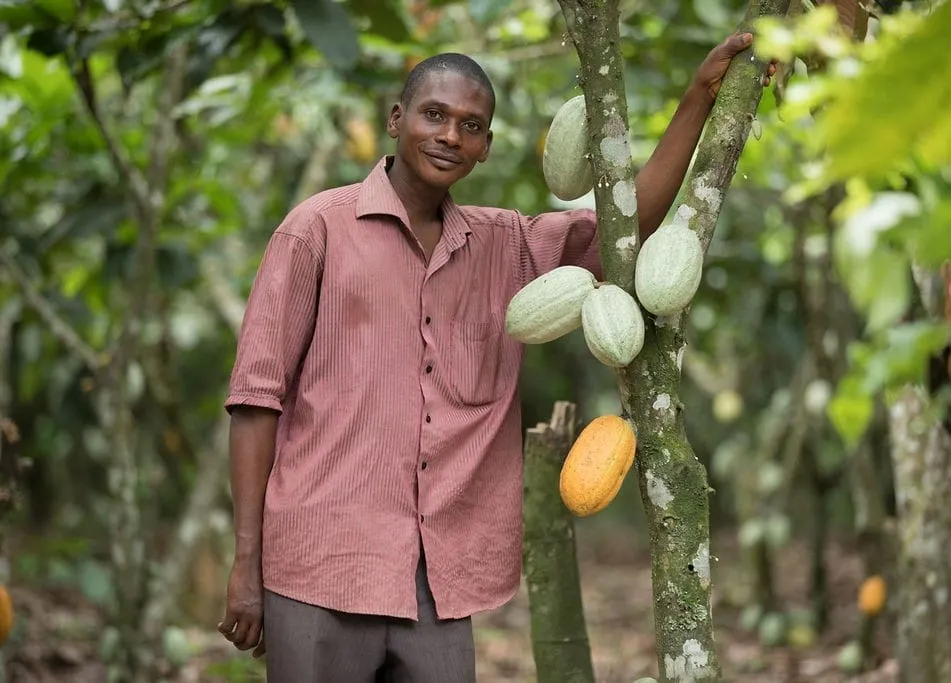
The farmers are the ones squeezed at both ends. They are being told that the cocoa must be deforestation-free, mapped, certified and documented, then absorb the demands of a compliance system. And at the same moment, laboratories in Europe, Israel and California are being financed — sometimes by the very companies that buy the beans — to make the crop replaceable.
No one has asked their opinion. Their income, and that of millions of households across West Africa and beyond where cocoa remains the backbone of rural economies, depends on the answer.
Let me be clear about what we are asking, because it is not protectionism and it is not a rejection of research.
First, honesty toward consumers. When cocoa content has been reduced or replaced, consumers should be told plainly. And there are already some rules on these matters. People who choose chocolate because they believe their purchase supports sustainable farming deserve to know whether the product contains the cocoa they think they are supporting. Sustainability claims on packaging must remain credible — for the industry's sake as much as ours.
The Regulatory Burden Rises at Origin
Second, coherence from regulators. Authorities in importing markets should ask whether substitution and reformulation practices align with the sustainability and traceability obligations they impose on producing countries. It is difficult to defend a framework in which the regulatory burden rises at origin while the incentive to source genuine cocoa falls downstream. Coherence across the value chain is not a favour to producers; it is the condition of the system's legitimacy.
Third, partnership rather than exit. The pressures pushing manufacturers toward substitutes — price volatility, supply uncertainty, climate stress on the cocoa belt — are real. But the answer to a fragile supply chain is to invest in its resilience, not to abandon it. Every dollar spent replicating cocoa in a bioreactor is a dollar that could strengthen disease-resistant varieties, climate adaptation, and the incomes that keep farmers in cocoa at all times.
Producing countries are also acting. On 16 June in Abidjan, H.E. Alassane Ouattara, President of the Republic of Côte d’Ivoire, and H.E. John Dramani Mahama, President of the Republic of Ghana, reaffirmed their commitment to a cocoa economy that puts farmers at the heart of governance and value sharing. Our two governments are aligning farmgate prices and crop calendars, expanding joint research on swollen shoot disease and climate-resilient varieties, implementing the African sustainability standard ARS-1000, and speeding up local processing so that more cocoa value remains on the continent that grows about 80% of the crop. The Initiative is also preparing to welcome other producing countries, because the sector’s challenges require a coordinated African response, not a fragmented one.
Dialogue Requires a Shared Premise
We will continue to engage manufacturers, regulators and researchers in good faith, in the same spirit of dialogue that produced the Living Income Differential and the joint scientific cooperation now expanding across our region. But dialogue requires a shared premise. Ours is simple: a sustainable cocoa economy cannot be built on rising obligations for the people who grow cocoa and declining cocoa in the products those obligations are meant to make possible.
The industry must decide what chocolate is. If it is a product of cocoa — of the trees, the soil and the hands of farmers — then the standards now demanded of us make sense, and we will keep meeting them. If it is to become a flavour that can be assembled from oats, oils and fermentation tanks, then the sector should say so openly, and stop asking farmers to underwrite a promise it no longer intends to keep.
- Alex Assanvo is Executive Secretary of the Côte d'Ivoire–Ghana Cocoa Initiative (CIGCI), the intergovernmental body headquartered in Accra, established by the Republics of Côte d'Ivoire and Ghana, which together produce nearly 60% of the world's cocoa.
- Sponsored content: This article was created in collaboration with CIGCI. While it aligns with our audience’s interests, the ideas and content are provided by CIGCI, which retains copyright and editorial responsibility. We’re sharing it to offer our readers relevant information and perspectives.