This article is for members, which we are opening up to the public as a one-off. To read more exclusive insights subscribe below
Join our growing community of members and receive a free version of our daily newsletter on what really matters in cocoa.
No spam. Unsubscribe anytime.
There are countless premium chocolate launches each year, but relatively few begin with a conversation about childhood memories rather than cocoa percentages.
That distinction may prove to be one of Oumé’s greatest strengths.
Since its first public unveiling in London, the Côte d’Ivoire-inspired brand has deliberately resisted a conventional product-first approach. Instead of leading exclusively with flavour notes, recipes or technical specifications, Oumé introduced itself through identity, place and personal history.
Its ambitions also extend beyond the chocolate category. Oumé’s creators describe it as a lifestyle brand built around nostalgia, belonging and the meaning of home.
Advertisement
That strategy raises a larger question for the cocoa and confectionery industries: can a business with roots in Africa build a globally recognised premium brand rather than remaining associated primarily with the supply of raw cocoa?
For Ndubuisi Kejeh (ND), founding partner of the London-based venture studio Mustard, the answer begins with the story rather than the product.
“We’re a venture studio that believes story is king, and we’re trying to build brands that can prove that,” ND informs CocoaRadar during an interview at Mustard’s central London offices.
A Story That Began Near Oumé
The idea that eventually became Oumé emerged during a lunch two years ago involving ND, former Chelsea and Côte d’Ivoire footballer Salomon Kalou, his wife Karina Ferreira and Baafour Totoe.
During the conversation, Kalou recalled growing up as one of 11 siblings in a farming family near the Ivorian town of Oumé. During cacao season, he would sometimes miss school to help with the harvest.
The memory remained with ND because it contained the foundations of a much broader story: family, labour, land, ambition and the emotional distance between where a life begins and where it eventually leads.
Kalou’s relationship with chocolate also carried an unexpected disconnection familiar across many cocoa-producing communities. According to ND, Kalou did not initially understand that the chocolate he later encountered was made from the cacao he had known during childhood.
“When he figured that out, it gave him deep nostalgia,” ND says. “We are always trying to build things, tell stories or do things that express nostalgia and express home.”
That idea became the organising principle behind Oumé.
Rather than treating narrative as a marketing campaign added once the product had been developed, Mustard’s approach is to use the founder’s lived experience as the basis for the company itself.

Authenticity Or Marketing?
As storytelling becomes increasingly central to brand building, the boundary between authentic narrative and carefully constructed marketing can be difficult to define.
ND acknowledges that Oumé will have to keep testing that boundary.
“It is an ongoing experimentation, and I think it will be an ongoing learning,” he says.
Traditional brand development often starts by identifying an attractive market segment and then shaping a proposition to appeal to it. Mustard attempts to reverse that process.
“When you’re following a story, you’re not saying, ‘Who do I want to target?’” ND argues. “You’re actually saying, ‘Who gets me? Who gets my story?’”
He compares the approach to advising a child starting school. One option is to tell the child which group to pursue and encourage them to adapt their behaviour accordingly. The alternative is to tell them to be themselves and find the people who respond naturally.
For Oumé, the test is whether each new product, activation or message remains connected to the central ideas of home and nostalgia.
“As long as we’re doing that, then I think we’re on the right line,” ND believes.
More Than An African Chocolate Brand
Oumé’s origins are inseparable from Côte d’Ivoire, the country where Kalou was raised and whose cocoa sector remains central to the global chocolate supply chain.
Yet ND is cautious about allowing the brand to be defined solely by geography.
Mustard initially spoke openly about its ambition to build a major global brand emerging from Africa. As Oumé developed, however, the team began to broaden that positioning.
“Our biggest responsibility is the story,” ND says. “It’s not a continent. It’s not even a country.”
That shift became apparent during an early Oumé pop-up in London’s Soho district. Visitors from several countries responded to the concept of home without necessarily associating it exclusively with Côte d’Ivoire.
ND recalled an Italian visitor who interpreted Oumé’s message through memories of Italy.
“You’re talking about home, and I’m thinking about home in Italy,” the visitor told the team.
For ND, that reaction captured the brand's intended universality.
“Salomon is a human being who has strong feelings of nostalgia,” he explains. “He’s a human being who loves his home. There are many human beings around the world who feel the same way.”
The approach carries both an opportunity and a risk.
Emphasising Oumé’s Ivorian origins gives the business a distinctive and meaningful foundation. But presenting it primarily as an ‘African brand’ could also cause some consumers to assume the product is intended for a particular demographic or region.
Oumé therefore wants its roots to remain visible without allowing them to become a boundary around the brand.
Manufactured In Switzerland, With Wider Ambitions
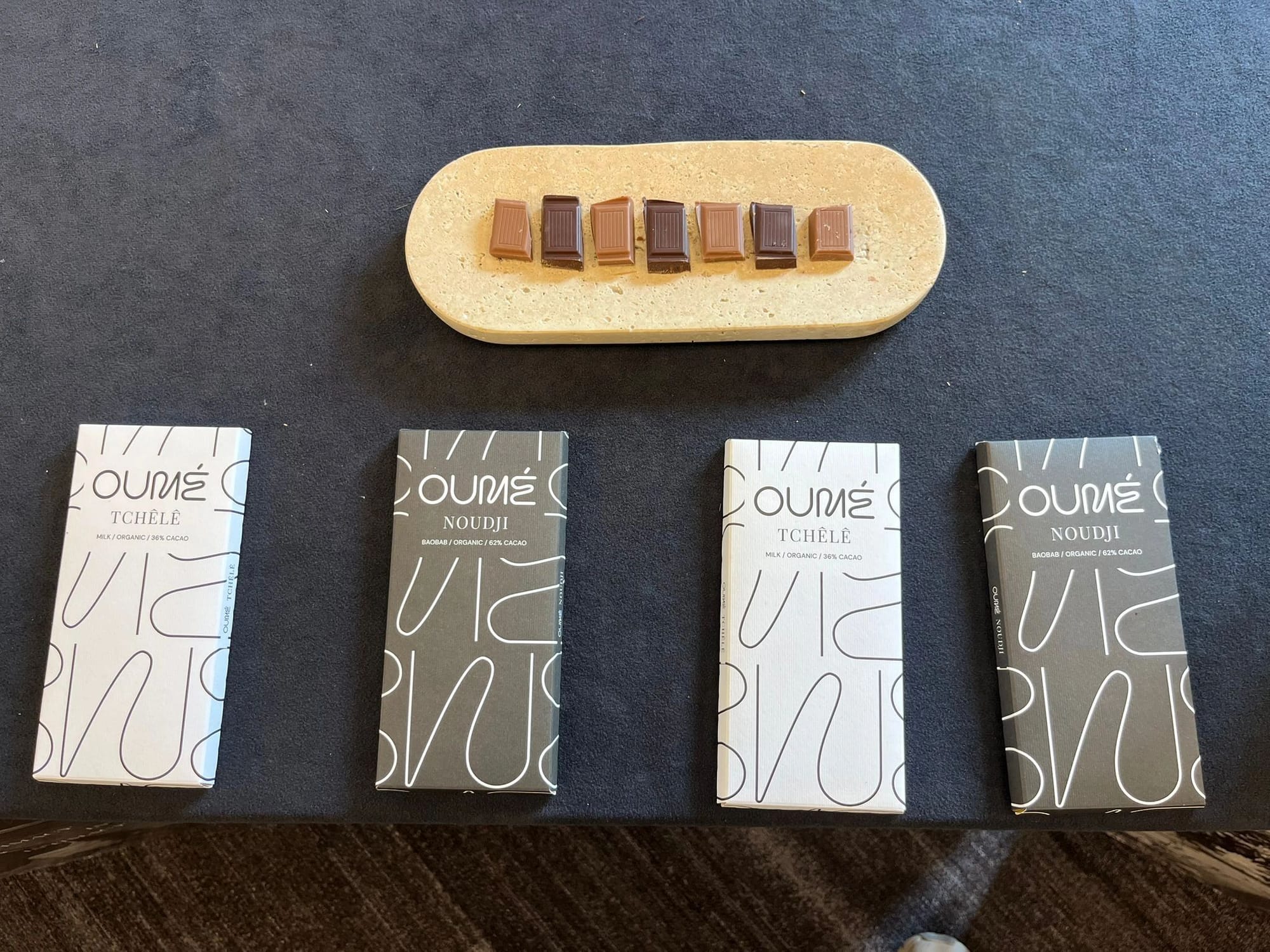
The initial Oumé chocolate range is manufactured in Switzerland using beans of mixed origin.
ND explains that the company is also working towards developing a chocolate made exclusively with cocoa from the Oumé area. A small-scale prototype has already been produced, but moving from an experimental bar to consistent commercial production presents considerable sourcing and quality challenges.
“It’s extremely difficult to get really good quality from the origin, let alone talk about manufacture,” he argues.
The issue goes to the heart of a longstanding structural challenge within cocoa.
West Africa produces much of the raw material used by the global chocolate industry, yet much of the manufacturing, branding and higher-value commercial activity takes place elsewhere.
Oumé’s current production model does not overturn that structure. Its founders instead argue that building a larger and more profitable lifestyle company could eventually give the business the resources and audience needed to develop products more closely tied to the Oumé region.
“If we truly want to be able to make bars that are single origin from Oumé in the future, we have to be bigger,” ND says. “That means we need a bigger audience, but it also means we’re going to need bigger revenues and bigger profits.”
Why Oumé Does Not Want To Remain Only A Chocolate Company
This month Oumé has opened its direct-to-consumer business in the UK and is also holding conversations with premium retailers.
However, ND believes the economics of the chocolate-bar category make it difficult to achieve the company’s wider ambitions through confectionery alone.
Chocolate bars operate within relatively established price and margin expectations. A business seeking to invest in origin-specific production, international expansion and wider cultural activations may therefore need products with different commercial characteristics.
“We don’t think being just a chocolate brand is true to the story,” ND believes. “We also don’t think it is going to be long-term feasible based on what it is we want to do.”
He points to businesses such as Goop and luxury food and lifestyle companies as more relevant comparisons than conventional mass-market chocolate manufacturers.
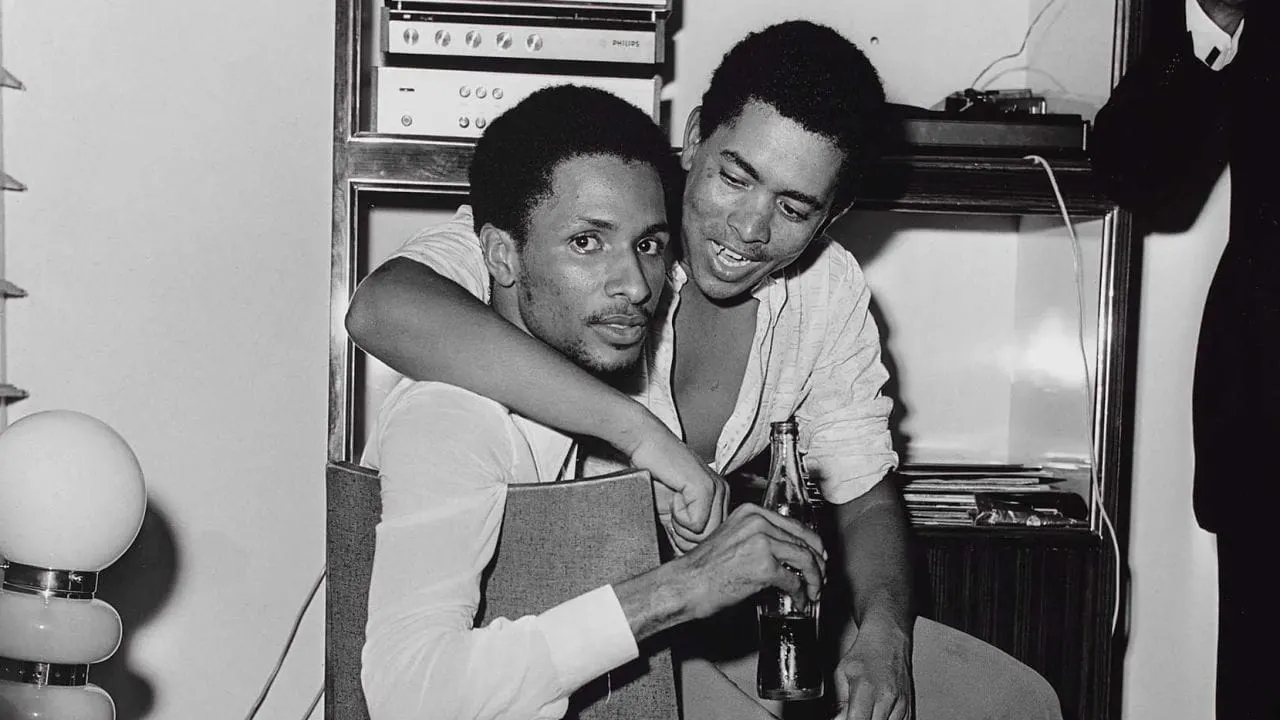
The brand has already experimented with its own exclusive clothing collection, initially creating T-shirts using Paul Kodjo's 1970s Ivorian photography and intends to explore what ND describes as ‘sentimental objects’: products capable of carrying memories or associations with people and places.
Chocolate will remain an important part of the proposition, but not necessarily the only expression of it.
“We need to not stay in chocolate if we want to stand a chance to do something different in chocolate,” ND argues.
Beyond The Celebrity Brand Model
Oumé also faces the familiar challenge attached to celebrity-founded businesses.
High-profile names can generate immediate attention, but that attention does not always develop into sustained consumer loyalty.
ND argues that Oumé differs from businesses built around celebrities with enormous and highly active online followings. Kalou retired from professional football several years ago and is not being used simply as a distribution channel to push products towards millions of current followers.
Instead, the business is being built around his history and experiences.
“We are building a brand that genuinely is about him – who he is as a retired athlete, his lived experience and the story arc that led him to where he is,” ND explains.
The long-term aim is for Oumé eventually to stand independently from its co-founder.
ND compares that process to a child gradually becoming less dependent on a parent.
“They start off as an avatar of the founder,” he says. “But eventually they grow up and they’re independent of their parent. People know them for what they are.”
That ambition explains the significance of the Oumé name. It remains connected to Kalou’s origins, but it is not dependent upon consumers knowing his biography.
Product Quality Is No Longer Enough
Oumé’s narrative may distinguish it, but storytelling alone will not secure a place in the premium market.
Consumers will ultimately judge the chocolate on taste, quality, packaging, availability and value.
Chief Chocolate Officer Marc Donaldson has overseen the development of the range, bringing decades of industry knowledge to the project. Visitors to the London Chocolate Forum were introduced to the products through guided tastings intended to connect flavour with the wider Oumé story.
ND believes the quality of the chocolate is strong, but he also argues that product excellence is no longer sufficient to guarantee commercial success.
“Products are really easy to make,” he said. “The thing that’s difficult is to get people to buy your product – and that’s attention.”
Artificial intelligence, faster manufacturing processes and easier access to product-development expertise have lowered some of the barriers facing new businesses. At the same time, the competition for public attention has become more intense.
“I think the chocolate is an amazing product,” ND reiterates. “But I don’t think an amazing product is enough.”
Mustard’s answer is to begin with an audience’s emotional connection to a story, then create products that give that connection a physical form.
Whether that model can translate into repeat purchases and sustainable growth remains to be tested.
A Brand Aiming To Become Stateless
Asked what success might look like five years from now, ND said he hopes Oumé will be substantially larger in revenue and valuation.
His more revealing ambition, however, concerns how consumers describe it.
“I would hope people will not be thinking of Oumé as an African brand,” he says. “I don’t think of Apple as an American brand.”
The comparison is not about scale but about perception. The world’s most powerful brands may have clear geographical origins, but consumers eventually experience them through their products, culture and accumulated meanings rather than through nationality alone.
“The best brands in the world, as they mature and capture the imagination, become truly global and stateless,” ND believes.
For Oumé, reaching that point would mean consumers no longer beginning with Côte d’Ivoire, Africa or even Salomon Kalou when explaining the company.
Instead, the name itself would provoke a recognisable feeling.
“I would like people’s minds to have shifted purely to Oumé,” ND says. “When people hear Oumé, they have a feeling and a response. That is something that, right now, we haven’t yet created.”
It is an unusually candid admission from the founder of a young venture.
Oumé has established its story, introduced its first products and opened the door to consumers. It has not yet proven that its story-first approach can generate lasting commercial momentum or deliver its longer-term ambitions around Ivorian cocoa.
But it has identified the territory it wants to occupy.
The company is not simply asking whether consumers will buy another premium chocolate bar. It is asking whether taste, objects and experiences can carry memories of home – and whether a story that began on a farm near Oumé can eventually belong to people far beyond it.
- Oumé is now taking pre-orders (UK deliveries only for the moment), and the online store is scheduled to open on 30 July.
- https://oume.store/
Read more on Oumé here: