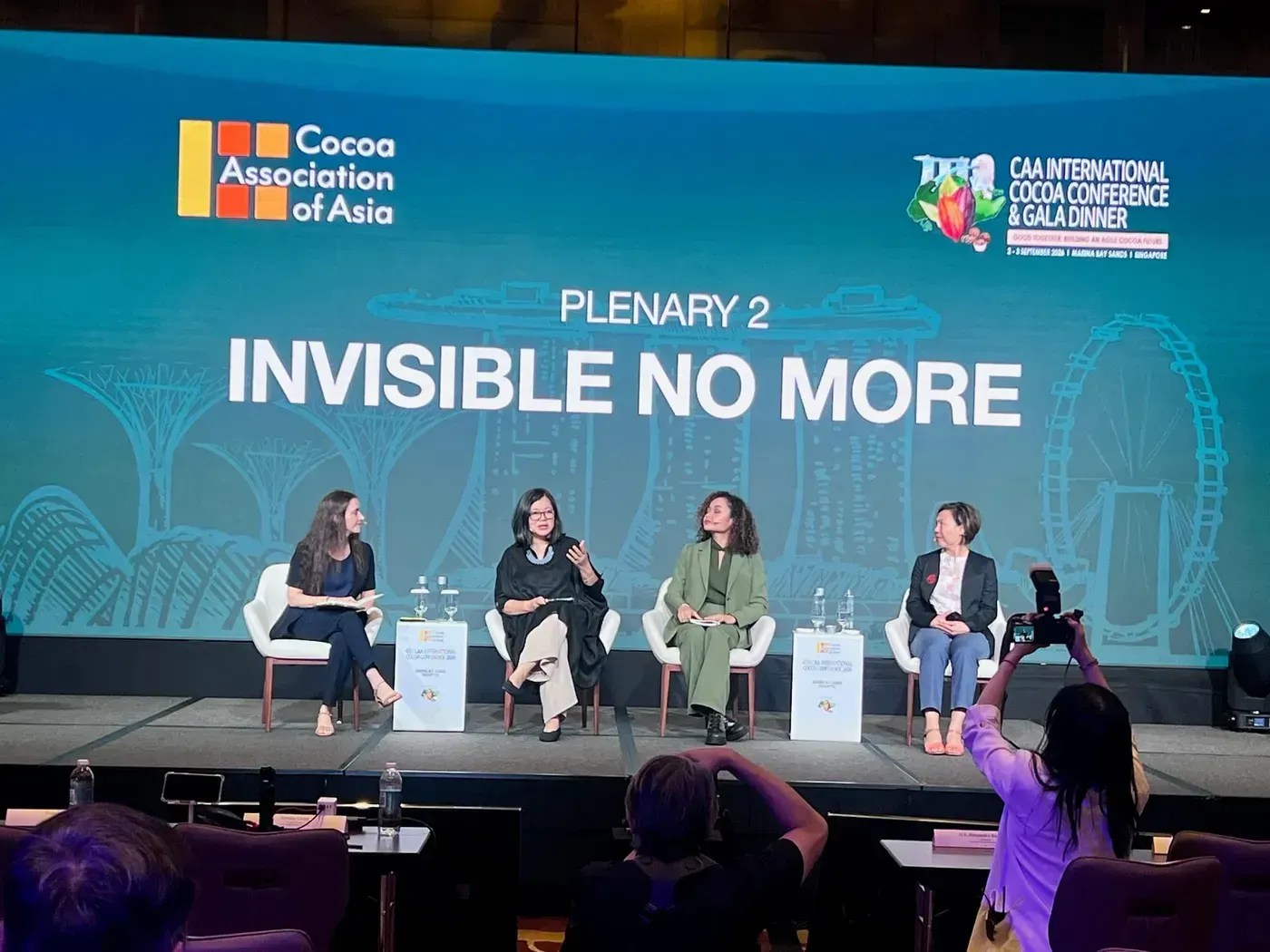
The conference theme was: 'Good Together: Building an Agile Cocoa Future '.
With traders, grinders, chocolate companies, governments, NGOs and tech companies all in attendance, organisers promised a flexible, forward-looking and fair programme.
All pumped up with adrenaline, from excitement about the days ahead, and from a lack of sleep due to jet lag, compensated with far too much coffee, I was ready to participate.
I love events like this. Seeing familiar faces of people you only ever meet at conferences, and people you have never met but who feel familiar because you follow their journey on social media.
The cocoa world is a people business, but I think we all feel we don't meet face to face enough. An event, if done well, is also an industry crash course, with all that knowledge at your fingertips.
International events make our industry feel so global, yet so small and familiar at the same time. Call me naïve, but I always start with a positive mindset: everything is still possible, even in gloomy times, if we're open to sharing authentically, willing to collaborate, and ready to invest in a better cocoa future.
So, did Singapore deliver on its promise of Good Together? Well, partly.
The right participants
Most of us travel halfway around the world for the network, and CAA absolutely nailed it. CEOs, finance directors, heads of procurement and sourcing and sustainability leaders, all accessible and in one venue.
Pulling together a participant list like this is quite something. The size was right too: large enough to meet new people, small enough to actually find the ones you were looking for. The quality of the participants made the trip worth it.
But with so many of them in one place, you need to build in enough moments for conversation, because most good conversations happen during the breaks. Or at the bar.
Who gets to talk?
The programme is where I felt it could have delivered much more. What happens on stage decides what people talk about in the months to come. It shapes articles, policies and debates. It matters!
I understand how it works, though. Events like this are made possible by sponsors, a.k.a. large companies who have these kinds of budgets, so it makes sense that they get the good slots.
Sponsors send their representatives, fully briefed by the marketing team, to follow the communication guidelines strictly and avoid any 'hot topics'.
And this is where an organising committee has a hugely important role: to be firm and bring the necessary counterweight on stage- independent thinkers, people from origin, voices with a different background or unique angle to challenge the speakers. They bring nuance and often the best new insights, simply because they are freer to say what needs to be said.
And with that come excitement, slightly unscripted moments and tension on stage. These 'free' speakers need to be part of the entire programme, not tucked away at the end or in breakout sessions.
Missing voices, missing topics
On the first day, three hours passed without a single woman speaking, apart from the organiser. In fact, about 20% of the speakers on the main stage were women.
The market sessions on prices and grinding were all men. The panel with mostly women was about sustainability.
It is not only gender. Africa and the Americas together grow more than 90% of the world's cocoa. Still, Africa had just one speaker on stage, from Ghana's Cocoa Marketing Company, and no one came from Latin America.
With Ecuador now the world's third-largest producer and a huge supplier of cocoa to Asia, that's just a big gap. The panel on whether Asia is ready for the EUDR had no Asian representatives, and the panel on farmers had no single farmer.
 Anthony Myers
The same goes for the content. The EUDR got a lot of attention, understandably, but the new EU rules on green claims, which came into force this week (see link above), were no more than a footnote, although they will affect brands and chocolate consumption, and, with that, the cocoa trade.
Climate change was on the agenda, but deserved much more room, even a key position in the programme. We are watching El Niño as the next big thing, but what will the climate look like in 10 years, and how will that affect farmers and our industry? How do we help farmers move towards agroforestry, and how do we share the risks and pay prices that make that shift possible?
And after all the billions that have gone into sustainability programmes, what I missed was a clear snapshot of where we truly stand today, on child labour, for example.
What role Singapore and Southeast Asia will play in that bigger picture, growing more cocoa instead of mainly processing it, was still an open question.
To be clear, this is not about ticking boxes to meet a quota. Speakers of different genders, backgrounds and professions, including more women and more farmers, bring nuance and new perspectives to the debates this industry really needs to have. We need to address the elephants in the room.
 Anthony Myers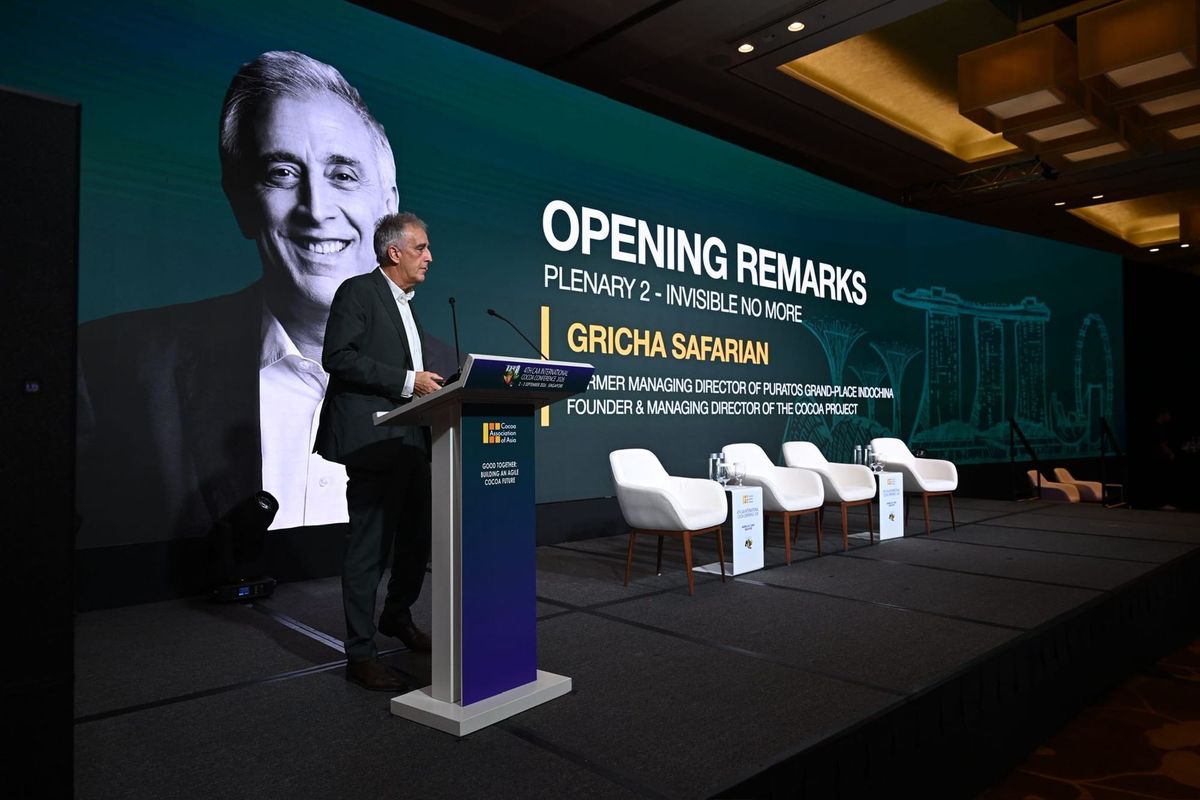
Dissonance Strikes a Chord
Gricha Safarian, CEO of Puratos Grand-Place Indochina in Vietnam, called it dissonance. He has been pushing for years for ways to source cocoa built on value creation, and his model has been successful in Vietnam.
I heard the frustration in his voice when he spoke about the industry investing in technology, reformulation and cocoa-free chocolate when it should be focusing on paying higher prices and supporting farmers to grow higher quality and in a better way. The alternative is consonance: making better chocolate with better flavour, the way the wine industry does, rather than pushing on yield and competing on cost.
To sum up
I felt some dissonance and disappointment too when I left Singapore. Great for networking, yes, but the programme lacked the clarity and answers I was hoping to find.
Good Together, the theme of this year's conference, does not mean we all have to agree. It means real, authentic conversations, where everyone in this sector feels represented and where plans become actionable and accountable.
A conference can facilitate that, and that is when it moves the sector forward.
Read more from Moving Cocoa:

Marika van Santvoort has been working in cocoa & chocolate since 2014, with a focus on responsible sourcing, innovation and farmer impact. In this monthly column she shares her own perspective on what is really moving in the sector; what is being said, what is not, why it matters and what it means for the industry. |