


The expectations placed on cocoa supply chains are changing.
For manufacturers, traders and offtakers, responsible sourcing is increasingly about more than commitments. Buyers need to know where cocoa comes from, whether farms can be traced, how deforestation risk is being assessed and what systems suppliers have in place to address social risks within producing communities.
Against this backdrop, Sunbeth Global Concepts has published its inaugural 2025 Sustainability Report, providing a detailed account of how the business is approaching these issues across its cocoa supply chain.
The report is significant because of the standards it has chosen to adopt and the operational data behind its disclosures.
Sunbeth says it is the first Nigerian agricultural company, public or private, to voluntarily align its sustainability reporting with IFRS S1 and IFRS S2, the International Sustainability Standards Board frameworks covering sustainability-related financial information and climate-related disclosures.
The decision reflects a broader shift within the business: sustainability is increasingly being treated not as a standalone corporate responsibility initiative, but as part of governance, risk management, sourcing and long-term commercial resilience.
That distinction matters.
As regulatory and customer expectations rise, suppliers will increasingly be expected to demonstrate that responsible sourcing systems are embedded in their operations rather than introduced simply to meet individual customer requests.
Traceability Moving From Ambition To Infrastructure
One of the clearest examples in the report is Sunbeth’s investment in farm-level traceability.
The company has polygon-mapped more than 140,000 hectares of cocoa farmland, screening plots for deforestation risk using satellite data alongside ground verification. The company has also mapped more than 30,000 farmers within its supply chain.
The objective is to create a sourcing system in which origin, farm location and deforestation risk can be verified rather than assumed.
For cocoa buyers, this is becoming increasingly important. Sustainability claims are only as credible as the data supporting them, particularly as manufacturers face growing scrutiny over the environmental and social conditions within their upstream supply chains.
Sunbeth has therefore been building traceability and geolocation validation directly into its sourcing infrastructure, supported by independent deforestation-risk screening.
Responsible Sourcing Also Has A Social Dimension
Environmental traceability is only one part of the picture.
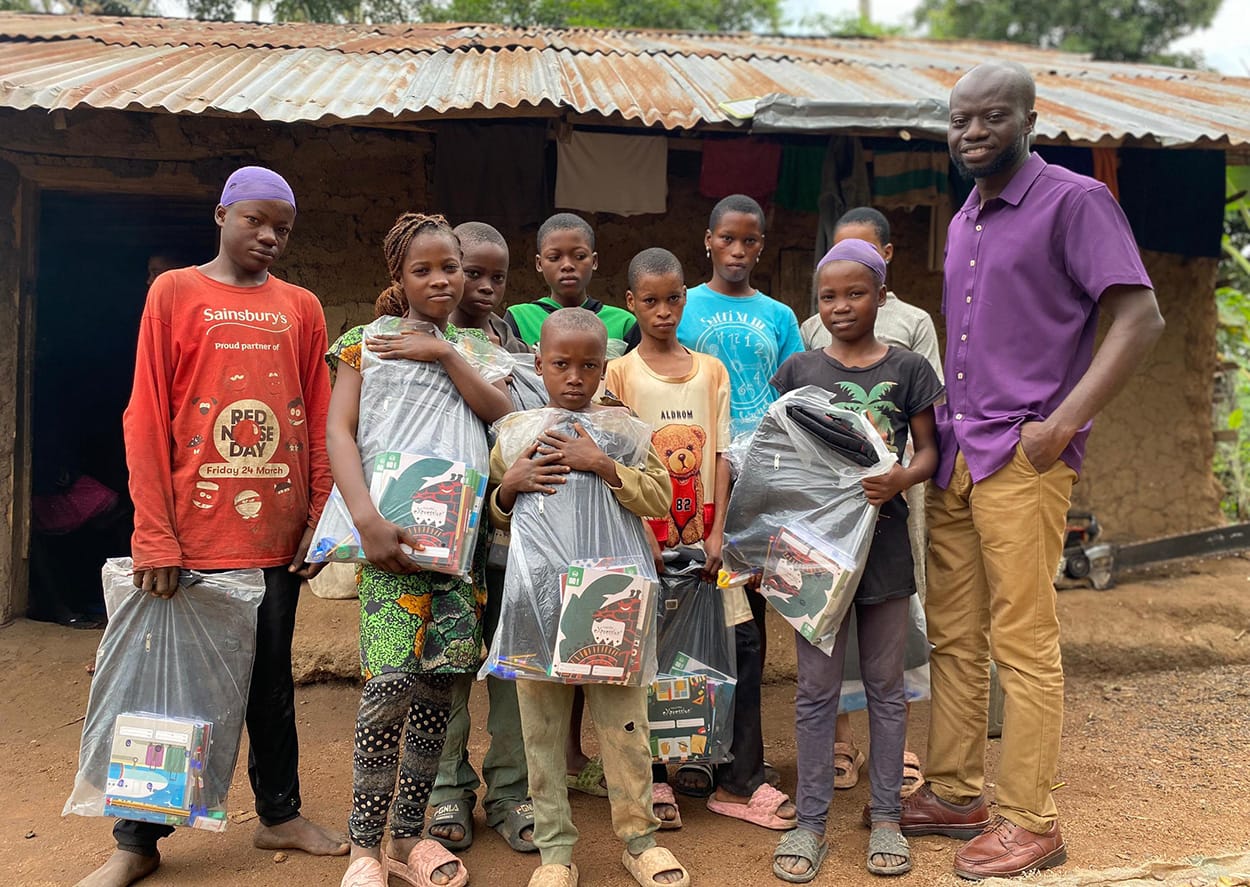
The report also details Sunbeth’s work through its Child Labour Monitoring and Remediation System (CLMRS). The programme surveyed more than 900 households across 120 communities. Eighty children identified as being at risk of child labour received remediation support.
Sunbeth has also become the first Nigerian company to join the International Cocoa Initiative, an organisation focused on addressing child labour and forced labour risks within cocoa-growing communities.
Beyond monitoring, the company reports investments in community infrastructure and farmer resilience, including clean-water facilities across 11 communities, income and skills programmes for women, and good agricultural practice training for more than 6,000 farmers.
These interventions point to an important reality for the sector: responsible cocoa supply chains depend not only on environmental compliance but also on the economic and social resilience of the communities producing the crop.
Building Certified Supply At Commercial Scale
The report also shows how these sustainability systems are translating into commercial volumes.
Sunbeth sourced and sold approximately 4,600 metric tonnes of Rainforest Alliance-certified cocoa at a premium and says it has developed more than 25,000 metric tonnes of certified capacity for the 2025-26 season.
For manufacturers and offtakers, the relevance is straightforward.
As sustainability requirements become more demanding, buyers will need suppliers that can combine volume, traceability, certification, and credible sustainability data. The commercial value increasingly lies not simply in moving cocoa, but in demonstrating how that cocoa was sourced.
As Sunbeth Managing Director Olasunkanmi Owoyemi states in the report:
“Responsible sourcing is how we do business, how we manage risk, and how we create long-term value.”
From Individual Projects To A Longer-Term Framework
The sustainability report also places these initiatives within Sunbeth’s broader Orange Cocoa Framework, the company’s long-term approach to responsible cocoa sourcing.
The framework includes commitments to achieve 100% traceability of volumes to deforestation-free land by 2050, train 100,000 farmers by 2040, distribute 300,000 shade trees by 2040 and reach net-zero Scope 1 and Scope 2 emissions by 2050.
These are long-term targets, and their credibility will ultimately depend on continued measurement and disclosure of progress. Publishing the sustainability report creates a baseline against which that progress can now be assessed.
That may be one of the report’s most important contributions.
Sustainability commitments across the cocoa industry are becoming increasingly common. What buyers, regulators and other stakeholders increasingly need is evidence: measurable targets, traceable data, transparent reporting and a clear account of progress over time.
Sunbeth’s inaugural report begins to provide that record.
For a company operating across one of the world’s most scrutinised agricultural supply chains, transparency is no longer simply about reputation. It is becoming part of market access, customer confidence and the ability to compete in increasingly demanding global supply chains.
The Sunbeth 2025 Sustainability Report offers a closer look at how one African cocoa exporter is preparing for that environment, and the systems it is putting in place as responsible sourcing moves from aspiration to operating requirement.
More from Sunbeth Global Concepts:
- Sponsored content: This article was created in collaboration with Sunbeth Global Concepts. While it aligns with our audience’s interests, the ideas and content are provided by Sunbeth Global Concepts, which retains copyright and editorial responsibility. We’re sharing it to offer our readers relevant information and perspectives.