
The discovery of a Mars bar in England dating from 1991 has reignited the debate over ‘shrinkflation’ in chocolate, with the old bar weighing 62.5g compared with 40g for the current version used in the widely reported comparison – a reduction of 22.5g, or 36%.
This has led to another argument: what happens if manufacturers increasingly reduce the cocoa inside chocolate products as well as their size?
Put another way, the vintage Mars bar was more than 56% heavier than the modern one.
Advertisement

The bar was discovered by cleaning business owner Victoria Gordon during a house clearance in Scunthorpe, England, and later compared side by side with a present-day Mars bar.
Images and video of the find spread rapidly online this week, turning an unusual household discovery into a highly visual example of how confectionery portion sizes have changed over several decades.
Newsite People.com reported that Mars acknowledged that its bar sizes and pack formats have changed over the past 35 years, citing consumer demand alongside external pressures including manufacturing costs and the price of cocoa.
Additional media reports on the company's response said Mars maintained that the recipe itself had not changed.
The episode is primarily a story about product size rather than cocoa substitution. But its timing is significant.
Just days after the Mars story emerged, the Côte d’Ivoire-Ghana Cocoa Initiative (CIGCI) issued a warning about another potential change taking place inside chocolate products: the growing use of cocoa substitutes and reformulation that reduces cocoa content.
For the world's two biggest cocoa-producing countries, the concern is that after years of consumers watching chocolate bars become smaller, manufacturers faced with high cocoa and sustainability costs could increasingly make products less cocoa-intensive as well.
From Smaller Bars To Less Cocoa?
In its statement this week, CIGCI expressed concern over the increasing use of substitutes and reformulation of products marketed as chocolate, warning that reducing cocoa-derived ingredients could ultimately weaken cocoa demand, producer incomes and sustainability investment.
The Initiative argues that the issue extends beyond the commercial decisions of individual chocolate companies.
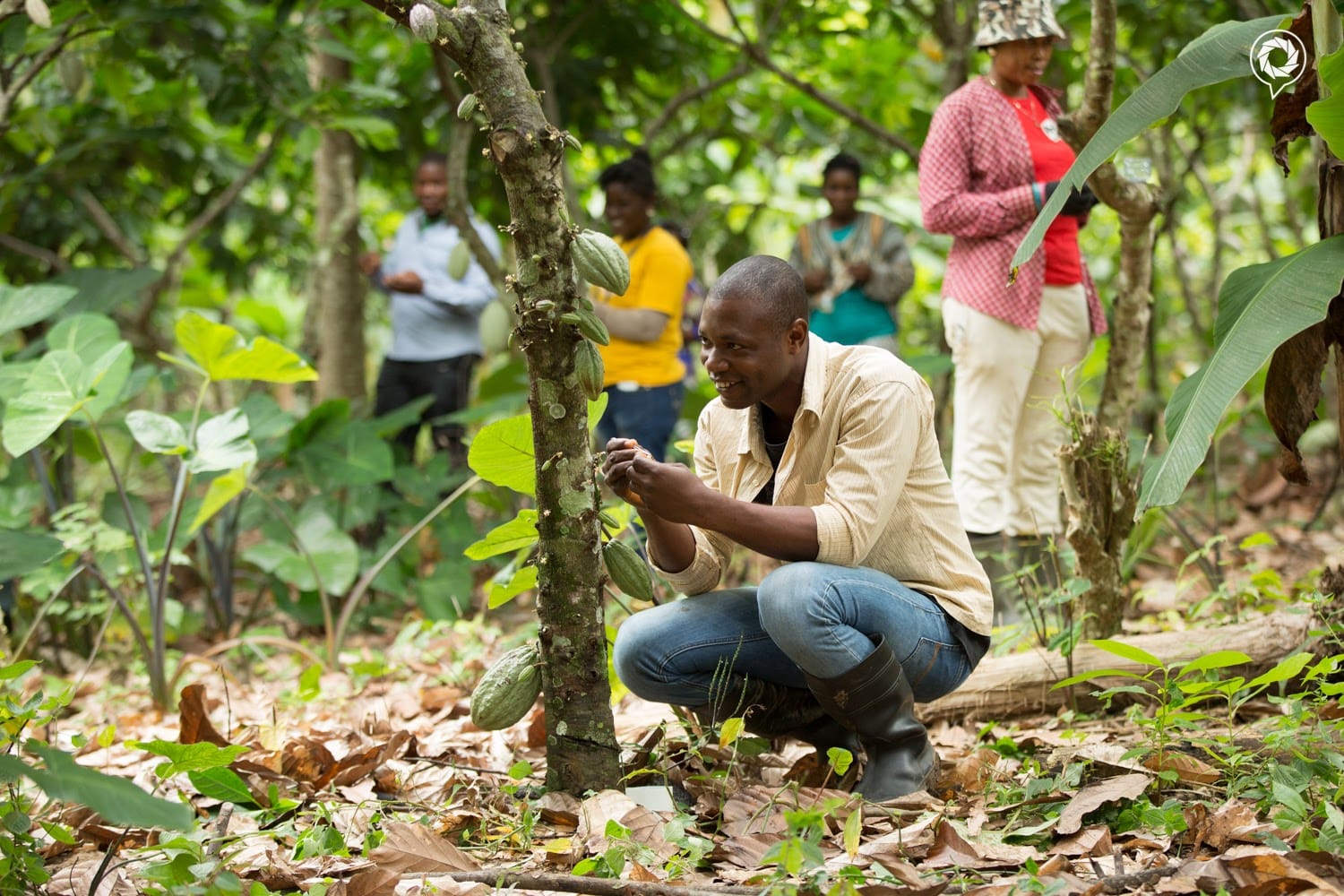
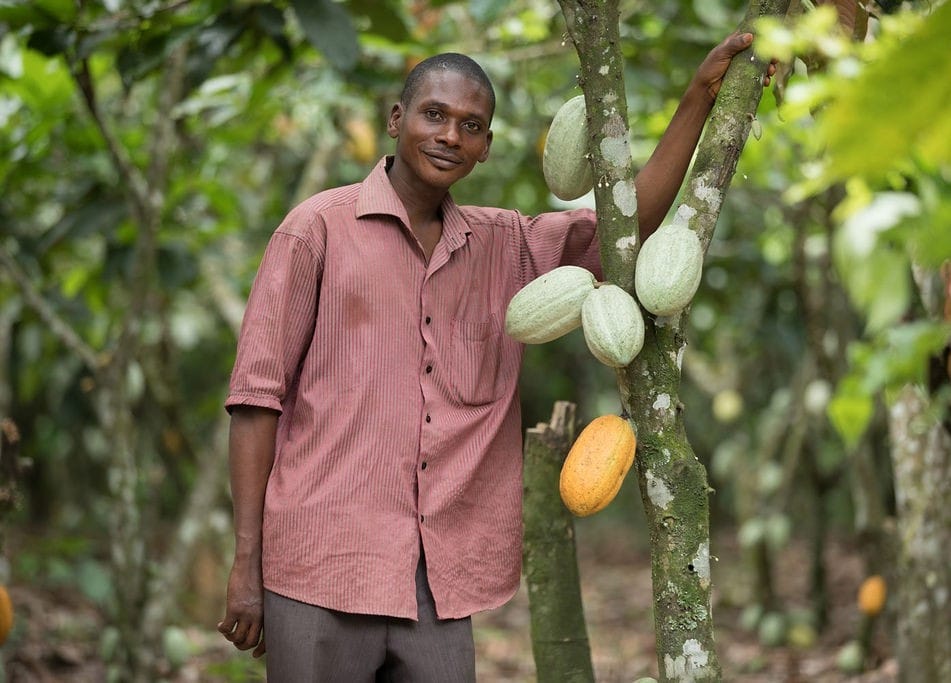
Farmers in Ghana and Côte d’Ivoire are increasingly being required to meet demanding standards on traceability, deforestation, environmental protection, social compliance and cocoa quality. Meeting those requirements comes at a cost.
If manufacturers simultaneously respond to high cocoa costs by reducing the amount of cocoa required in finished products, producer countries fear that farmers could be left investing more to produce compliant cocoa for a market that ultimately needs less of it.
That creates a potential disconnect between sustainability requirements at the beginning of the supply chain and product formulation decisions at the consumer end.
Reformulation Raises A New Demand Question
CIGCI warned that widespread reformulation risks undermining the coherence of the cocoa value chain and weakening its economic, social and environmental objectives.
The economic concern is relatively straightforward.
If a chocolate manufacturer makes a bar smaller, less product is sold in each unit. If it also reduces the cocoa intensity of the recipe, it may require even less cocoa per unit.
Replicated across millions of products and multiple confectionery categories, relatively small formulation changes could eventually become meaningful for aggregate cocoa demand.
This is why the debate over substitutes matters particularly to Ghana and Côte d’Ivoire, where cocoa remains an important source of export earnings and supports millions of rural livelihoods.
It also raises a longer-term question over whether farmers will receive sufficient returns on the investments required to produce increasingly traceable and sustainable cocoa.
Ghana And Côte D’ivoire Demand Transparency
CIGCI is calling for clear and unambiguous communication whenever cocoa-derived ingredients are substantially reduced or substituted.
The Initiative argues that product names, composition and sustainability claims should accurately reflect the quantity and nature of cocoa actually contained in finished products.
For consumers, subtle recipe changes may be considerably harder to identify than shrinkflation.
As the Mars example shows, a 62.5g chocolate bar next to a 40g version provides an obvious visual comparison. Changes to cocoa butter, cocoa solids or other cocoa-derived ingredients inside a formulation can be much less apparent.
That is why CIGCI wants environmental, social and ethical claims to be proportionate to the actual cocoa contained in a product.
The position potentially broadens the sustainability debate. Much of the industry's scrutiny has historically focused on where cocoa comes from and how it is produced. Ghana and Côte d’Ivoire are effectively arguing that attention should also be paid to how much cocoa ultimately remains in products carrying cocoa-related sustainability credentials.
Farmer Economics Under Pressure
The potential consequences for producers form one of the strongest themes in the CIGCI statement.
Farmers are being required to make investments associated with traceability, environmental compliance, disease management and sustainable production. Those investments ultimately depend on a market that can provide an adequate economic return.
Large-scale substitution could alter that equation.
Reduced cocoa intensity across confectionery products could weaken demand growth even if overall confectionery sales remain resilient.
For farmers, that creates the possibility of bearing the cost of increasingly stringent sustainability standards without receiving a corresponding benefit from demand for compliant cocoa.
Environmental investment could also be affected.
If cocoa demand or producer returns weaken, incentives to invest in climate resilience, forest protection, disease control and improved production could come under pressure.
Ghana And Côte D’ivoire Reinforce Producer Strategy
Against this backdrop, Ghana and Côte d’Ivoire have reaffirmed their commitment to building a more sustainable cocoa economy based on improved producer remuneration and a fairer distribution of value across the supply chain.
Their agenda includes greater coordination of cocoa marketing policies, stronger research into diseases such as cocoa swollen shoot disease, development of climate-resilient planting material and deeper implementation of the ARS-1000 sustainable cocoa standard.
 Jasper Jemmett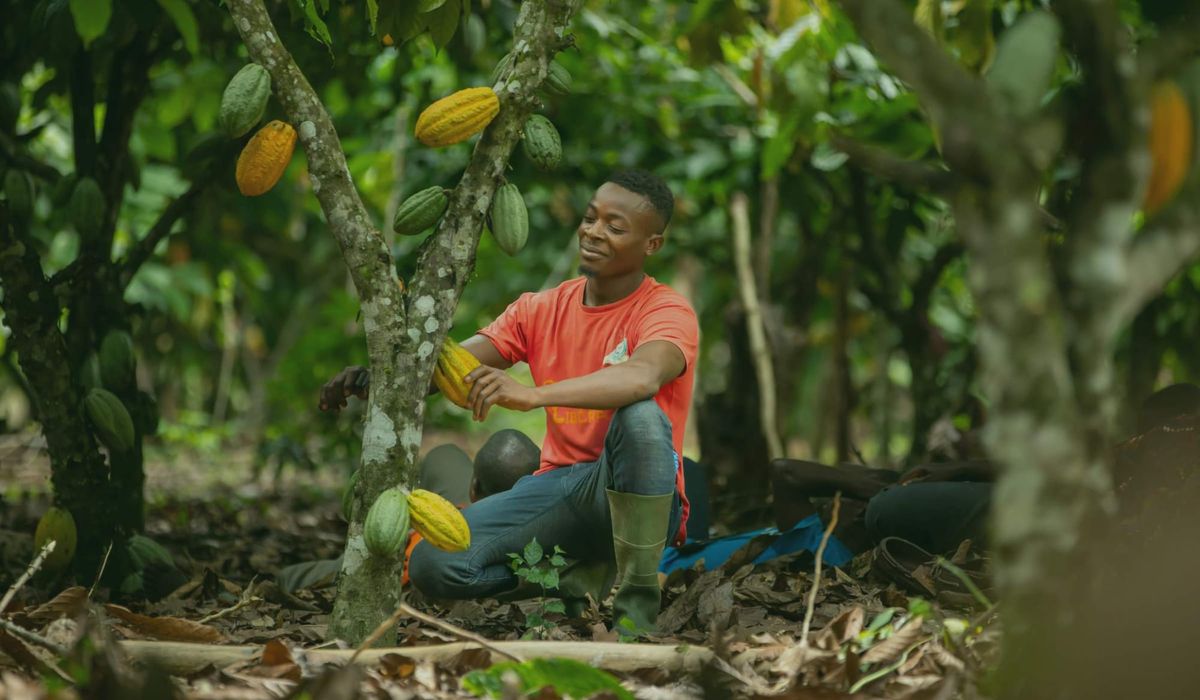
The countries also intend to accelerate local cocoa processing, allowing producing economies to capture a greater proportion of the value generated beyond the export of raw beans.
CIGCI is seeking to broaden cooperation to other producing countries, potentially strengthening coordination between cocoa origins as the economics of the global chocolate industry change.
Call For Permanent Industry Dialogue
Rather than simply calling for restrictions on reformulation, CIGCI is seeking a structured consultation process involving governments, regulators, manufacturers, distributors, standardisation bodies, producer organisations, scientific partners and consumer representatives.
Such discussions would examine how substitution affects cocoa demand, producer incomes and sustainability investment, while considering whether requirements imposed on producers remain aligned with standards governing finished products.
The Initiative has called for a permanent consultation framework across the cocoa value chain and said it remains open to dialogue with industry and other stakeholders.
The broader message is one of shared responsibility: if farmers and producing countries are expected to bear the cost of making cocoa more sustainable, decisions further downstream should not undermine the economic value of those investments without transparency or consideration of their consequences.
Cocoaradar View: First the bars got smaller. What if cocoa is next?
The timing of the Mars story makes the CIGCI intervention particularly interesting.
The 1991 Mars bar is a remarkably simple visual representation of how manufacturers can alter confectionery economics without abandoning an established brand. Consumers still recognise the wrapper and the product, but the quantity they receive has changed substantially over time.
To be clear, the Mars example should not be conflated with the substitution issue raised by Ghana and Côte d’Ivoire. Mars says its recipe remains unchanged, and the story concerns changes in bar and pack sizes rather than evidence that cocoa has been removed from the product.
But it provides useful context for a broader structural question facing cocoa.
The cocoa market's recent narrative has overwhelmingly been about supply: weather, disease, ageing farms, production deficits, sustainability requirements, prices and the investment required to rebuild output.
Reformulation introduces another variable — structural demand destruction.
There is an important difference between consumers temporarily buying less chocolate because prices rise and manufacturers permanently redesigning products so that each unit requires less cocoa.
The first can reverse when prices fall.
The second can become embedded in manufacturing.
That is what makes the producer-country intervention worth watching.
The Mars comparison shows just how significant incremental product changes can become over a long enough period. A bar associated with the same brand is today dramatically lighter than the version sold three-and-a-half decades ago.
Apply that principle not simply to the weight of a bar, but to the amount of cocoa used across an entire portfolio of chocolate and confectionery products, and the potential implications for the cocoa balance become much more significant.
Even modest reductions in cocoa intensity, multiplied across billions of individual products sold in major consuming markets, could eventually affect the amount of beans the global chocolate industry requires.
There is also a fundamental timing problem.
Farmers are being encouraged — and increasingly required — to invest in traceability, environmental compliance, productivity and climate resilience. Those investments assume sufficient future demand, and sufficient value within that demand, to reward compliant production.
If downstream companies simultaneously engineer cocoa out of products to control costs, the two sides of the sustainability equation begin moving in opposite directions.
For Ghana and Côte d’Ivoire, this is therefore more than a debate about ingredient labels. It is an early attempt to influence the rules governing future cocoa demand.
Their emphasis on local processing is equally significant. If producing countries expand grinding and processing capacity while manufacturers in consuming markets seek to reduce cocoa intensity, competition over where value is captured in the chain could intensify.
Shrinkflation has already taught consumers that familiar chocolate brands do not necessarily contain the same quantity of product they once did.
The question now being raised by cocoa-producing countries is whether the next evolution could concern the quantity of cocoa within those products.
For the global cocoa market, that creates a question arguably as important as the industry's continuing struggle to restore production: Not only how much cocoa can the world produce – but how much cocoa will the chocolate industry choose to use?
More from CIGCI:
 Jasper Jemmett